Most thought she was foolish.
Her farmhouse tilted slightly toward the east.
The barn roof leaked in six places.
Three fences had collapsed before winter.
The well pump groaned like a dying animal.
Rowan repaired what she could.
She collected discarded boards from behind the lumber yard.
She traded mending work for nails.
She straightened fence posts.
She patched holes with flattened tin.
She grew potatoes where other people insisted nothing useful would grow.
And whenever anyone told her the land was worthless, she answered the same way.
“We’ll see.”
So when Amos Bell spotted Rowan making her fourth trip from the roadside ditch with a basket of cracked goose eggs, he leaned on his fence and laughed.
“Mercer!”
Rowan kept walking.
“You planning to hatch scrambled eggs?”
Two men beside him chuckled.
Rowan adjusted the basket against her hip.
“Afternoon, Amos.”
“You know what dead eggs smell like after three days?”
“No.”
“You will.”
The laughter followed her all the way home.
By the next morning, children were calling the Sink Goose Graveyard.
Rowan ignored them.
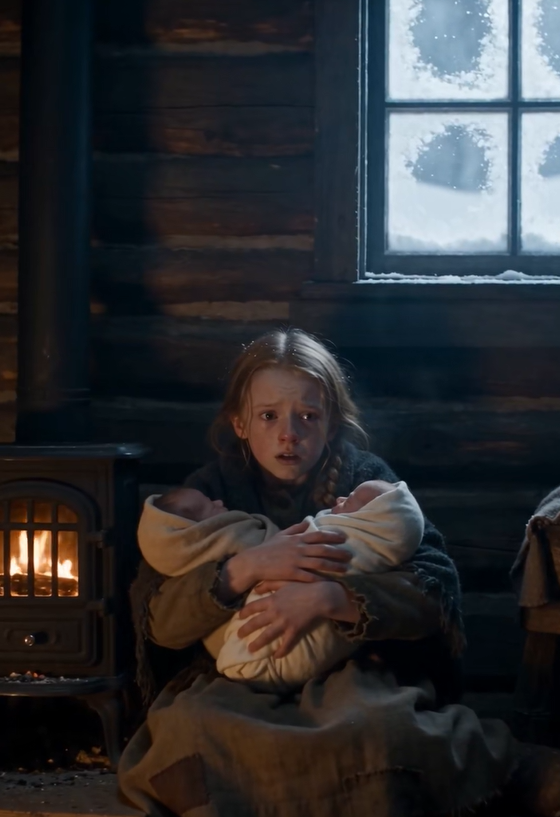
Inside the barn, she spread clean straw across the driest section of the floor.
Then she inspected every egg.
Some were hopeless.
Thirty-seven had shattered badly enough that she could see damaged membranes.
Rowan buried those beneath the old pear tree.
The rest she cleaned gently with warm water.
She had no incubator.
No proper brooding house.
No electricity.
What she had was an iron stove, an old thermometer, several blankets, baskets, straw, patience, and the memory of her mother doing something similar with chicken eggs when Rowan was a child.
Her mother had called it foolish then, too.
But not impossible.
Rowan melted beeswax in a small tin cup.
With a fine brush, she sealed the smallest fractures.
Larger cracks received thin linen patches fixed with wax.
The weakest shells she wrapped loosely in soft cloth.
Then she arranged the eggs in baskets around the stove where the heat remained steady.
One shell.
Then another.
Then another.
By midnight, Rowan’s fingers ached.
At two in the morning, she was still working.
At dawn, she finished the last egg.
Three hundred and thirteen remained.
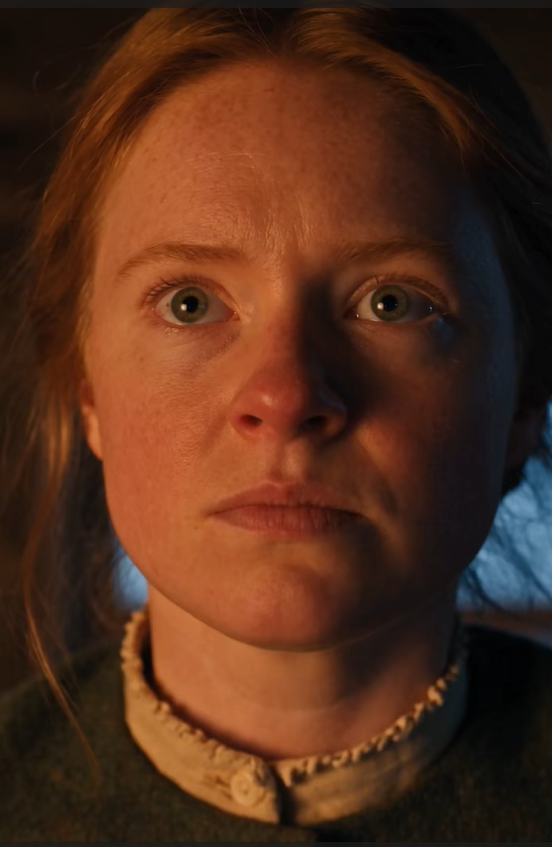
Rowan sat on an overturned bucket in the gray morning light and looked at them.
“I don’t know how many of you are still in there,” she whispered.
“But I suppose we’ll find out.”
For the next two weeks, her life changed.
Turn.
Check.
Warm.
Listen.
Repeat.
Every morning before breakfast, she rotated the eggs carefully.
Every afternoon, she checked the wax seals.
Every night, she added wood to the stove and woke every two hours to check the temperature.
Twice, rain leaked through the barn roof, and Rowan spent half the night moving baskets.
One cold evening, the stove pipe clogged, filling the barn with smoke.
She dragged every basket outside beneath the porch roof until the air cleared.
Three eggs broke during the move.
Rowan cried over them.
Not long.
Only long enough to know she still cared.
Then she cleaned the floor and kept going.
The town became increasingly entertained by her failure.
At Walsh’s General Store, customers began making bets.
“How long before Mercer buries the whole lot?”
“Friday.”
“Sunday.”
“I say she cooks ’em before they turn.”
Old Amos Bell announced loudly that Rowan was “watering stones and expecting flowers.”
Rowan heard him.
She bought lamp oil.
Said nothing.
Then, on the twenty-first morning, the impossible began.
She was alone in the barn when a tiny sound broke the silence.
Tap.