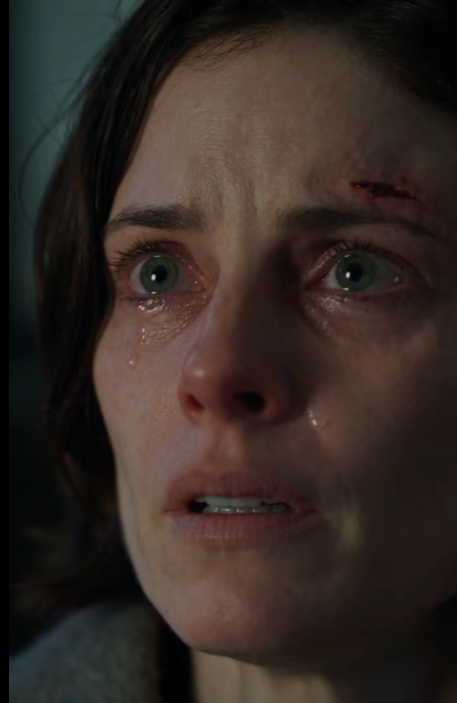
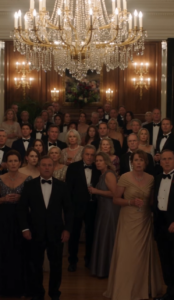
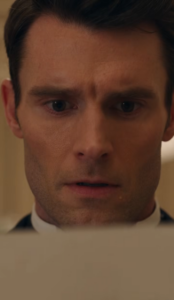
Her mother always crossed her sevens.
The date on the letter contained two.
Neither was crossed.
It was a small thing.
But it was enough to bring her to Halcyon House.
Enough to make her take a job cleaning rooms in the place her mother had last been seen.
She arrived with one suitcase and the dark amber violin Mara had given her for her thirteenth birthday.
“Music stays,” her mother had said.
For nine years, Elena had hated her for being right about music and wrong about herself.
The mansion stood above the Newport shoreline, enormous and pale against the sea.
Maxwell rarely lived there.
His father, Philip Anderson, had sent him abroad after Eleanor’s death. First for treatment. Then university. Then responsibility.
There had always been something more useful for him to do elsewhere.
When he returned, the east wing remained closed.
Structural damage, his father said.
Then mold.
Later, private storage.
By the time Philip died, eleven months before the wedding, Maxwell had stopped asking.
The house belonged to a childhood he could no longer enter.
Vivienne Caldwell managed the domestic arrangements.
She had once been Philip’s executive assistant. Later, his indispensable companion in business, charity, and grief.
Nobody used the word mistress in Maxwell’s presence.
Her daughter, Vanessa, had grown up attending Anderson parties in dresses chosen to impress people who did not remember her name.
Now everyone remembered.
She was marrying the heir.
And her mother still held the keys.
On Elena’s fourth night at the mansion, the housekeeper handed her a tray.
“One cup upstairs. End of the east corridor.”
“I thought that wing was empty.”
The housekeeper’s face hardened.
“You thought wrong.”
There was a silver teapot, a porcelain cup with a blue bird painted inside, and a small envelope of pale powder.
“Mrs. Caldwell prepares it,” the woman said. “You deliver it. You don’t ask questions.”
Elena carried the tray upstairs.
At the door marked with a faded music-note carving, she heard someone counting.
“One. Two. Three.”
A pause.
“One. Two. Three.”
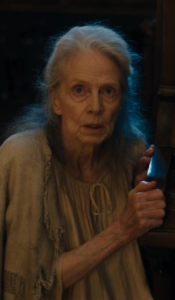
Inside sat a woman in a faded nightgown, rocking almost imperceptibly beside a piano.
A caregiver stood near the bed.
“Put it down.”
Elena obeyed.
As she turned to leave, the woman looked up.
Her eyes sharpened.
“Mara?”
Elena froze.
The caregiver stepped between them.
“She mistakes everyone for someone.”
But the woman was still staring.
“No,” she whispered. “Not Mara.”
Elena’s hand tightened around the tray.
The woman looked at the violin-shaped pendant at her throat.
“Her little bird.”
That was what Mara had called her.
Nobody in that house should have known.
Elena returned the next night.
And the next.
She learned that the woman was officially called Mrs. Ellis, a distant relative suffering from severe psychiatric illness.