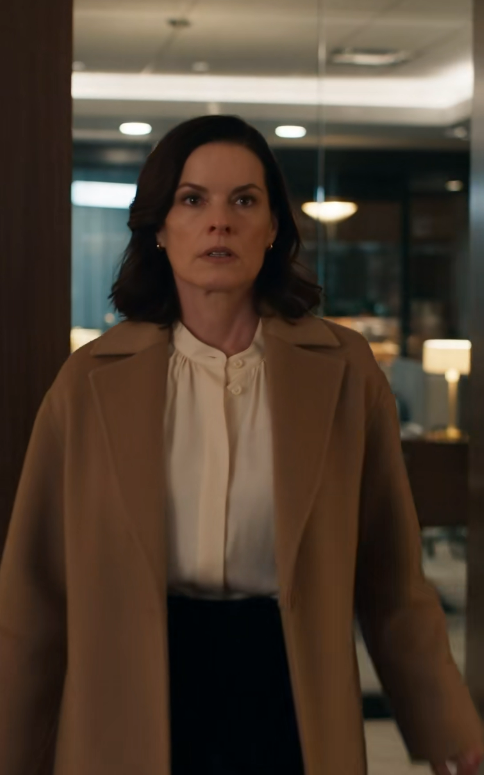
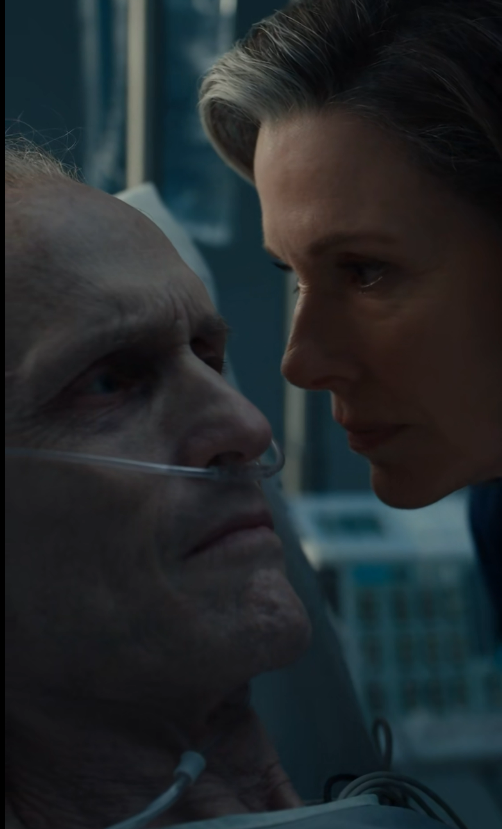
“No.”
Silas smiled.
“That’s the point.”
Elias’s laughter died.
Silas stepped closer.
“I didn’t come back to take your ranch.”
“You couldn’t.”
“I know.”
“I didn’t come back because Calder blood gave me a right to anything.”
Elias stared at him.
Silas’s voice softened.
“I came back because it didn’t.”
The full truth landed slowly.
All those years Elias had believed Silas dangerous because he was the eldest Calder.
Amos had feared his return.
Elias had feared his inheritance.
He had built murders, lies, and years of cruelty around stopping Samuel Calder from reclaiming the family land.
But Samuel Calder had never existed.
Not by blood.
And Silas had known.
He had returned anyway.
Not for an inheritance.
Not for revenge.
Not for the Calder name.
For Gideon.
For Clara.
For the truth.
Elias began laughing again.
But this time the laughter sounded broken.
“All this.”
His eyes moved around the room.
“All this because of a woman and some dirt.”
Clara studied him.
“No.”
She walked closer.
“All this because you thought both could belong to you.”
The trial lasted seven weeks.
Sheriff Dawes testified in exchange for avoiding the gallows.
His testimony connected Elias and Wade to Gideon’s attempted murder and to the deaths of two prospectors whose claims later became Calder land.
Wade received twenty-five years.
Micah received twelve for assault, intimidation, and his role in the land conspiracy.
Asa, whose greatest crime appeared to have been cowardice, received three years.
Elias received life.
Clara attended every day.
He never apologized.
She stopped expecting him to.
The Calder ranch was legally returned to the Vane estate.
Which meant Clara owned it.
All twelve hundred original acres.
Plus additional land Elias had bought legally during their marriage.
When the court clerk handed Clara the documents, she stared at them.
For years, she had been told she had nothing.
Now half the valley carried her name.
But ownership felt different than she expected.
Heavy.
Almost dangerous.
She understood how easily possession could become identity.
Three weeks later she found Silas saddling his horse behind the hotel.
“You’re leaving.”
He tightened the cinch.
“Seems that way.”
“You weren’t going to say goodbye?”
“Never been good at them.”
“I’ve noticed.”
He smiled.
She held out a paper.
Silas frowned.
“What is it?”
“Read.”
He did.
His expression changed.
“Clara.”
“Don’t argue.”
“You’re giving me eighty acres?”
“No.”
“It says—”
“I’m offering you eighty acres.”
“Why?”
“There is a difference between owning someone and giving them somewhere to stand.”
Silas looked at her.
She continued.
“My father says you’re incapable of remaining anywhere longer than six months.”
“Your father exaggerates.”
“He says your record is four.”
“Five.”
“Then consider it a challenge.”
Silas looked toward the hills.
“I’m not a rancher.”
“You know horses.”
“They dislike me.”
“My horses dislike everyone.”
He almost smiled.
Clara folded her arms.
“There’s an abandoned cabin near Crow Creek.”
His expression changed at the name.
“I know.”
“My mother owned that parcel.”
Silas said nothing.
“She bought it from Rebecca Hale.”
Silas turned sharply.
“What?”
Clara smiled.
“There was one final letter in Box 17.”
She handed it to him.
Silas recognized the handwriting immediately.
His mother’s.
His hands began to shake.
Clara stepped away.
“I thought you should read it alone.”
She walked toward the hotel.
“Clara.”
She looked back.
Silas stood beside the horse, letter unopened.
For once, the man who always seemed to know what to say had no words.
“Thank you.”
Clara nodded.
Then smiled.
“Don’t disappear.”
He looked at the envelope.
Then at the eighty-acre deed.
“No.”
His voice was rough.