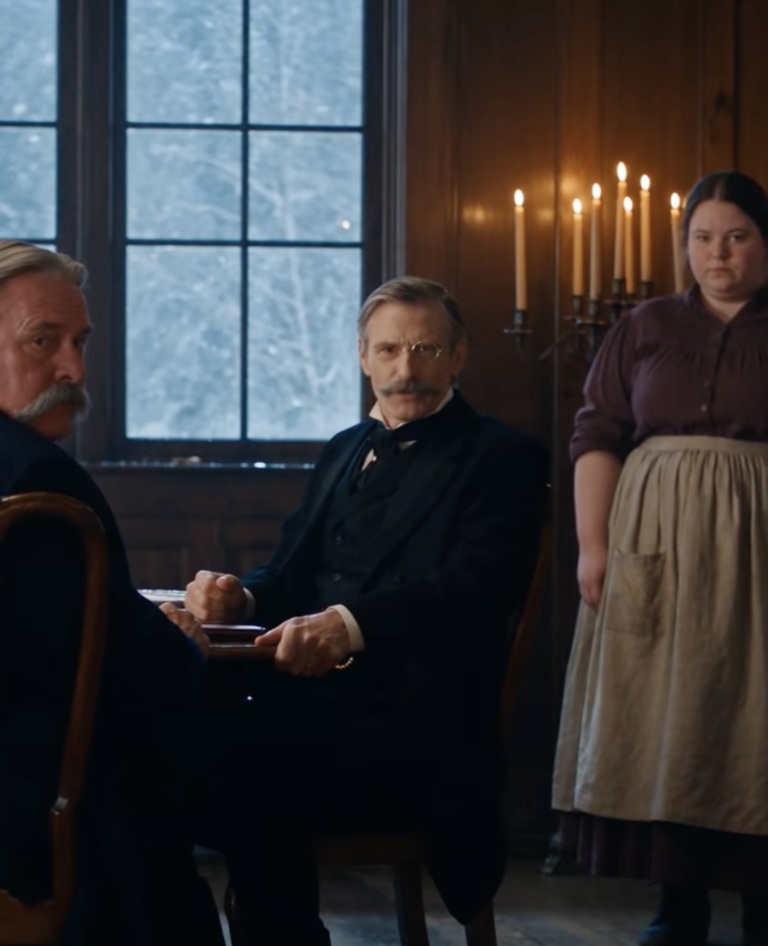

Three Hundred Warriors Came for the Man Who Gave One Woman Water. By Nightfall, Corvin Torne Discovered the War Around His Ranch Had Begun Before He Was Born.
Before Corvin Torne even stepped off the porch, he knew the morning was wrong.
His horses had gone completely still.
No grazing.
No restless hoof scraping.
Not even a tail flick against the flies.
Every animal in the corral stood frozen, staring toward the eastern ridge.
Corvin followed their gaze.
And his hand tightened around the porch post.
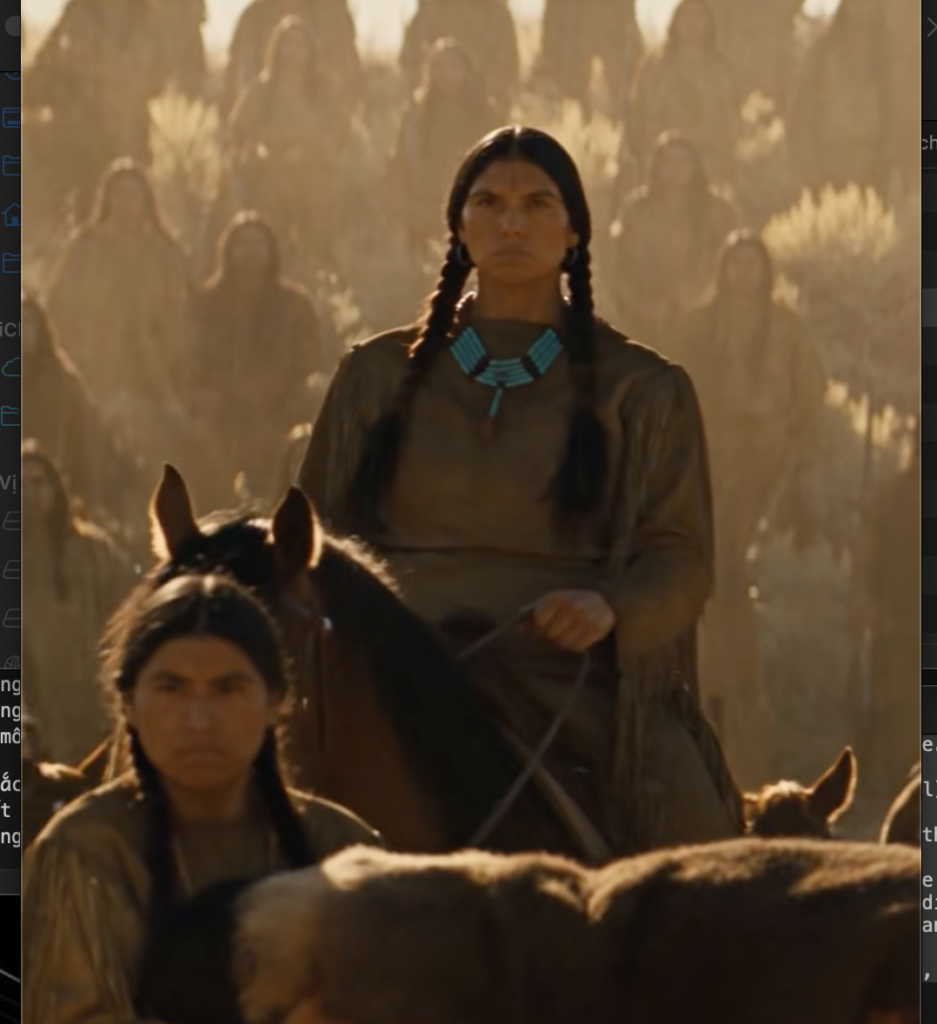
Riders covered the horizon.
At first, he counted a few dozen.
Then more appeared.
And more.
Some carried bows.
Others rested rifles across their saddles.
Additional riders spread across the northern hills and western slope until the ranch seemed surrounded on every side.
Corvin stopped counting.
There had to be close to three hundred Apache warriors watching his property.
And somehow, all of them were there because of
one ladle of water.
The afternoon before had been brutally hot.
Corvin had been hauling water from the old stone well when he spotted what looked like a heap of deerskin beside the fence.
Then it moved.
A woman was slumped against the rails.
An Apache woman.
And she was enormous.
Not simply tall.
Powerful.
Even half-collapsed, she looked stronger than most men Corvin had known.
Her shoulders were broad, her hands large, and her long limbs were covered in dust from the trail.
Dark hair hung around her face.
Dried blood marked one side of her forehead.
Turquoise beads, dulled by dirt, rested against her throat.
Her cracked lips told Corvin she was close to collapse.
He stopped several yards away.
Her eyes immediately moved to his hands.
Then to the knife at his belt.
Then to the nearest horse.
Even exhausted, she was calculating.
Corvin understood.
So he did not move closer.
Instead, he returned to the well, filled a metal ladle, and held it toward her.
“Water.”
The woman stared at him for several seconds.
Then she reached out.
She drank once.
Then twice.
Then a third time.
Slowly.
Carefully.
Not a single drop spilled.
When she finished, she handed the ladle back and pushed herself upright.
Corvin’s eyebrows lifted.
Standing straight, she was taller than nearly every man he had ever met.
For several moments, she studied him.
Not with gratitude.
Not with fear.
With something harder to understand.
It was almost as if she were
memorizing his face.
Then she turned toward the northern hills.
“You shouldn’t be walking out there alone,” Corvin warned.
She ignored him.
Within minutes, the heat swallowed her silhouette.
Corvin watched the empty horizon.
“Well,” he muttered, “that’s the end of that.”
He could not have been more wrong.
That evening, life returned to normal.
He repaired fence rails.
Fed the horses.
Checked the barn.
Then, before bed, he opened the ranch ledger and wrote:
Apache woman.
Hurt.
Gave her water.
Walked north.
Nothing more.
By sunrise, hundreds of armed men had surrounded his home.
Corvin stepped slowly into the yard.
No one fired.
No one shouted.
The silence was worse.
Then one rider broke away from the eastern ridge.