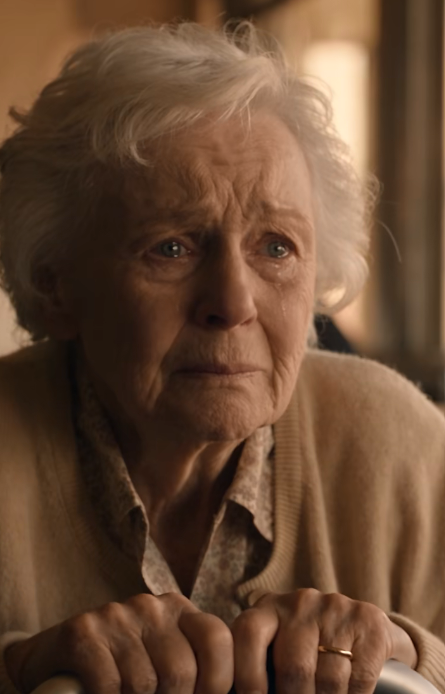
“Your mother’s grandfather divided portions of the land among his children. Some documents disappeared during fighting. Others were recorded under altered names. Most descendants never knew what remained.”
Eli looked toward the hills outside.
“How much land?”
Nobody answered.
“How much?”
Serina spoke.
“More than this ranch.”
Eli gave a humorless laugh.
“Obviously.”
She opened Rusk’s map.
Her finger traced a boundary.
Across Eli’s 320 acres.
Across Gideon’s property.
Across five neighboring spreads.
Across the southern valley Voss had spent three years buying.
Then west toward the mesas.
Eli stared.
“You’re saying my mother’s family owned all that?”
“Not alone,” Chaska said. “There were several branches.”
“And you?”
Chaska nodded.
“Our families connect to another branch.”
Eli looked from Chaska to Waya to Serina.
The truth formed slowly.
“You weren’t searching for me only because of the canyon.”
“No.”
“Why did you really come?”
Chaska’s voice softened.
“Because if this record is accepted, you are one of the surviving heirs.”
Eli actually laughed then.
Not because anything was funny.
Because reality had become ridiculous.
He had spent twenty years believing himself a man without family.
Twenty years working for other people.
Ten years sweating over a few hundred acres because they represented the only piece of earth he had ever possessed.
And now three women he had once rescued from a canyon were standing in his kitchen telling him that his forgotten mother had left him connected to half the valley.
Voss’s expression turned hard.
“This claim will never survive court.”
Chaska looked at him.
“You were willing to pay Eli twelve times the value of his ranch to make certain it never reached one.”
That silenced him.
Eli finally understood.
The clause.
Voss did not merely want the spring.
He wanted Eli’s signature relinquishing any ancestral claim.
Because if Eli signed before learning who his mother had been, Voss could argue that one of the grant’s heirs had voluntarily extinguished his rights.
And perhaps use that surrender against the others.
Eli stared at the deed.
He had nearly signed it.
Another inch.
One stroke of ink.
That was all.
The ranch would have been gone.
The water would have been Voss’s.
And something his mother had carried silently her entire life would have vanished beneath legal language Eli had not bothered reading.
His hands curled into fists.
Voss must have seen something in his face.
“Be careful, Mercer.”
Eli raised his eyes.
“With what?”
“Believing desperate people simply because they tell you that you belong to them.”
The words landed harder than Voss intended.
Because that was precisely the weakness buried deepest inside Eli Mercer.
Belonging.
He wanted it so badly that he had trained himself not to want it at all.
Voss knew.
Or guessed.
Either way, the blade found bone.
Chaska’s expression did not change.
“We are not asking him to believe us.”
She slid the documents toward Eli.
“We are asking him to read.”
Voss left before noon.
But he did not leave quietly.
At the gate, he turned.
“You have until tomorrow evening.”
“For what?” Eli called.
“To decide whether you want money for your land or lawyers taking it without payment.”
He looked toward the three women.
“And I would think carefully about whose battles you choose.”