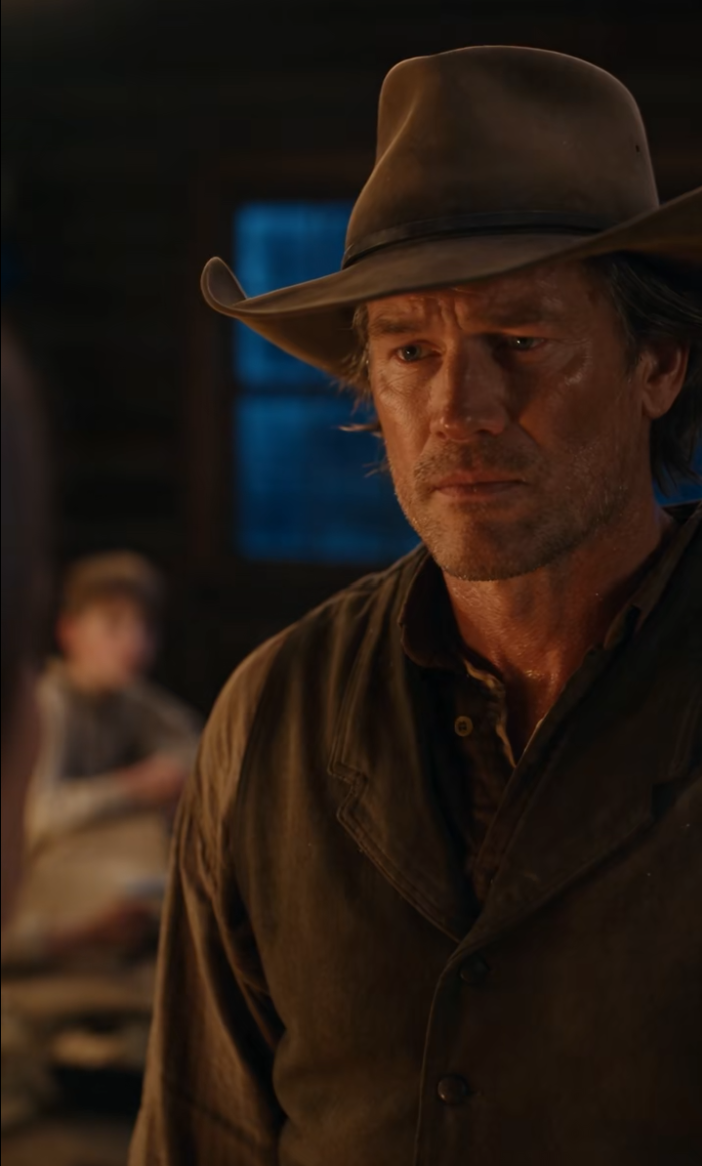
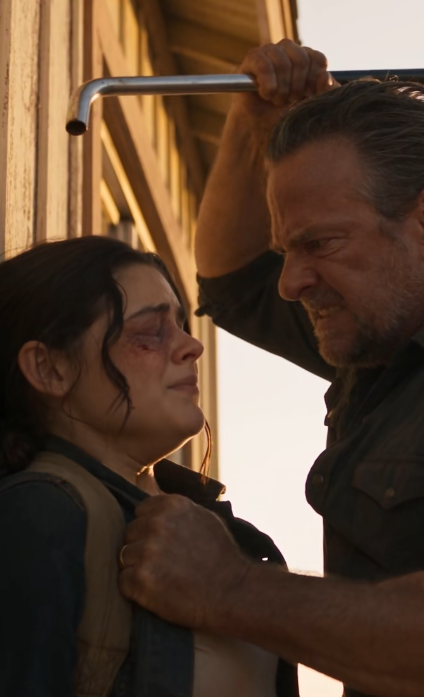
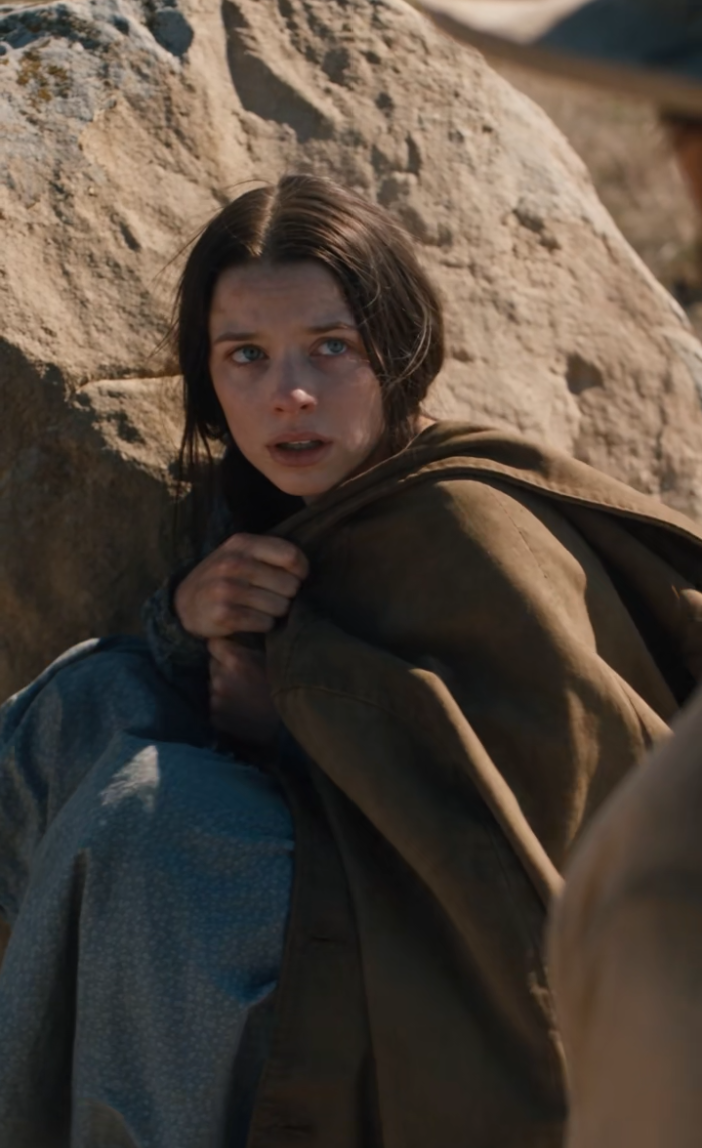
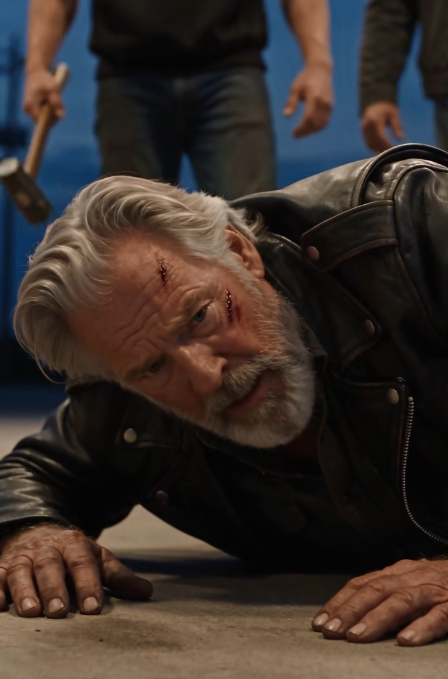
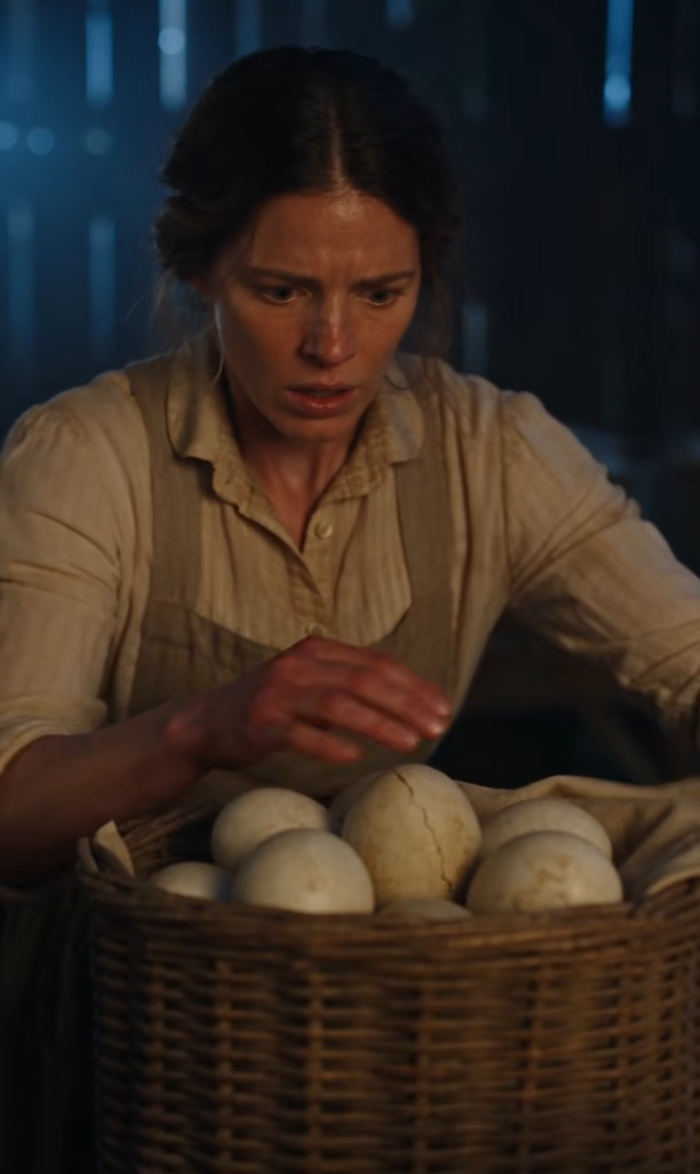
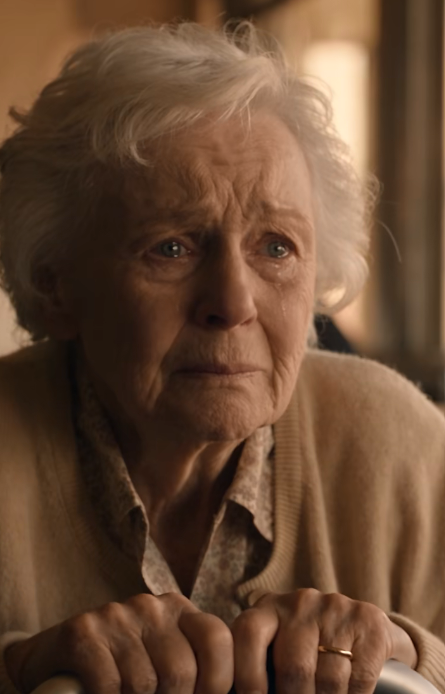
Voss fought viciously.
He struck Eli across the jaw with a stone.
Eli answered with his forehead.
Something cracked.
Possibly Voss’s nose.
Possibly Eli’s skull.
He did not care.
Voss rolled toward the dropped revolver.
Eli grabbed his ankle.
Voss kicked free.
His fingers touched the weapon.
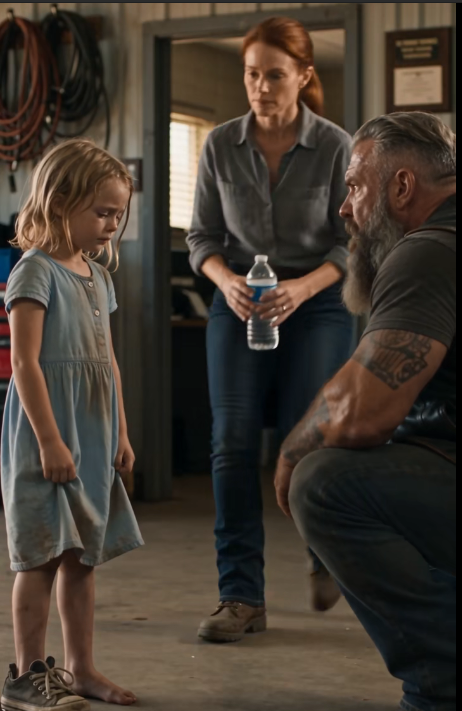
Then Nell appeared.
Nine years old.
Barefoot.
Furious.
She picked up a fist-sized red stone.
“Leave my family alone!”
She threw it.
The stone struck Voss directly in the temple.
He dropped.
Silence.
Gideon stared at his granddaughter.
“Nell.”
“What?”
“You could’ve killed him.”
She considered this.
“I was aiming for his hand.”
Gideon looked toward Eli.
“Child needs practice.”
For the first time all day, Eli laughed.
He could not stop.
Chaska began laughing too.
Then Serina.
Even Waya smiled.
Voss groaned in the dust.
Nell kicked dirt toward him.
“That’s for my shoe.”
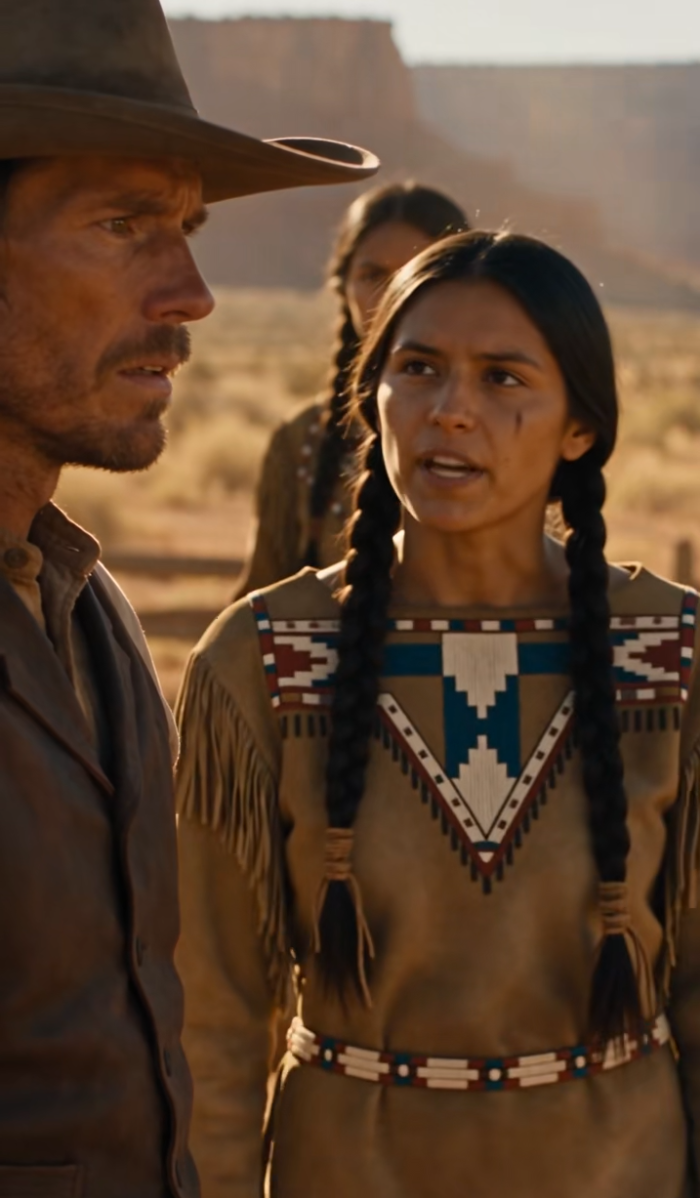
Harlan Voss did not escape justice.
The written order from his foreman, the attempted destruction of the documents, the kidnapping of Nell, Rusk’s private notes, and testimony from families throughout the valley created more evidence than even Voss’s expensive lawyers could bury.
But the land question took longer.
Months.
Hearings.
Translations.
Old parish records.
Spanish documents.
Territorial maps.
Testimony from people who remembered people long dead.
Winter arrived before everything was settled.
And during those months, the three women stayed.
At first they camped near Eli’s ranch.
Then Serina began sleeping inside because cold weather made her hands ache and she refused to let pride ruin her beadwork.
Waya preferred the barn loft.
Chaska accepted Gideon’s spare room because Nell asked her seventeen times.
Slowly, without anyone deciding it, Eli’s quiet world became crowded.
Coffee disappeared faster.
Someone was always using his table.
Serina complained about his lighting.
Waya complained about how loudly he chopped wood.
Chaska reorganized his kitchen because, according to her, “placing flour on the highest shelf is foolish when you use it every day.”
Nell stopped knocking.
Gideon had never knocked anyway.
One December morning Eli woke before dawn and stood inside the main room listening.
Serina was sleeping on the bench.
Waya had apparently come inside sometime during the night and was asleep near the stove.
Chaska had fallen asleep at the table over a stack of translated legal records.
Nell’s mittens hung near the fire.
There were six coffee cups waiting to be washed.
His house had never looked worse.
Eli had never loved anything more.
That frightened him.
Naturally.
So he went outside.
Chaska found him beside the corral.
“You disappear when you feel too much.”
Eli looked at her.
“Is that an Apache saying?”
“No.”
She pulled her shawl tighter.
“That is an Eli Mercer saying.”
He laughed softly.
Then became serious.
“Why did you keep looking?”
She knew what he meant.
Not the legal claim.
Not Voss.
The deeper reason.
Five years of searching.
Dozens of towns.
Hundreds of questions.
Chaska leaned against the fence.
“When you rode away from us in that canyon, Waya thought you were foolish.”
“Still does.”
“Yes.”
“I was angry.”
“At me?”
“At the world.”
She looked toward the mountains.
“We had been taught to remember danger. To remember betrayal. To remember people who took.”
Her eyes returned to him.
“Then a stranger rode directly into danger for us and asked nothing.”