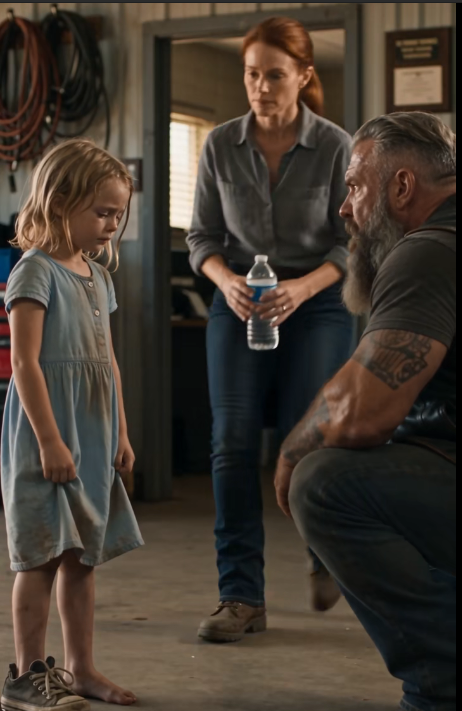
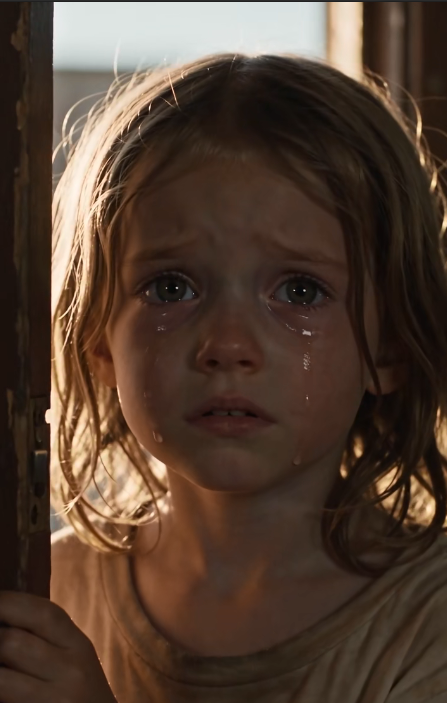
He looked at Mercy with an expression she could not read.
Finally, he said, “If you’re willing to stay after seeing what this place really is, I want to marry you Saturday.”
Seven spoons stopped.
Mercy stared at him.
“Saturday?”
“You came because of the advertisement.”
“I came because it said marriage was possible.”
Thomas’s jaw tightened.
“I don’t have much time for courting.”
“Well, that makes two of us.”
Caleb snorted unexpectedly.
Thomas shot him a look.
Mercy folded her arms.
“I crossed nearly nine hundred miles, Mr. Bell. I can survive another few weeks without becoming anybody’s wife.”
“This ranch needs—”
“A housekeeper?”
Thomas stiffened.
“Those boys need—”
“A mother?”
Silence.
Mercy glanced at the seven children.
Each face closed immediately.
There it was.
The wound beneath everything.
She looked back at Thomas.
“They already had one.”
Something flickered across his face.
Pain.
Guilt.
Perhaps both.
Mercy continued.
“And if I stay, I will not pretend she never existed.”
Eli stared at her.
Mercy thought about the faded rag doll beneath his pillow—the one she had deliberately left untouched while changing his blankets.
“I’ll cook,” she said. “I’ll mend. I’ll work. I’ll learn this family before deciding whether I belong in it.”
Thomas studied her.
“How long?”
“One month.”
“A month?”
“If you cannot tolerate me for thirty days, eternity would be inconvenient.”
This time Caleb laughed outright.
It was brief.
Harsh from disuse.
But it was laughter.
Thomas looked at his son, then back at Mercy.
And something in him surrendered.
“One month.”
Mercy extended her hand.
Thomas stared at it before taking it.
His palm was callused and warm.
That was how Mercy Calloway began her courtship—not with flowers, kisses, or promises, but with a thirty-day agreement made over an empty stew pot while seven suspicious boys watched.
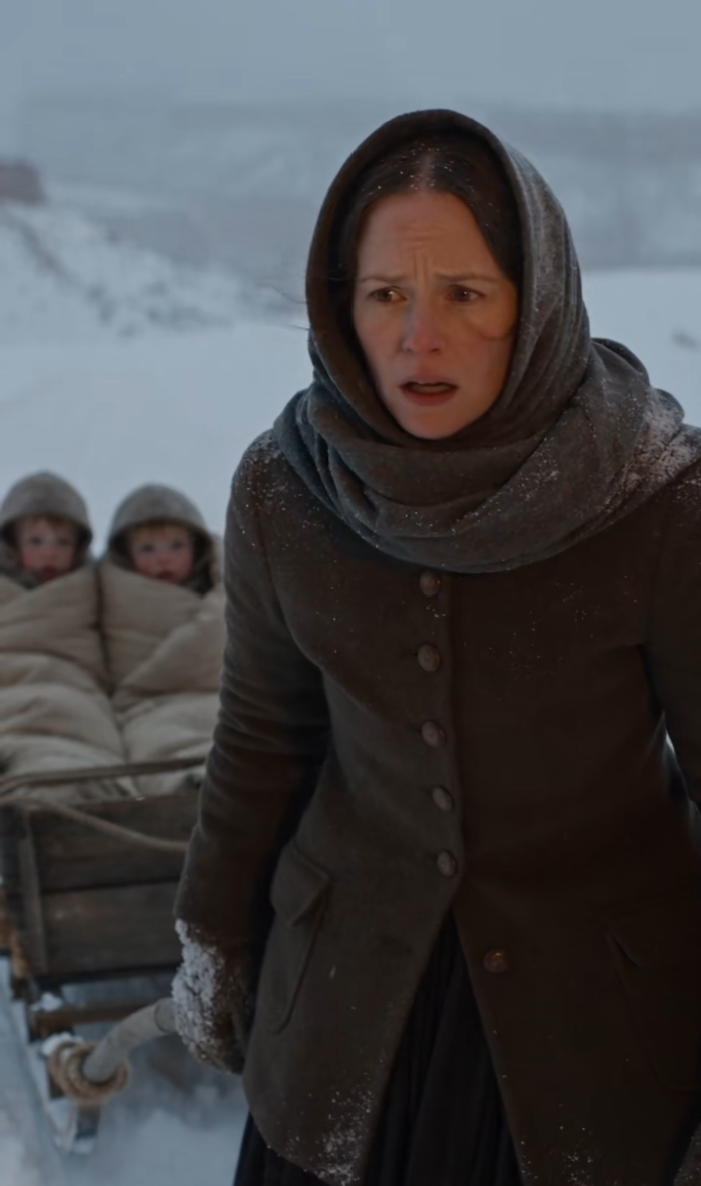
By the fourth morning, Mercy understood why the previous women had left.
The Bell household was not merely disorganized.
It was warfare disguised as domestic life.
Someone put salt in her coffee.
A dead mouse appeared in her boot.
The twins tied the kitchen door shut from outside while she was making biscuits.
Will “accidentally” released three chickens into the parlor.
Nathan informed her with solemn seriousness that the upstairs hallway was haunted.
Ben placed a frog beneath her pillow.
Mercy responded by frying the frog’s breakfast—three eggs and bacon scraps—and setting it outside.
The boys were disappointed.
On the fifth evening, Caleb finally confronted her.
“You know we’re trying to make you leave.”
Mercy continued peeling potatoes.
“Yes.”
“And?”
“And you’re not very good at it.”
His face darkened.
“You think this is funny?”
“No.”
Mercy set down the knife.
“I think you’re frightened.”
Caleb stood so abruptly his chair scraped the floor.
“I’m not frightened of anything.”
“You’re sixteen. Of course you are.”
His face flushed.
“You don’t know us.”
“No.”
“You don’t know our mother.”
“No.”
“You don’t know what happened.”
Mercy’s voice softened.
“No.”
Caleb stared at her, almost challenging her to ask.
Mercy didn’t.
That seemed to anger him more.
“Her name was Rebecca.”
Mercy nodded once.
Caleb swallowed.
“She didn’t run away.”
“I never thought she did.”
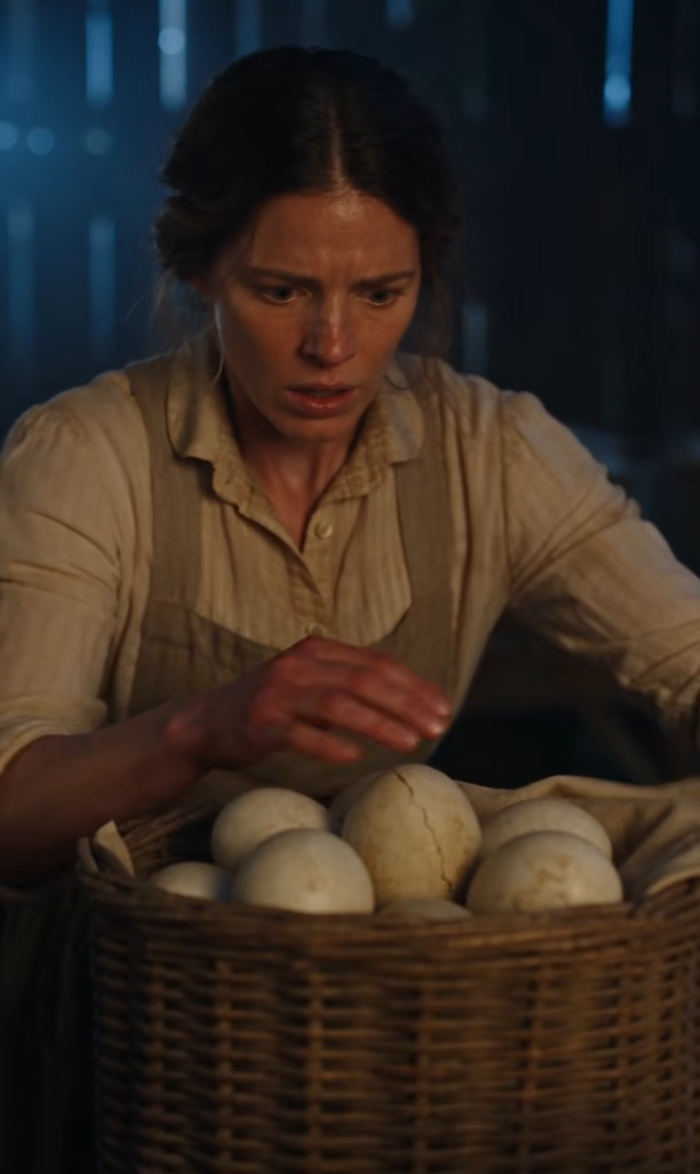
“She died in the barn.”
Behind them, the stove crackled.
“There was a fire,” Caleb continued. “Pa was gone checking cattle. I was at the north pasture. Nathan and Ben were in town.”