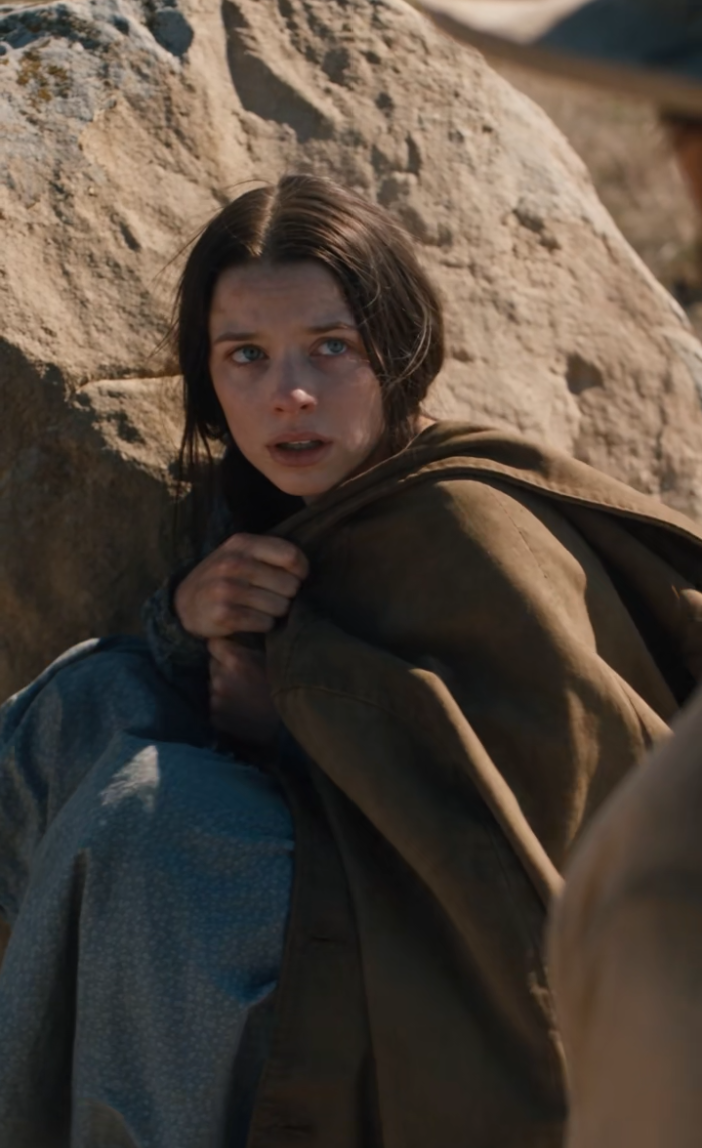
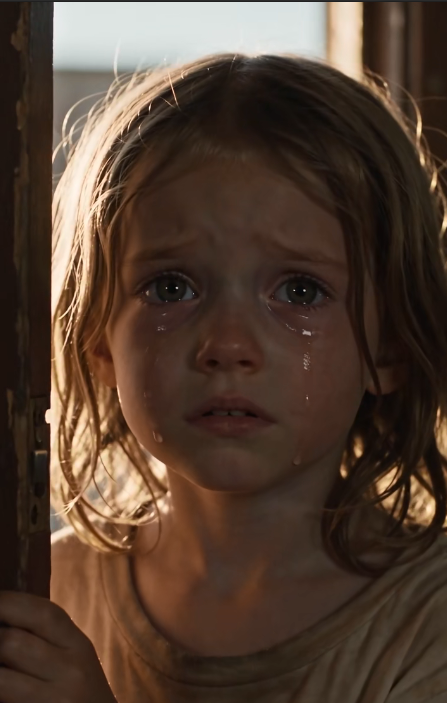
When Mercy recovered, her father told her Ruth had died.
There had been no funeral Mercy remembered.
Only grief.
So much grief that individual losses blurred together.
Mercy swallowed.
“What did your mother call this doll?”
Eli shrugged.
“Merry.”
“After someone?”
Another shrug.
Mercy told herself it meant nothing.
She repaired the arm.
But that night she lay awake listening to the Wyoming wind scrape branches against the roof.
And for the first time in twenty-one years, Mercy dreamed about a little girl with yellow ribbons in her hair calling after her.
Merry.
A week later, trouble rode onto the Bell ranch wearing polished boots.
Gideon Voss dismounted from a black gelding shortly before noon.
He was approximately fifty, silver-haired, well dressed, and far too clean for a man who claimed to make his living from cattle.
Thomas came from the corral and stopped when he saw him.
“What do you want?”
Voss smiled.
“Pleasant greeting.”
“You’ve had all the pleasant greetings I own.”
Mercy, carrying laundry across the yard, slowed.
Voss noticed.
“And who might this be?”
“None of your business.”
Voss looked amused.
“Another candidate?”
Mercy disliked him immediately.
“Mercy Calloway.”
His smile vanished.
Only for a second.
But she saw it.
“Calloway?”
“Yes.”
His gaze sharpened.
“From where?”
“Missouri, mostly.”
Something passed behind his eyes.
Thomas stepped between them.
“You came for something.”
Voss removed papers from his coat.
“The note comes due December fifteenth.”
Thomas’s expression hardened.
“I know when it comes due.”
“Do you?”
Voss glanced toward the house.
“The ranch has been running a considerable deficit.”
“We drove eighty-three head to market in August.”
“And your payment covered accumulated interest.”
Thomas stared.
“What accumulated interest?”
Voss’s eyebrows lifted.
“You signed the papers.”
“I signed a renewal last spring.”
“A renewal with revised terms.”
Thomas snatched the documents.
Mercy watched his face change while reading.
“I never agreed to this.”
“Your signature says otherwise.”
“That isn’t my signature.”
Voss smiled without warmth.
“A court may disagree.”
Mercy put down the laundry basket.
“What happens if he cannot pay?”
Voss looked at her.
“I take possession.”
“Of the house?”
“The ranch.”
“How much?”
Thomas turned.
“Mercy—”
“How much?”
Voss named a figure.
Mercy inhaled.
It was more money than the Bell ranch could produce before December even if Thomas sold half his herd.
Voss tipped his hat.
“Pleasure meeting you, Miss Calloway.”
As he mounted, his gaze lingered on her.
Not admiration.
Recognition.
Or fear.
Mercy watched him ride away.
Then she turned to Thomas.
“You know him well?”
“Too well.”
“Did Rebecca?”
Thomas went very still.
“What makes you ask that?”
“The way he looked at my name.”
Thomas’s face tightened.
“Voss handled some business for Rebecca before we married.”
“What business?”
“She inherited money from the family who raised her.”
Mercy’s heartbeat quickened.
“The family who raised her?”
Thomas looked at her.
“Rebecca was adopted.”
The world seemed to narrow.
“Did she know her birth family?”
“No.”
Mercy’s mouth went dry.
“What was her birthday?”
Thomas frowned.
“April fourteenth.”
Mercy dropped the laundry basket.
A sheet spilled into the dirt.
Thomas stepped forward.
“What is it?”
Mercy could barely hear him.
Ruth’s birthday had been April fourteenth.
“No,” Mercy whispered.
“What?”
“Nothing.”
But she knew it was not nothing.
And for the first time since arriving at Bell ranch, Mercy became afraid not that she might have come to the wrong place—but that she had somehow come to exactly the place she was meant to find.