She Called Me Nobody at My Son’s Wedding. Ten Minutes Later, the Ballroom Learned Whose Name Was Really on Everything.
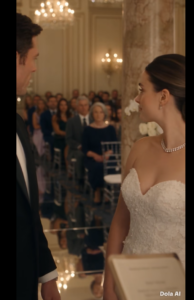
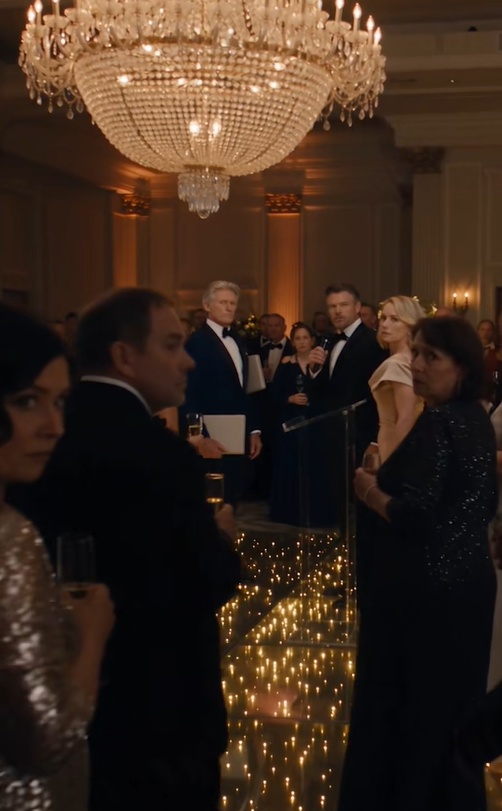
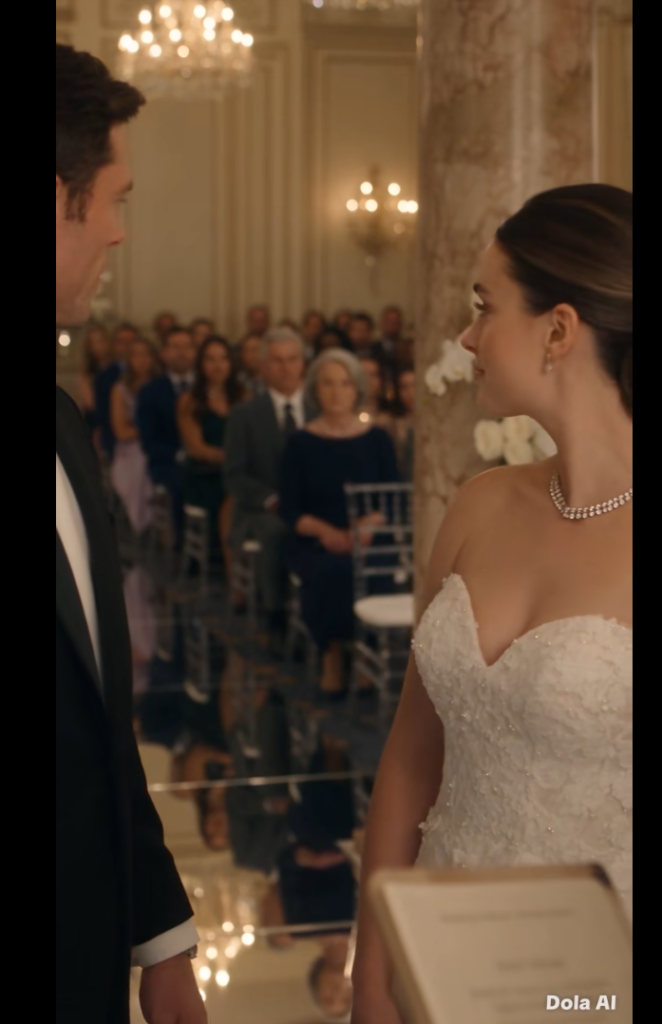
The bride slammed me into a marble column in front of two hundred guests and whispered six words she would regret before the night was over.
“You’re nobody here. David doesn’t need you.”
My shoulder struck the stone hard enough to make my vision flash white.
For a moment, the Bellamy Grand disappeared.
The chandeliers vanished. The white roses disappeared. The string quartet became nothing but a distant ringing in my ears.
All I could see was my son.
David stood three steps away in a black tuxedo, his cuff links catching the warm light.
He had seen her shove me.
He had seen my evening bag fall to the floor.
He had seen a seventy-year-old woman—his mother—hit marble hard enough to stagger.
And he did nothing.
That was the moment something inside me stopped fighting.
Not my love for him.
A mother does not switch that off like a lamp.
What disappeared was something more dangerous.
My willingness to protect him from the consequences of his own choices.
Clara leaned closer.
Her perfume was expensive and floral, a scent she had once described as “quiet luxury.”
There was nothing quiet about the hatred in her face.
“After tonight,” she murmured, “things will finally be the way they should be.”
I looked past her at David.
“Is that what you believe too?”
He swallowed.
“Mom…”
Behind him, a bridesmaid shifted uncomfortably. Two relatives pretended to study the flowers. A waiter froze beside a tray of champagne.
“Answer me.”
David lowered his eyes.
“Maybe you should just go home.”
Three seconds.
That was all it took for thirty-six years of memories to move through me.
David asleep on my chest with a fever at two years old.
David learning to ride a bicycle while I ran behind him until my knees gave out.
David at thirteen, crying in our kitchen after his father died.
David at twenty-one, holding his college diploma over his head while searching the crowd for me.
David at thirty-six, standing beside the woman who had just shoved me into stone.
Maybe you should just go home.
I bent slowly and picked up my evening bag.
Clara smiled.
She thought she had won.
“All right,” I said.
I turned toward the elevators.
What Clara did not know was that inside my bag was a phone containing three things.
Security footage.
Bank records.
And a recording made forty-eight hours earlier.
What she knew even less about was the silver-haired man waiting upstairs with a leather portfolio across his knees.
And what her own signature appeared on inside it.
Until Clara came into David’s life, I had never considered myself an interfering mother.
At least, I tried not to be one.
After my husband, Richard, died twenty-three years earlier, David became the center of my private world, but I understood the danger of making a child responsible for a parent’s loneliness.
So when he moved to Seattle for graduate school, I smiled.
When he took a job in Boston, I encouraged him.
When he eventually returned to Chicago and built an architectural consulting firm, I invested nothing in it despite being able to.