“That’s yours,” I told him. “Build something that doesn’t have your father’s name or mine attached to it.”
David hugged me.
“I want to make you proud.”
“You already did.”
For years, we were close without being tangled together.
Sunday dinners when schedules allowed.
Christmas mornings.
Phone calls about books, work, ridiculous television shows, and the Cubs.
Then he met Clara Vale.
She was thirty-two, polished, clever, and beautiful in the precise way magazine covers are beautiful.
Nothing appeared accidental.
Not the pale cashmere coats.
Not the diamond studs.
Not the perfectly controlled laugh that made everyone within twenty feet feel as though they had said something charming.
The first time David brought her to my house, Clara arrived carrying French wine and white lilies.
“Helen,” she said, taking both my hands. “David talks about you constantly.”
“Only good things, I hope.”
“Almost embarrassingly good.”
She laughed.
So did I.
For three months, I liked her.
That is the part people always have trouble believing afterward.
They imagine villains announce themselves.
They don’t.
The dangerous ones learn the shape of your trust before they begin cutting into it.
Clara asked about my garden.
She remembered my birthday.
She sent me photographs of restaurants David liked.
When I caught pneumonia the following winter, she sent soup from a little Italian place near my house.
Then, slowly, the temperature changed.
Small things.
David canceled Sunday dinner.
“Clara thinks we need more couple time.”
Then Christmas Eve became Christmas brunch because Clara’s family had traditions.
Then brunch became a one-hour visit.
When I called David, he increasingly sounded distracted.
“I’ll call you back, Mom.”
Sometimes he did.
Often he didn’t.
Clara’s comments grew sharper, always delivered with a smile.
At dinner one evening she looked around my Gold Coast apartment and said, “I don’t think I could live surrounded by this much old furniture.”
“It belonged to Richard’s family.”
“Exactly.”
David laughed as if it were harmless.
Another time, while discussing their engagement party, Clara said, “I just want things to feel young.”
I understood.
I was seventy.
The problem was that Clara did not merely want youth.
She wanted history erased if that history reminded David he had belonged to anyone before her.
When they announced their engagement, I gave them a check substantial enough to cover the wedding.
Clara stared at it.
“This is too much.”
“Then don’t spend it.”
She smiled.
“We probably will.”
They did.
And then some.
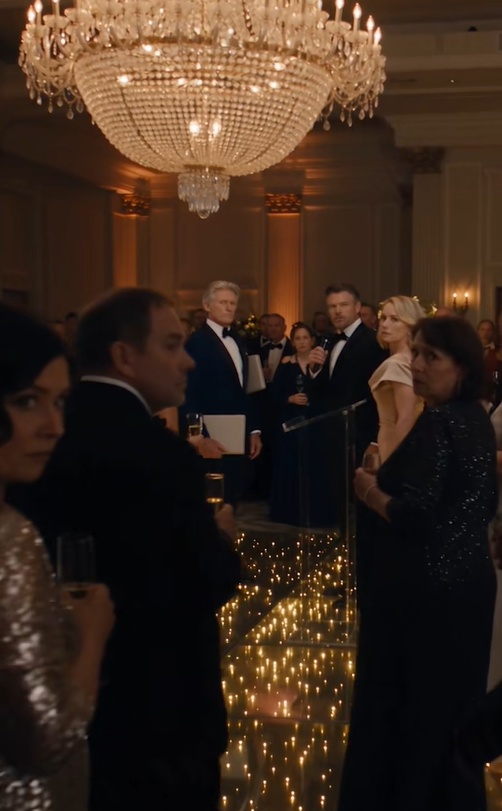
The Bellamy Grand was Clara’s choice.
The irony almost made me laugh when David first told me.
“Bellamy?” I asked.
Clara nodded eagerly.
“It’s the most beautiful ballroom in Chicago.”
“It certainly is.”
“You’ve been?”
“A few times.”
That was all I said.
There was no reason to explain.
My late husband had been one of four partners in an investment group that rescued the Bellamy Grand from bankruptcy in the 1980s. Over the years, partners died, sold shares, or transferred interests.
Richard’s holdings eventually went into a private trust.
I became controlling trustee.
The public knew none of this.
My name appeared nowhere on the hotel website.
I did not sit in the lobby expecting people to recognize me.