She fell silent.
Rosa looked at her hands.
“I signed papers. Some I understood. Some I was told meant something else. When I recovered enough to leave the hospital, Evelyn said there had been an infection.”
Her voice thinned.
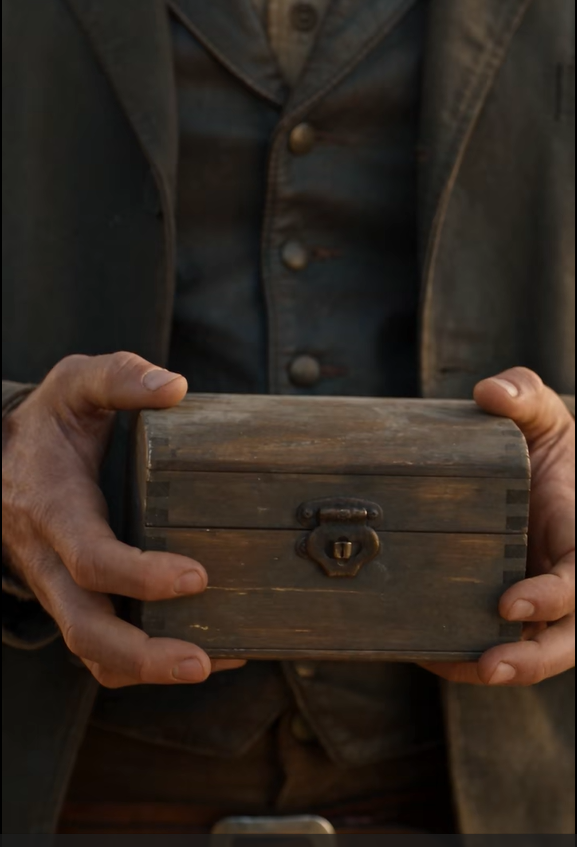
“She brought me a little box.”
I could not move.
“What was in it?”
“A blanket. A photograph. She said the burial had already happened.”
The wind stirred the roses.
I heard a bird call from somewhere in the vines, impossibly ordinary.
“How did you find me?”
“A magazine. Your family at a hospital benefit. You were fifteen. The article mentioned your birthday.”
“That was enough?”
“No. But your face…”
She looked at mine.
“Your father had a little crease here when he smiled.”
She touched the air beside her own cheek.
“I hired somebody. It took everything I had saved.”
My eyes burned.
“And then?”
“I came to the house.”
I remembered a Saturday afternoon. My mother sending me upstairs. A woman’s voice below, saying the same words over and over.
I had thought someone was asking for money.
Perhaps my mother had told me that.
Memory was suddenly a house with doors opening on unfamiliar rooms.
My father’s letter explained the rest.
When Rosa arrived, Evelyn threatened to accuse her of harassment. She said the adoption was final. She said I was happy. She said the truth would destroy me.
Then my father spoke to Rosa alone.
He offered money.
She refused it.
He offered to arrange contact.
She accepted.
A seamstress.
A convenient explanation.
An adult who could enter my life without disturbing its architecture.
I called it a compromise, he wrote. It was an arrangement that required the person who had suffered most to continue suffering so the rest of us could remain comfortable.
I sat back on my heels.
“Dad knew all those years?”
Rosa nodded.
“I thought, at first, he would help me tell you.”
“Why didn’t you tell me yourself?”
The question came out sharper than I intended.
She accepted it without flinching.
“Because I had already lost you once.”
She wiped her cheek with the heel of her hand.
“Evelyn said you would believe her. That she would tell you I had sold you and come back for more money. She said she would take you out of the country.”
My mother looked away.
“At first I wanted proof,” Rosa continued. “Something no one could explain away. Then you came into my shop.”
Her breath caught.
“You were wearing your school uniform. You asked if I could fix the sleeves because you hated how your wrists showed.”
I remembered.
God help me, I remembered.
“You talked to me about your history teacher. You ate the orange I gave you. I had spent fifteen years imagining your voice.”
She looked down.
“After that, I kept making myself small enough to stay.”
Lila was crying silently.
My mother watched her with an expression almost like anger.
“Don’t,” she said. “You have no idea what it was like.”
Lila lifted her face.
“What what was like?”
“Wanting a child. Being told no, again and again. Watching other women—”