Red brick.
White steeple.
Small graveyard.
We met the pastor, who led us into an archive room beneath the sanctuary.
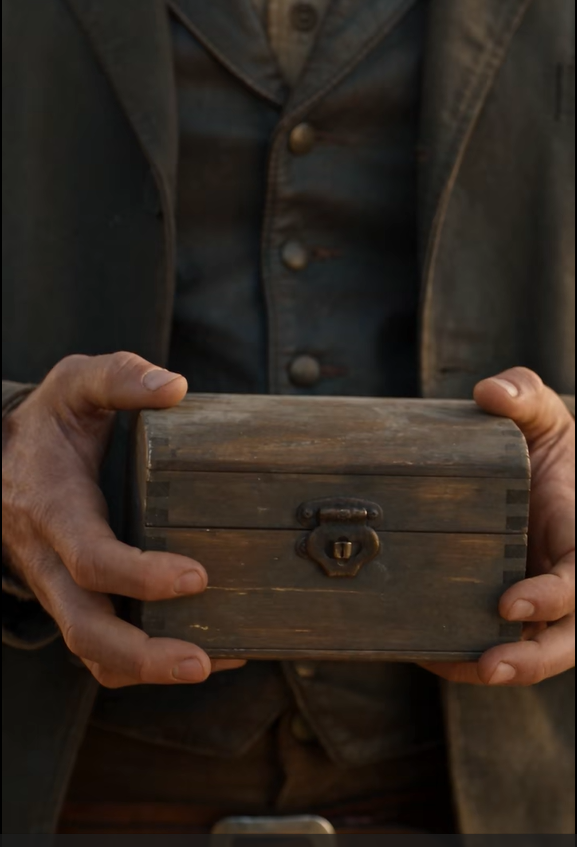
Inside a metal cabinet was a box labeled:
MERCER RELIEF FUND — 1968.
My hands trembled as I opened it.
Inside were handwritten ledgers.
Receipts.
Letters.
And a photograph.
The woman in it was thin.
Dark-haired.
Tired-looking.
Three boys stood beside her.
The smallest was Howard.
On the back, someone had written:
Margaret Mercer and sons, 1952.
Beneath the photograph was an envelope.
Addressed:
To the woman my Howard chooses someday.
I stopped breathing.
Daniel whispered, “Grandma wrote that?”
Apparently she had.
Howard must have kept it with the foundation records rather than his personal papers.
I opened it.
The paper was yellow.
The handwriting delicate.
Dear future daughter,
If Howard gives you this letter, then I hope you are kinder to him than life has been to us.
I laughed through tears.
My oldest boy made a terrible mistake with money. For a long time I blamed him. Then I blamed myself for trusting him. Both things were easy. The harder thing was understanding that a family cannot survive if love has no boundaries and boundaries have no mercy.
I looked at Daniel.
He was crying.
I continued.
So I have begun saving what little I can to help women who lose their homes because they trusted someone they loved.
At the bottom was one final paragraph.
If this little fund survives me, I hope one day it becomes large enough that no woman in my family will ever have to beg for a chair in a home she helped build.
My knees nearly gave way.
Daniel caught my arm.
Neither of us spoke.
Because suddenly that Christmas night looked different.
Not less cruel.
Not less painful.
But connected to something none of us had understood.
Howard had not invented Mercer House after watching his mother suffer.
His mother had invented it herself.
She had begun with eleven dollars and forty cents.
Eleven dollars and forty cents became a relief fund.
The relief fund became investments.
Howard expanded them.
Those investments became cottages.
The cottages became Mercer House.
And Mercer House eventually became the legal shield that protected me from my own family.
For nearly sixty years, one woman’s humiliation had traveled through time until it reached another woman standing beside a Christmas table without a chair.
Me.
I read Margaret’s last sentence again.
No woman in my family will ever have to beg for a chair in a home she helped build.
Daniel lowered his head.
“I did exactly what Dad was afraid of.”
“Yes.”
“And Grandma.”
“Yes.”
He wiped his face.
“I’m sorry.”
“I know.”
“What if I never stop being sorry?”
I folded the letter carefully.
“Then turn it into something useful.”
He looked at me.
That was what Margaret had done.
What Howard had done.
Perhaps what Daniel could do.
I am seventy-three now.
I still live on Hawthorne Lane.
The house is quieter than it used to be.
Howard’s photograph is back on the mantel where it belongs.
My sewing room is full of fabric.
The ugly brass hallway lamp still works.
And every December, I host one dinner here before Christmas.
Not for coworkers.
Not for appearances.
For Mercer House residents, former residents, volunteers, neighbors, and anyone who has nowhere else to go.
Last Christmas, twenty-seven people came.
We borrowed folding tables.
Children ate on the stairs.
Someone spilled gravy on the rug.
A woman named Carol laughed so hard she knocked over her wine.
It was perfect.
Before dinner, Daniel carried in an extra chair.
“Where does this go?”
I looked around.
Every place seemed filled.