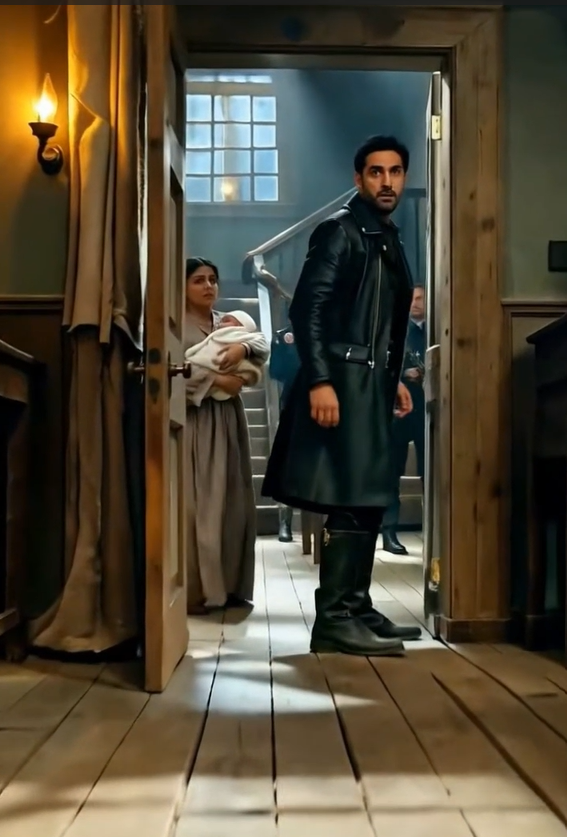
Then a young woman appeared in the doorway.
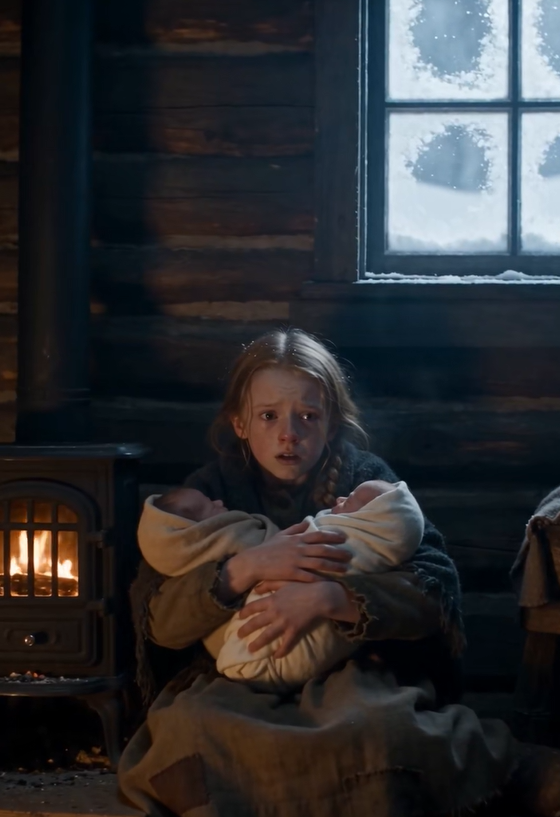
She had arrived at Mercer House that morning with a suitcase and two children after being locked out by relatives.
She looked embarrassed.
“I can leave,” she said. “I didn’t know there were so many people.”
Daniel didn’t hesitate.
He set down the chair.
“There’s always room.”
I looked at him.
For one instant, I saw Howard.
Then Margaret.
Then every version of my son I had ever known.
Broken.
Loved.
Weak.
Learning.
Human.
The young woman sat.
Daniel brought another plate.
And I understood something I wish I had learned decades earlier.
A home is not defined by who expects to inherit it.
It is defined by who is safe inside it.
Melissa had believed owning my house meant getting her name on paper.
Daniel had believed being my son guaranteed him a claim.
For years, even I believed Howard and I owned Hawthorne Lane because we had paid the mortgage and held the deed.
But Margaret Mercer understood something all of us had missed.
The deepest ownership is not possession.
It is protection.
It is the person who says, You will not be erased here.
It is the person who pulls out one more chair.
After dinner that Christmas, I found Daniel alone in the living room.
He was staring at the mantel.
At Howard’s photograph.
“I think Dad would have liked tonight,” he said.
“Yes.”
“Do you think he’d be proud of me?”
The old version of myself would have answered immediately.
Of course.
Mothers are trained to soften every edge.
But love with no boundaries nearly cost me my home.
So I considered the question honestly.
“I think he’d be proud of what you’re becoming.”
Daniel nodded.
Apparently that was enough.
He started toward the dining room.
Then stopped.
“Mom?”
“Yes?”
“I never asked.”
“Asked what?”
“What happens to this house when you’re gone?”
I smiled.
Four years earlier, that question would have frightened me.
Now it didn’t.
“Mercer House gets it.”
He smiled too.
“Good.”
No disappointment.
No calculation.
No fear.
Just one word.
Good.
And that was when I knew Howard’s final condition had been fulfilled in the only way that mattered.
Not because Daniel had become trustee.
Not because he had repaired our relationship.
Not because he had spent years serving people whose stories resembled mine.
But because he could finally stand inside a six-hundred-thousand-dollar house, know he would never inherit a dollar of it, and still be grateful for what it would become.
I walked toward him.
He opened his arms.
This time there was no hesitation.
I hugged my son beneath the photograph of the man who had seen danger coming years before any of us did.
Outside, snow covered Hawthorne Lane.
Inside, twenty-seven people laughed around tables pulled together from every room in the house.
Nobody had a name card.
Nobody had been sent upstairs.
Nobody had to earn a place.
And beside Howard’s old chair stood one empty seat.
Not because someone had been excluded.
Because Daniel insisted we keep one ready.
For whoever arrived next.