They Stole My Wedding Dress Before I Reached the Altar. They Never Imagined What I Was Wearing Underneath.
The moment I stepped into my bridal suite, I knew someone had tried to hijack my wedding before I even reached the altar.
The dress hanging beneath the crystal lights was not mine.
For several seconds, I simply stared at it.
It glittered aggressively beneath the warm hotel lighting—thousands of rhinestones stitched across a stiff corseted bodice, silver embroidery curling around the waist like frost, and layer after layer of sparkling tulle spilling across the marble floor.
It looked less like a wedding gown than something designed to be photographed from space.
Behind me, ice clicked softly inside a champagne glass.
“This one is better.”
My mother said it without apology.
I turned.
Vivian Sinclair stood beside the velvet sofa in a champagne-colored designer gown, one hand wrapped around a crystal flute. At fifty-eight, she still possessed the kind of beauty that made strangers lower their voices around her: sculpted cheekbones, pale blond hair swept into a flawless twist, posture so perfect it looked rehearsed.
Beside her, my younger sister Lila crossed one leg over the other.
She was twenty-six, beautiful in the effortless way our mother had always valued, dressed in pale rose satin with diamonds at her throat.
Her smile told me everything before either of them spoke again.
I touched the unfamiliar gown.
“Where is my dress?”
My mother took a sip.
“I had the boutique make a change.”
“A change?”
Lila laughed.
“An expensive change.”
I looked from one woman to the other.
For six months, I had worked with designer Camille Moreau on the gown I wanted.
Not the gown my mother wanted.
Not the gown Lila would have chosen.
Mine.
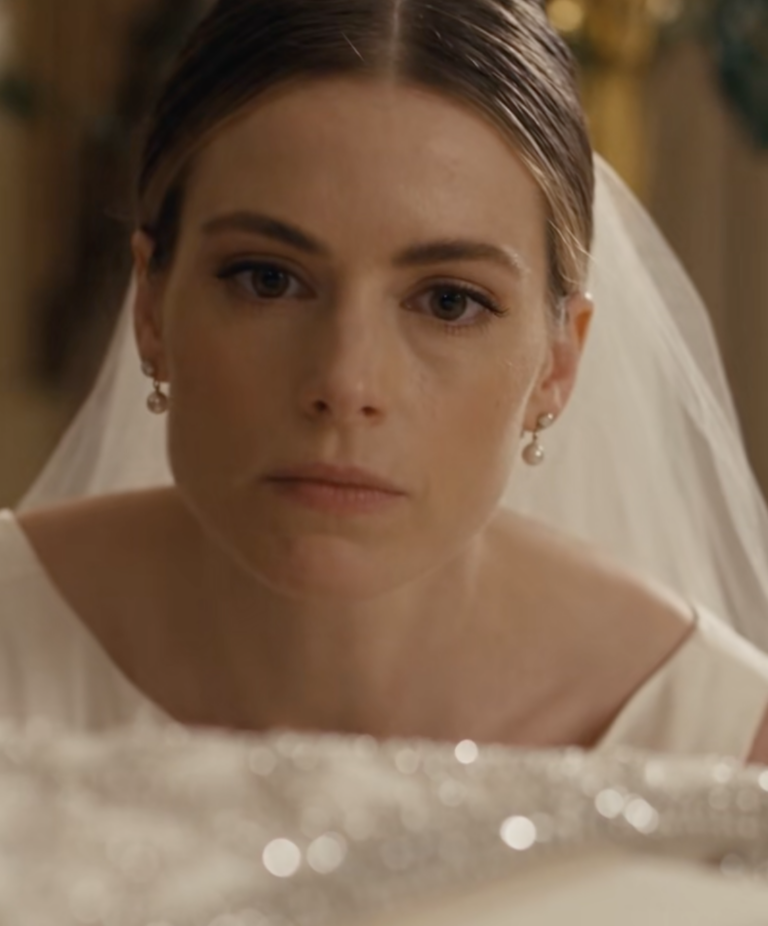
Silk crepe. Clean lines. A sculpted neckline. Long fitted sleeves. Hand-covered buttons running down the back. No crystals. No glitter. No enormous skirt.
Simple.
Elegant.
Quiet.
Everything my family considered unforgivably boring.
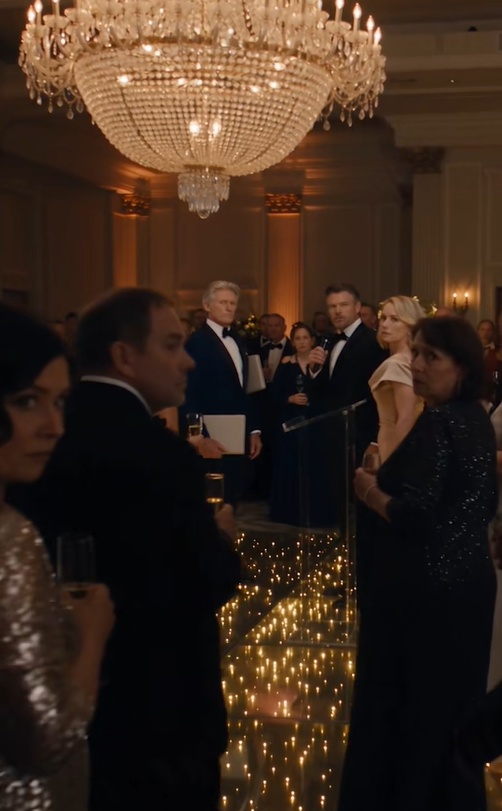
“For a wedding like this,” Lila said, gesturing toward the enormous suite and the historic hotel beyond it, “you needed something more dramatic.”
“For whom?”
Her mouth curved.
“Everyone.”
And there it was.
Not fashion.
Not generosity.
Control.
My mother and sister had always treated my independence like a character defect.
When I chose economics instead of art history, my mother called me stubborn.
When I took a job at Halden & Price instead of joining the family foundation, she called me selfish.
When I bought an apartment without consulting her, she didn’t speak to me for three weeks.
When I became the youngest vice president in my division, she told people Daniel had helped me.
And when I decided to marry Daniel Mercer—a man whose family name meant nothing to her social circle—she spent the first six months of our engagement trying to convince me that I was confusing love with rebellion.
Her favorite sentence had followed me from childhood into adulthood.
“One day you’ll understand that family knows best.”
Standing in that bridal suite, looking at the dress she had secretly substituted for mine, I finally understood exactly what she meant.
Family knew best as long as family meant her.
Lila lifted her phone.
“Well?”
They expected me to scream.
That was the part they had rehearsed.
I knew because three nights earlier, an old tablet had shown me the script.
The tablet had once belonged to our father.
After he died, my mother kept it in a drawer at the family house. Six weeks before the wedding, I borrowed it because it contained several childhood photographs I wanted for the reception.
I had forgotten it was still logged into the Sinclair family cloud account.
Then, three nights before my wedding, while I was importing photographs, an email notification appeared.