My mother had manipulated her too.
Not innocently.
Lila had still helped.
But differently than I had believed.
“Why the dress?” I asked.
My mother crossed her arms.
For the first time, the elegant mask had disappeared.
“Because you care about control as much as I do.”
“No.”
“Yes. You just call yours independence.”
“Canceling my dress was supposed to make me cancel my wedding?”
“I expected you to do what you always do when someone crosses a boundary. Make a dramatic exit.”
A strange laugh escaped me.
She had studied me.
Calculated me.
Planned the emotional pressure like an equation.
“Then you don’t know me at all.”
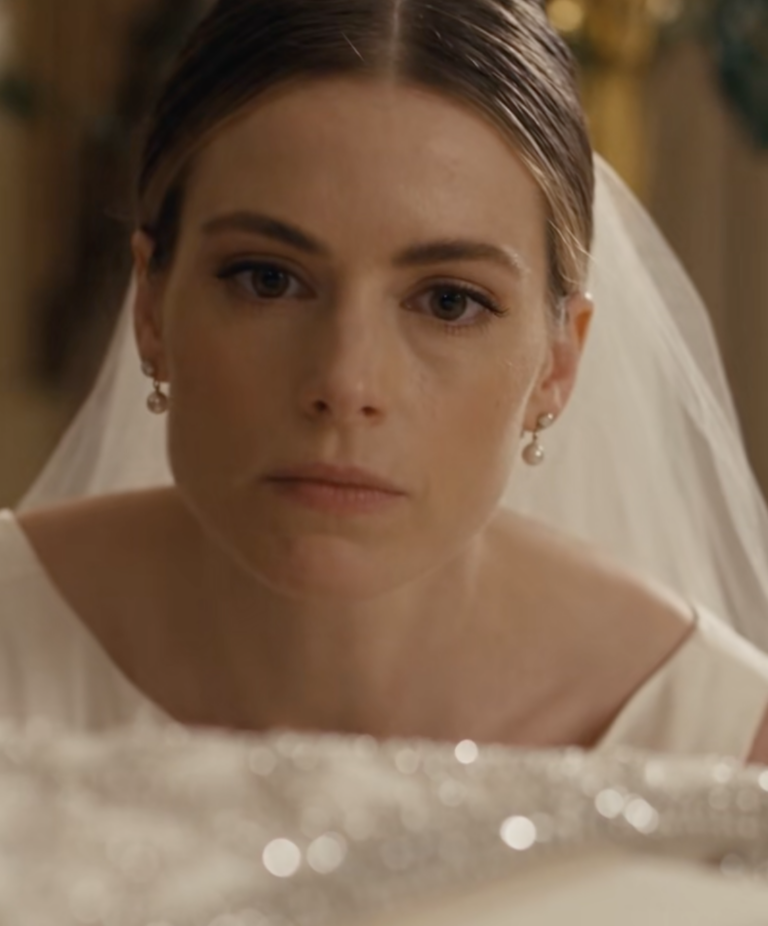
Her eyes flicked toward the discarded rhinestone gown.
“Apparently.”
But Margaret had not finished.
“There’s more.”
My mother’s head snapped toward her.
“Margaret.”
For the first time, her voice carried something close to pleading.
Margaret ignored it.
She turned to me.
“Your mother did not merely delay your access to the trust.”
My stomach tightened.
“How much?”
“Emma—” my mother began.
“How much?”
Margaret answered.
“Approximately six-point-four million dollars has been removed or pledged as collateral.”
The ballroom reacted again.
Six million.
I stared at my mother.
“For what?”
Her face crumpled almost imperceptibly.
Then she looked away.
It was Daniel who noticed first.
“The foundation.”
My mother went still.
He continued.
“Sinclair House.”
My family’s charitable foundation had existed for three generations.
Scholarships.
Women’s shelters.
Arts grants.
Medical programs.
My mother had built her identity around it.
There had been a gala every year.
Magazines called her a philanthropist.
The city had given her awards.
Daniel looked at Margaret.
“It’s insolvent, isn’t it?”
Margaret nodded.
I felt sick.
My mother whispered, “Temporary liquidity issues.”
“How temporary?”
Margaret answered.
“Nearly nine years.”
My mouth fell open.
My father had died nine years earlier.
Suddenly I understood.
Not everything.
But enough.
After my father died, donations had apparently declined.
Investments had failed.
Projects had expanded.
My mother had refused to let the foundation shrink because the foundation was her reputation.
So she had fed it money.
Then more.
Then borrowed against assets she didn’t own.
Our assets.
Mine.
Eventually, keeping me away from the trust stopped being about control.
It became survival.
If I married Daniel and gained unrestricted control of my share, independent auditors would discover the missing money.
My mother had not wanted to humiliate me for choosing the wrong dress.
She needed to stop me from becoming legally impossible to deceive.
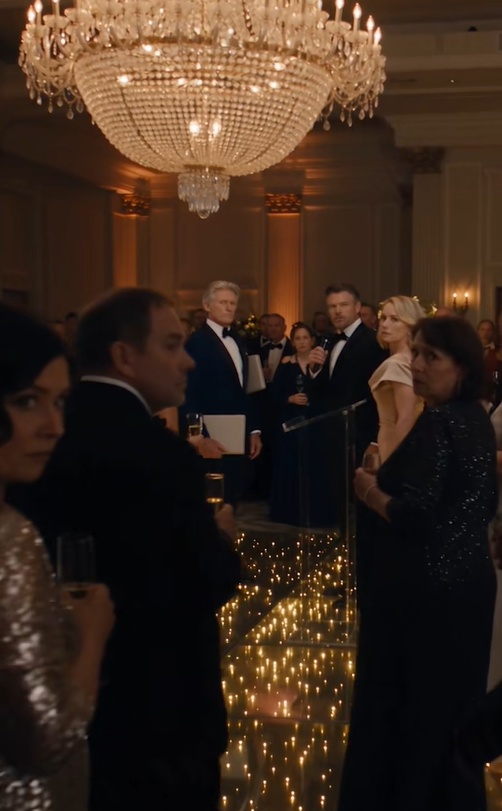
I looked around the magnificent ballroom.
Three hundred guests.
Flowers costing more than some people earned in a year.
Champagne.
Crystal.
Silk.
Everything suddenly seemed grotesque.
“Who paid for this wedding?”
Nobody spoke.
I stared at my mother.
“Who paid for it?”
Her lips pressed together.
Margaret lowered her eyes.
I already knew.
My knees almost buckled.
“My trust?”
Vivian snapped, “It was always supposed to pay for major family events.”
“You stole money from me to pay for the wedding you were trying to sabotage?”
“I was going to replace it.”
“With what?”
Silence.
“With what, Mom?”
She looked around the ballroom.
For the first time, she seemed aware that hundreds of people were watching her unravel.
Then she did something I had never seen my mother do.
She cried.
Not elegantly.
Not one diamond-bright tear.
Her shoulders collapsed.
“I was trying to keep everything from falling apart.”
The room remained silent.
She looked at me.
“After your father died, I discovered debts. Businesses I didn’t understand. Investments that were failing. People who had smiled at me for twenty years stopped returning my calls. The foundation had commitments. Employees. Families depending on us.”
“So you took our money.”
“I borrowed it.”