Part of me wanted to run.
Maybe my mother had been right about that one thing.
Running had always been my instinct.
Then Daniel held out his hand.
No pressure.
No command.
Just an invitation.
I took it.
“Are you sure?” he asked.
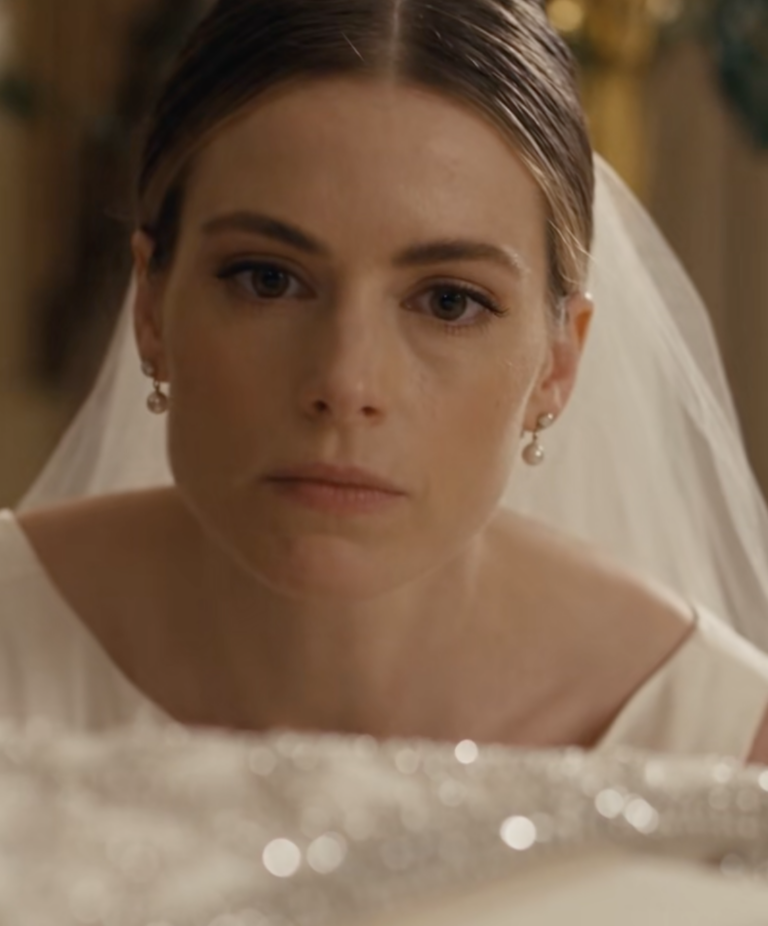
I looked down at my dress.
My actual dress.
The one my mother tried to cancel.
At the sapphire that belonged to a woman Lila had spent her entire life being denied.
At my sister, crying beside Camille.
At Margaret clutching my grandmother’s letter.
At Vivian sitting among the ruins of every secret she had protected.
Then I looked at Daniel.
“Yes.”
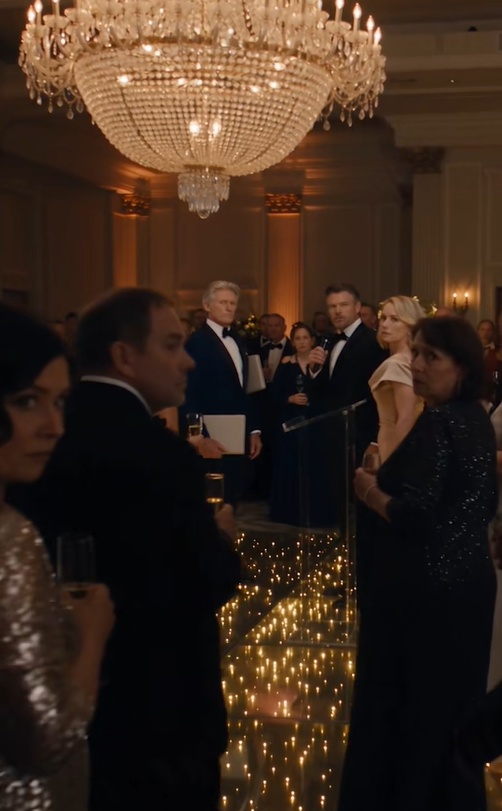
I turned toward the guests.
“I think we’ve all learned more about the Sinclair family today than anyone reasonably needed to.”
Nervous laughter moved through the room.
I picked up the microphone.
“But there is one thing my mother was right about.”
Vivian looked up.
I smiled faintly.
“She always said one day I’d understand that family knows best.”
I looked at Lila.
Then Daniel.
Then Camille.
Then Margaret.
“She just never understood that sometimes family is the person who tells you the truth, not the person who shares your blood.”
Daniel squeezed my hand.
I faced the officiant.
“Can we try this again?”
He smiled.
“I believe we were at ‘Do you.’”
This time, when he spoke about love, trust, honesty, and commitment, the words didn’t sound ceremonial.
They sounded earned.
“Do you, Daniel Mercer, take Emma Sinclair to be your wife?”
Daniel looked directly at me.
“I do.”
“And do you, Emma Sinclair, take Daniel Mercer to be your husband?”
I laughed through my tears.
“After all this?”
The room chuckled.
Then I said:
“I do.”
The applause shook the chandeliers.
We did not have the reception my mother planned.
Half the guests left early.
Reporters began calling before dessert.
By midnight, clips of the ceremony had spread across social media.
By morning, the Sinclair Foundation board had called an emergency meeting.
Within forty-eight hours, my mother resigned.
Within a week, attorneys froze several accounts.
Within a month, forensic auditors confirmed almost everything Margaret suspected.
My mother eventually accepted a settlement that required restitution of the misappropriated trust funds, liquidation of several personal assets, and permanent removal from any fiduciary role.
The criminal investigation lasted longer.
There were no chandeliers when she finally admitted what she had done.
Just a courtroom.
Wood benches.
Fluorescent light.
And two daughters sitting several rows behind her.
Lila did not forgive her quickly.
Neither did I.
Perhaps forgiveness was never supposed to be quick.
Perhaps sometimes forgiveness was simply deciding not to let someone’s worst choices dictate the rest of your life.
Six weeks after my wedding, Lila flew to Vermont.
I went with her.
Rose lived outside a small town in a white farmhouse surrounded by maple trees.
She opened the door before we knocked.
She was fifty-six.
Thin.
Gray beginning at her temples.
And she had Lila’s eyes.
The moment she saw my sister, she covered her mouth.
Lila stood frozen on the porch.
Rose whispered only one word.
“Baby.”
Lila collapsed into her arms.
I turned away because some reunions feel too sacred to witness directly.
Later, we sat around Rose’s kitchen table drinking coffee while three decades of lies were carefully unfolded.
Rose showed Lila birthday cards she had written every year but never sent because lawyers had threatened her.
Photographs.
A tiny knitted sweater.
A hospital bracelet.
And copies of letters she had mailed to Vivian asking for contact.
Most had been returned unopened.
Some had disappeared.
One had been answered by my father.
That was how he discovered the truth.
His letter—the one my mother had carried to my wedding—was not written because he had suddenly decided to confess.