David had learned to ride a bicycle on that sidewalk.
He had broken his wrist falling from the maple tree behind the garage.
On the kitchen doorway, beneath several coats of paint, faint pencil marks still recorded his height at ages seven, ten, twelve and fourteen.
I poured tea.
I never drank it.
Instead, I went upstairs to my study.
There were photographs everywhere.
David at graduation.
David receiving his law degree.
David standing beside me at his bar admission.
And David on his wedding day, one hand around Clara’s waist.
I picked up that photograph.
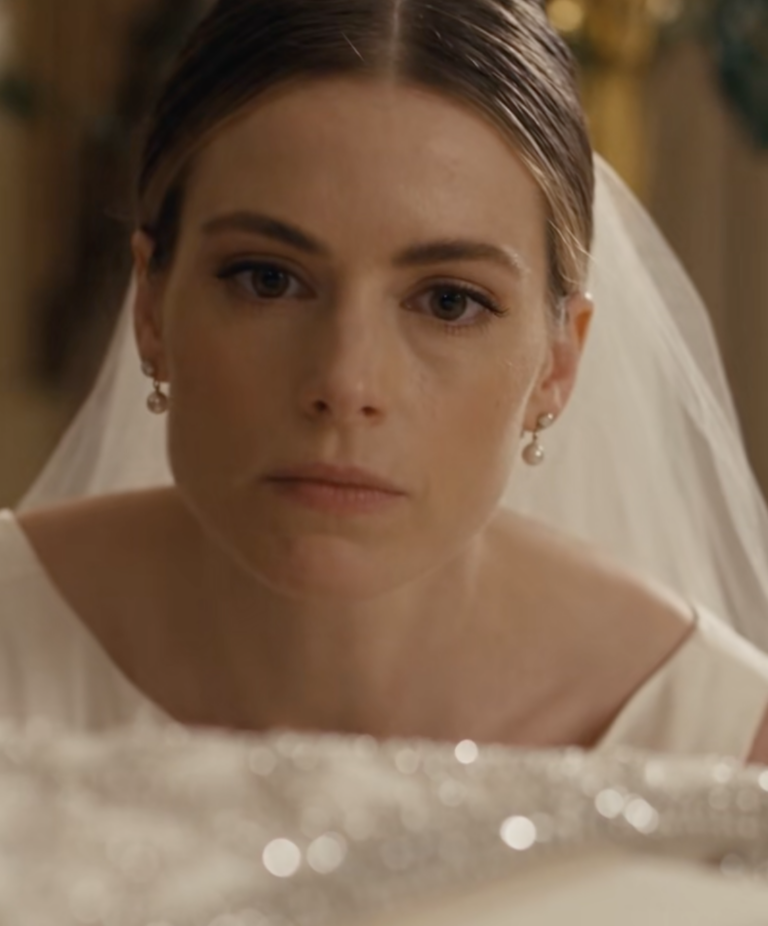
Clara smiled directly at the camera.
Beautiful.
Controlled.
Victorious.
Around her neck hung a small oval pendant.
I had seen it countless times.
That afternoon, however, something about it bothered me.
I carried the photograph beneath my desk lamp.
The pendant was old-fashioned.
Gold.
Oval.
A black enamel border around a tiny red stone.
My breathing slowed.
I knew that pendant.
Not Clara’s specifically.
But I had seen one exactly like it.
A long time ago.
I opened a cabinet containing newspaper clippings and case memorabilia accumulated across four decades.
Most judges do not keep reminders of defendants.
I kept very few.
But one case had stayed with me.
People v. Adrian Voss.
Twenty-four years earlier.
A financial adviser named Adrian Voss had built a business around elderly widows.
He presented himself as charming, patient and trustworthy.
He took clients to medical appointments.
Bought groceries.
Remembered birthdays.
Then gradually isolated them from family, transferred property into controlled entities, obtained signatures on powers of attorney and drained their accounts.
By the time investigators caught him, seventeen victims had lost almost twelve million dollars.
Three died before trial.
One lost the home where she’d raised five children.
I had been the trial judge.
Voss showed no remorse.
At sentencing, he stared at me and said, “You think locking me away changes what my daughter knows about people?”
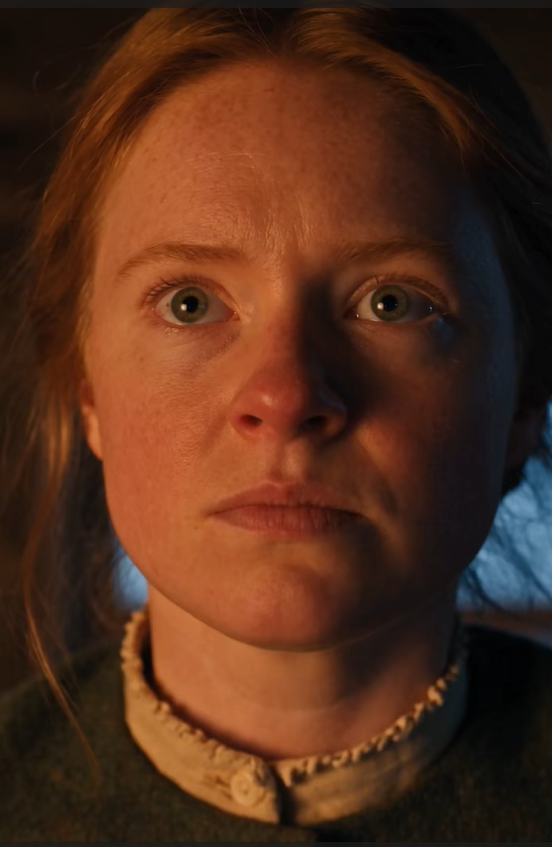
His daughter had been sitting in the back row.
Fourteen years old.
Dark hair.
Rigid posture.
A gold oval pendant around her neck.
Her name had been—
I found the clipping.
My hands went cold.
Clarissa Voss.
I stared at Clara’s wedding photograph.
Clara’s legal surname before marriage had been Sutton.
Her mother’s name.
At least, that was what we had been told.
I placed the two photographs side by side.
Twenty-four years changed a face.
But not everything.
The eyes were the same.
The shape of the mouth.
And the pendant.
“Oh, David,” I whispered.
My phone rang.
Unknown number.
I answered.
Silence.
Then my son’s voice.
“Mom?”
Every muscle in my body tightened.
“David.”
“Are you alone?”
“Yes.”
“You need to leave the house.”
“What?”
“Right now.”
Something about his tone made me stand.
“David, what have you done?”
“I can’t explain.”
“Mrs. Bell says you told her I was dead.”
Silence.
“Answer me.”
“I know.”
“Why?”
“Mom, please. Take your purse and leave through the back door.”
“Did you know who Clara’s father was?”
His breathing changed.
That was answer enough.
“When did you find out?”
“Seven months ago.”
“Does she know I know?”
“No.”
“Does she know you’re calling me?”
“No.”
“Then explain.”
“I can’t.”
My voice hardened.
“You are not speaking to an elderly woman you can send downstairs. You are speaking to your mother. And if you have involved yourself in exploiting vulnerable people—”