“You should have.”
“I know.”
“No, David. You don’t get to transform cowardice into heroism because there was a microphone under your shirt.”
Silence.
I regretted the cruelty immediately.
But not enough to take it back.
He whispered, “I know.”
I rubbed my forehead.
“Why did you tell Miriam I was dead?”
“To stop her from contacting you.”
“That makes no sense.”
“Clara wanted Miriam to approach you.”
I froze.
“What?”
“She wanted to create a connection between you and Miriam’s case. Then she planned to claim you had improperly interfered in litigation involving her company. She wanted ethics complaints against you. Maybe criminal allegations if she could manufacture enough.”
“So you lied.”
“To keep Miriam away from you.”
“You told an eighty-two-year-old woman her former judge was dead.”
“I hated myself for it.”
“You should.”
“I do.”
Rain struck the study windows.
Finally I asked, “Why do I need to leave my house?”
His answer came instantly.
“Because Clara knows the investigation is closing in.”
“How?”
“She saw the preservation order for the courthouse video. Then Judge Alvarez ordered her company’s financial servers preserved.”
That sounded like Mateo.
“She thinks I’ve betrayed her,” David said. “She left the courthouse twenty minutes ago.”
“Where is she going?”
“I don’t know.”
A sound came from downstairs.
The soft click of my front door.
David heard it through the phone.
“Mom?”
I didn’t answer.
Footsteps crossed the foyer.
Slow.
Unhurried.
Familiar.
“Helen?”
Clara called from downstairs.
David whispered, “Oh God.”
I stood.
“Call the police.”
“Mom, lock the door.”
But I didn’t.
I placed the newspaper clipping inside my desk drawer.
Then I walked downstairs.
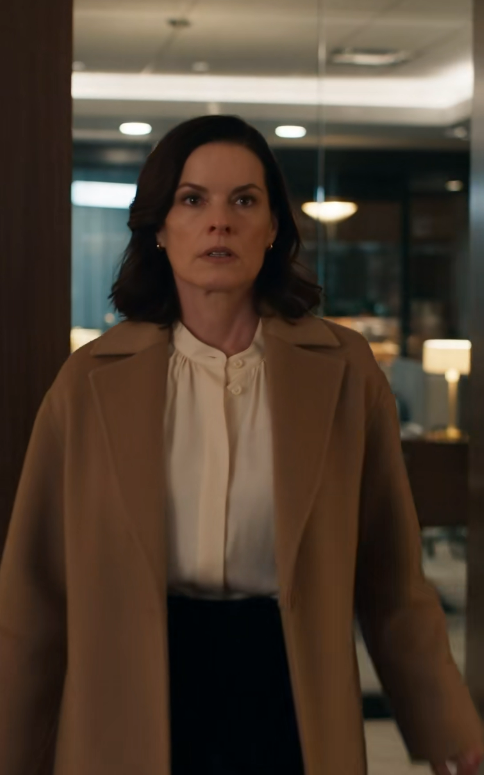
Clara stood in my living room.
Her navy courthouse dress was damp from the rain.
Her hair had loosened.
For the first time since I had known her, she looked imperfect.
She also looked frighteningly calm.
“You left your door unlocked,” she said.
“I’ve never needed to lock it against family.”
Her mouth twitched.
“Still performing.”
“No audience here, Clara.”
She looked around at my books.
The framed degrees.
Old judicial photographs.
“You know, I used to imagine this house.”
“I know who you are.”
Her face became still.
I continued.
“Clarissa Voss.”
For the first time, I saw the fourteen-year-old girl inside her.
Not weakness.
Rage.
“My father remembered you until he died.”
“Your father had seventeen victims.”
“My father had a daughter.”
“Both things can be true.”
“You destroyed him.”
“No. Evidence convicted him. His choices destroyed him.”
She stepped toward me.
“You loved it.”
“Loved what?”
“Watching him beg.”

“He never begged.”
That stopped her.
“He told me he did.”
“He lied.”
“Shut up.”
“Your father laughed during sentencing.”
“Shut up.”
“He called his victims fools.”
“SHUT UP!”
Her voice exploded through the room.
Then she saw my telephone on the side table.
The call with David was still connected.
She stared at it.
Everything changed.
“David?”
I said nothing.
Clara crossed the room, grabbed the phone and looked at the screen.
“David?”
My son’s voice came through faintly.
“Clara.”
Her expression collapsed.
Not anger.
Heartbreak.
Real heartbreak.
“You betrayed me.”
“I tried to save you.”
“You wore a wire.”
Silence.
“How long?”
“Five months.”
She closed her eyes.
A tear slipped down her cheek.