No mention of Adrian.
No mention of the wedding.
Only my mother’s six words:
STRENGTH CAN STILL BE MADE BEAUTIFUL.
On opening night, I stood across the room watching strangers stop to read it.
Claire appeared beside me carrying two glasses of champagne.
She handed me one.
“Properly,” she warned.
I held the stem exactly the way Victoria had once corrected me.
Claire burst out laughing.
I did too.
Then my father joined us.
For a few minutes, we stood together beneath the lights.
Alive.
Whole in the strange way people become whole after accepting that they will never again be exactly who they once were.
A little girl approached the display.
She couldn’t have been older than eight.
She stared at the golden seams.
Then she tugged her mother’s sleeve.
“Why didn’t they hide the cuts?”
Her mother leaned down.
“I don’t know.”
The girl thought about it.
Then she said:
“Maybe because they’re part of the pretty part now.”
My throat tightened.
Claire looked at me.
Neither of us spoke.
Outside, Manhattan moved beneath a cold blue evening.
Taxis streamed past.
Windows illuminated one by one.
Somewhere, couples were marrying.
Somewhere, hearts were breaking.
Somewhere, someone was discovering that the future they had spent years designing would never be built.
I knew that terror.
I also knew what came afterward.
You stand among the ruins.
You decide what is still sound.
You remove what cannot be saved.
And then, slowly, painfully, defiantly—
you build again.
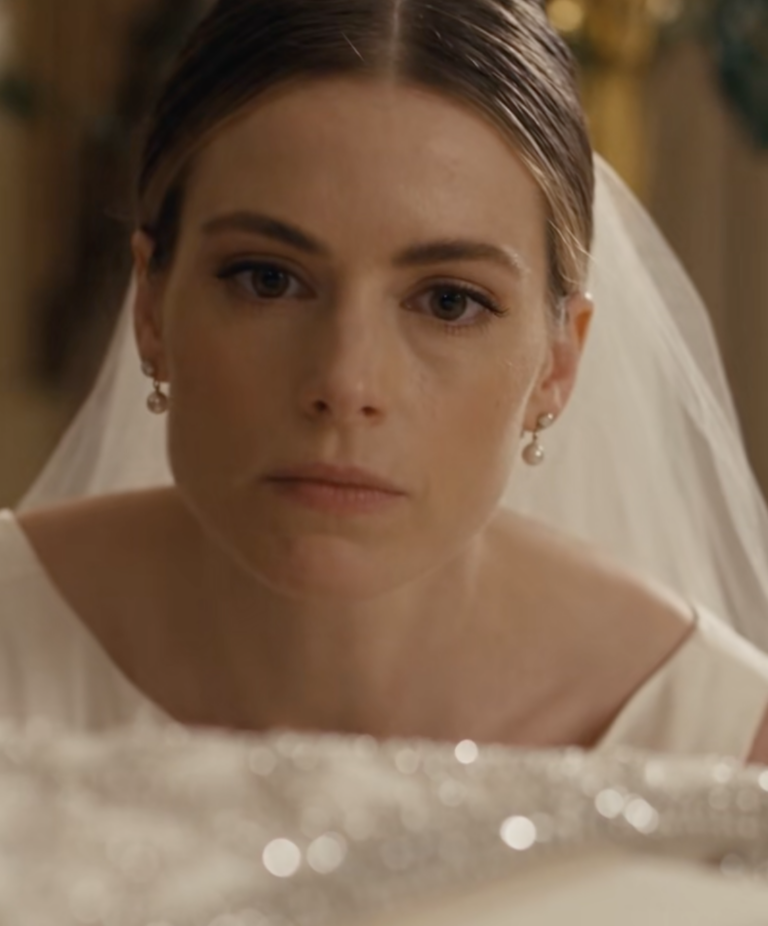
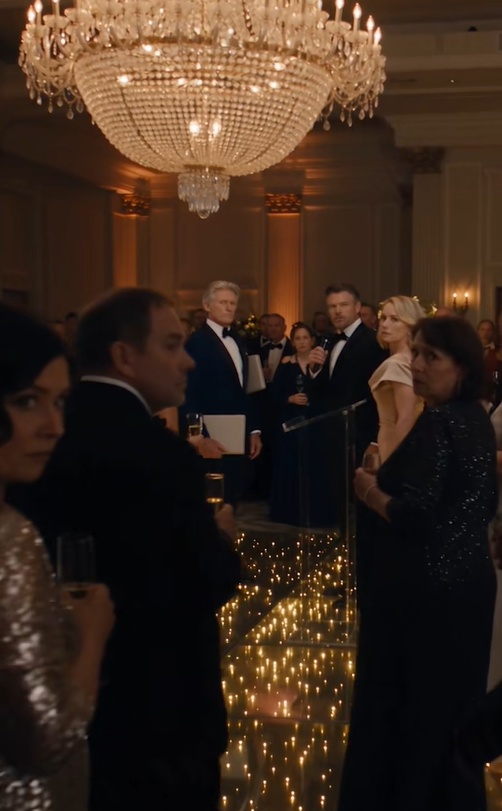
I once believed Victoria Harrington destroyed my wedding dress three minutes before I walked down the aisle.
For a long time, I believed Adrian destroyed my future.
But they hadn’t.
They had destroyed an illusion.
The illusion that elegance meant goodness.
That wealth meant security.
That love guaranteed character.
That keeping a relationship intact was more important than keeping yourself intact.
The gown behind the glass taught me something better.
It had been cut.
Repaired.
Changed permanently.
And somehow it was more extraordinary because nobody had tried to erase what happened to it.
I raised my champagne glass toward my mother’s words.
Claire bumped hers against mine.
“To the wedding that never happened,” she said.
I smiled.
“No.”
I looked at the golden seams glowing beneath the lights.
“To the woman who walked away from it.”
And for the first time since the ballroom doors had opened a year earlier, I realized I did not remember that day as the day I failed to become Emma Harrington.
I remembered it as something entirely different.
It was the day I finally understood how lucky I was to remain Emma Reyes.