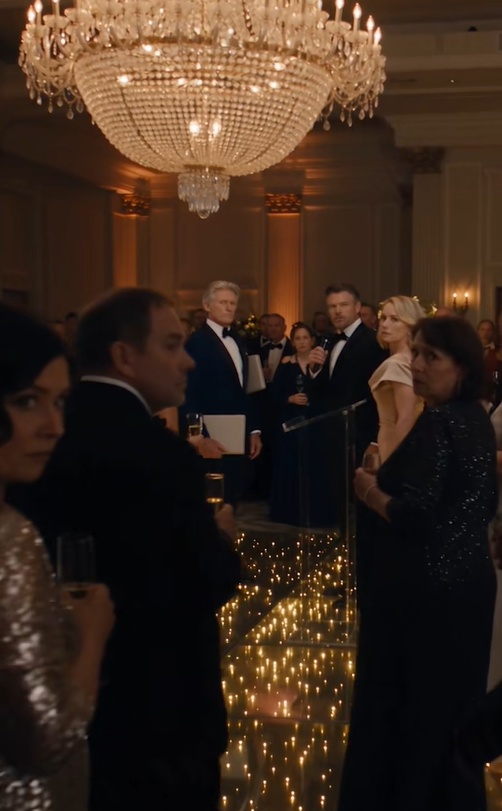
“Take an hour. Perhaps two. Adrian can make an announcement.”
There it was.
The solution.
Prepared before anyone had asked for one.
That was how I knew beyond any doubt that Victoria had planned everything.
Not merely the scissors.
The aftermath.
The whispers.
The humiliation.
The story people would repeat for decades:
Emma Reyes panicked at the last moment.
Poor Adrian.
Perhaps Victoria had been right about her all along.
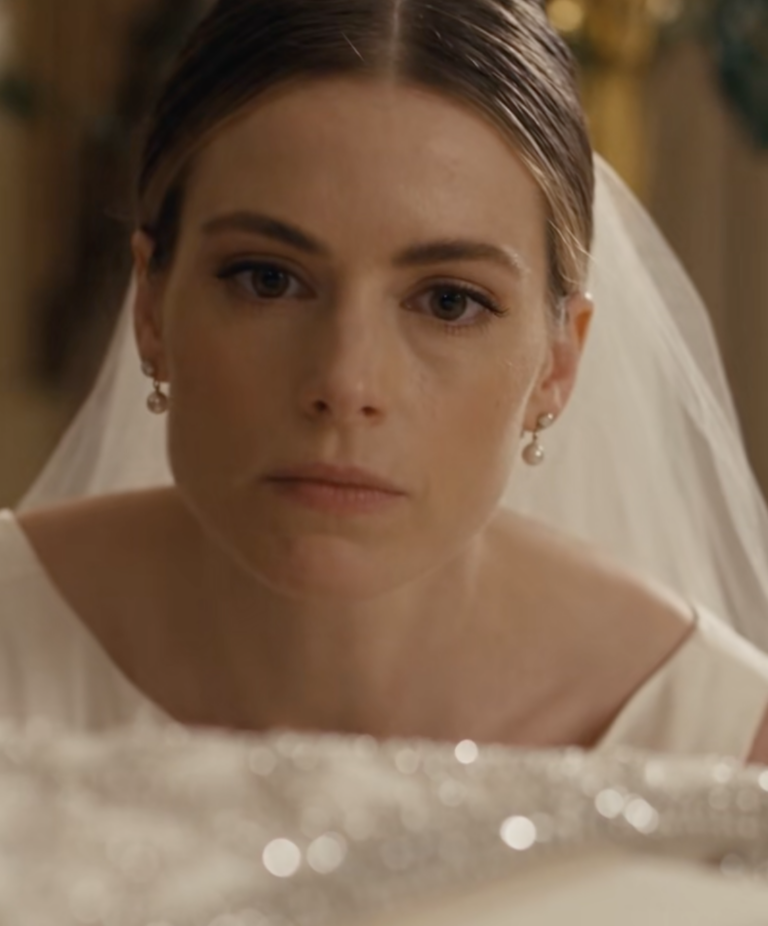
My gaze fell to the destroyed gown.
And then I smiled.
“Thank you.”
Victoria blinked.
“What?”
“Thank you.”
Claire stared at me.
One bridesmaid whispered my name.
Victoria’s composure faltered for the first time.
“I’m afraid I don’t understand.”
“You will.”
I bent down, gathered sixty pounds of ruined silk into my arms, and carried it behind the dressing screen.
Victoria followed me with her eyes.
“Emma?”
I pulled the screen closed.
“Yes?”
“What exactly are you doing?”
“Getting married.”
Silence.
Then I heard Claire laugh.
Not a happy laugh.
A dangerous one.
Sixteen months earlier, when Adrian proposed to me on the roof of the unfinished Calder Museum, I believed the hardest part of marrying him would be surviving the Harrington social calendar.
I was wrong.
The hardest part was surviving his mother.
Adrian Harrington came from the kind of family whose name appeared on hospital wings, libraries, university buildings, and occasionally subpoenas.
Harrington International had begun with railroads four generations earlier. By the time I met Adrian, it owned hotels, commercial developments, construction firms, private equity funds, and enough Manhattan property to make entire blocks feel like family heirlooms.
Adrian himself was different.
At least, that was what I believed.
We met because my architecture firm had won the competition to redesign an abandoned courthouse into a cultural center.
He represented the foundation funding half the project.
At our first meeting, he arrived ten minutes late, carrying his own coffee, with rain in his hair and absolutely no idea I was supposed to be impressed by him.
“You moved the eastern staircase,” he said after studying my model.
“Yes.”
“My board specifically asked you not to.”
“They were wrong.”
He looked at me.
I waited to be fired.
Instead he smiled.
“Good.”
Six months later, we were inseparable.
Adrian loved my stubbornness until it became inconvenient, admired my career without treating it like a hobby, and somehow remembered everything—from the coffee my father drank to the reason I hated lilies.
When he proposed, I said yes before he finished the question.
Then Victoria invited me to lunch.
Just me.
No Adrian.
We ate at an old private club on Fifth Avenue where every waiter seemed to know her name.
She waited until dessert to begin.
“Love is wonderful,” she said. “Marriage is structural.”
I nearly smiled.
“Structural?”
“You’re an architect. I thought the word would appeal to you.”
“What exactly are we discussing?”
“Compatibility.”
She folded her napkin.
“Adrian has responsibilities.”
“So do I.”