Then guilt swallowed him.
He abandoned the Vance homestead.
He became a trapper.
A guide.
A mountain man.
He avoided towns.
Avoided families.
Avoided love.
“I thought everyone I loved disappeared,” he admitted one evening.
Ara sat beside him on the porch.
Hope slept in her arms.
Grace slept against Elias’s chest.
Ara smiled.
“You’ve held her for two hours.”
Elias looked down.
“She was sleeping.”
“You could’ve put her in the cradle.”
“Didn’t want to wake her.”
“Of course.”
He frowned.
“What’s that supposed to mean?”
Ara laughed.
Grace stirred.
Elias immediately rocked her.
Ara’s smile softened.
The cabin had changed.
Curtains covered the windows.
A second bedroom had been added.
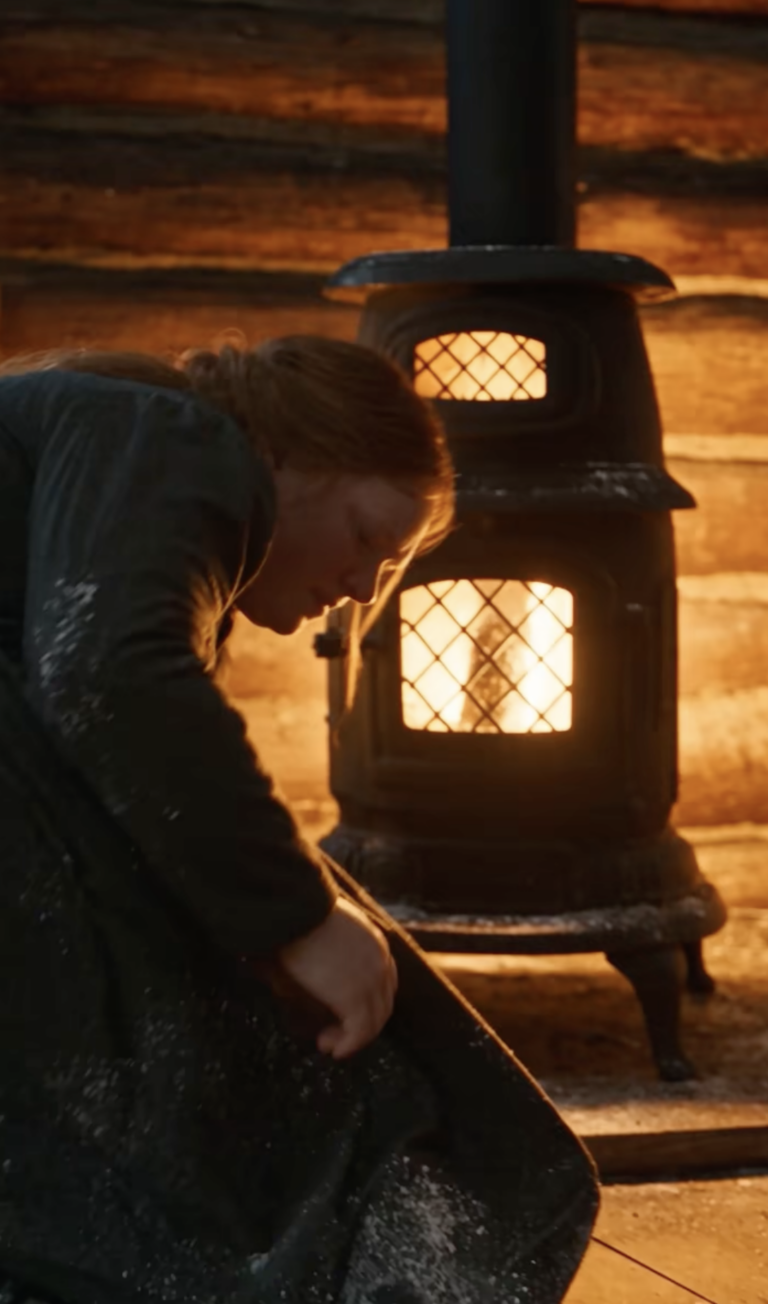
There were children’s clothes hanging near the stove.
Flowers sat inside an old whiskey bottle on the table.
Life had entered every corner.
Elias looked toward the valley.
“We should claim the estate.”
Ara shook her head.
“Not all of it.”
“It’s yours.”
“Half is yours.”
“I don’t need it.”
“Neither do I.”
“Your daughters might.”
Ara considered that.
Then nodded.
“We’ll keep enough land to protect them.”
“And the silver rights?”
Ara smiled.
“Sell them.”
“What will you do with the money?”
She looked toward the distant road.
“I’ve been thinking.”
Elias groaned.
“That’s dangerous.”
Ara nudged him.
“I want to build something.”
“What?”
“A house.”
“We have a house.”
“A bigger one.”
Elias narrowed his eyes.
“How big?”
“Big enough for women who have nowhere to go.”
He stared at her.
Ara continued.
“Women like me.”
Understanding slowly appeared in his face.
“Women escaping husbands.”
“Or fathers. Employers. Anyone.”
She looked toward Hope.
“A place where nobody has to earn the right to survive.”
Elias remembered saying those words months earlier.
Ara smiled.
“What?”
“Nothing.”
“You’ve got that look.”
“What look?”
“The February smile.”
He laughed.
This time he didn’t hide it.
The Vance Refuge opened eighteen months later.
It stood where Nathaniel Vance’s old homestead had once been.
Twelve rooms.
A kitchen.
A schoolroom.
A garden.
A barn.
And a painted wooden sign beside the road.
NO WOMAN OR CHILD TURNED AWAY.
People came.
A widow with three sons.
A girl fired from a hotel after refusing a manager’s advances.
A mother fleeing a drunk husband.
Two orphaned sisters.
A pregnant teenager thrown from her father’s house.
Ara welcomed all of them.
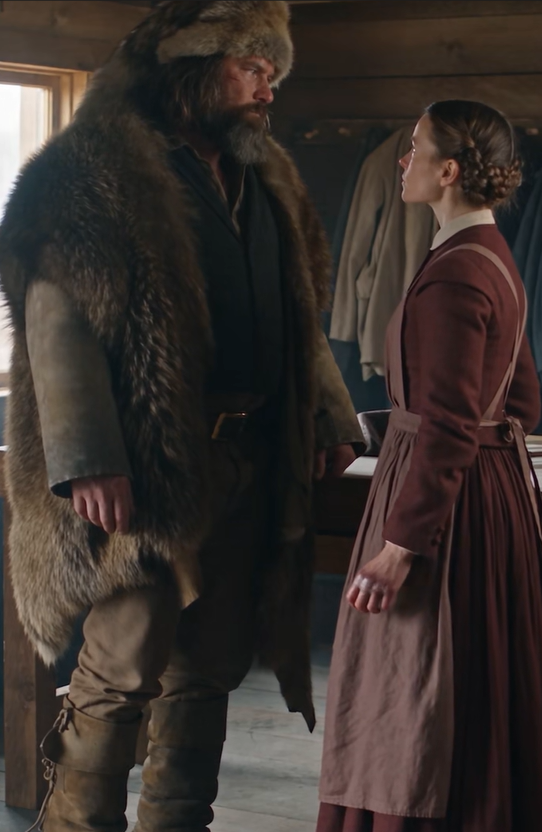
Elias repaired roofs, chopped wood, scared troublesome men away from the property, and became hopelessly obedient to a growing army of children who discovered that the enormous bearded mountain man would do almost anything if asked politely.
Years passed.
Hope became fearless.
Grace became thoughtful.
Both inherited Ara’s stubbornness.
Neither accepted the idea that girls were less valuable than boys.
When Hope was seven, a visiting rancher’s son told her women couldn’t own land.
Hope punched him.
Ara was horrified.
Elias pretended to be horrified.
Later he gave Hope an extra piece of pie.
Ara caught him.
“You rewarded her.”
“I rewarded her appetite.”
“You told her she had a good right hook.”
“She does.”
“Elias.”
He sighed.
“I’ll talk to her.”
“You’d better.”
He waited until Ara left.
Then whispered to Hope, “Next time, keep your thumb outside your fist.”
Hope nodded solemnly.
Grace burst out laughing from behind the door.
Life had become louder than Elias ever imagined.
He loved every second.