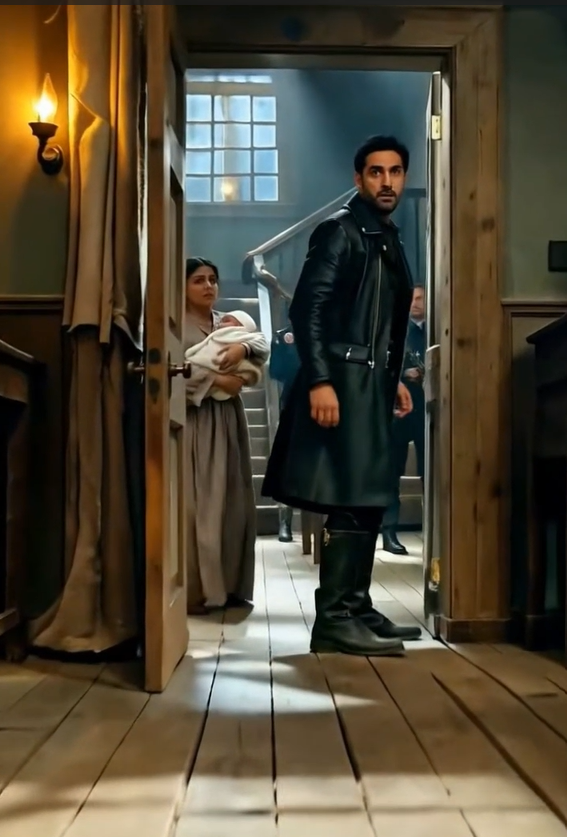
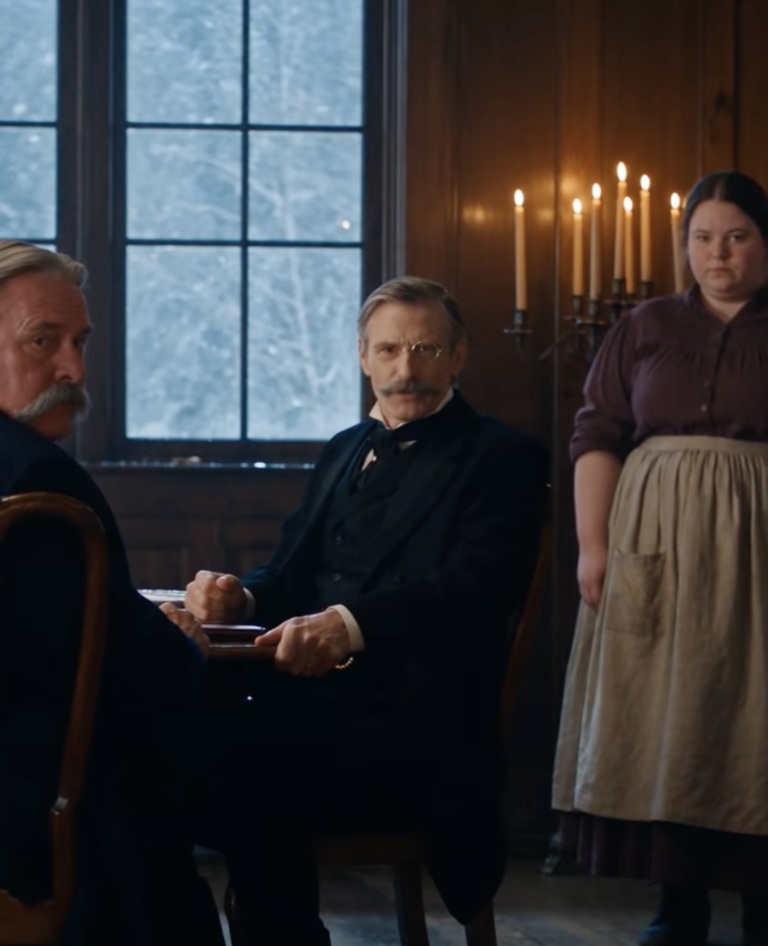
“Didn’t say forever.”
“You don’t understand.”
“I understand snow.”
“This isn’t about snow.”
Her fear returned.
“He’ll come.”
Elias looked toward the rifle mounted over the door.
“Then he’ll come.”
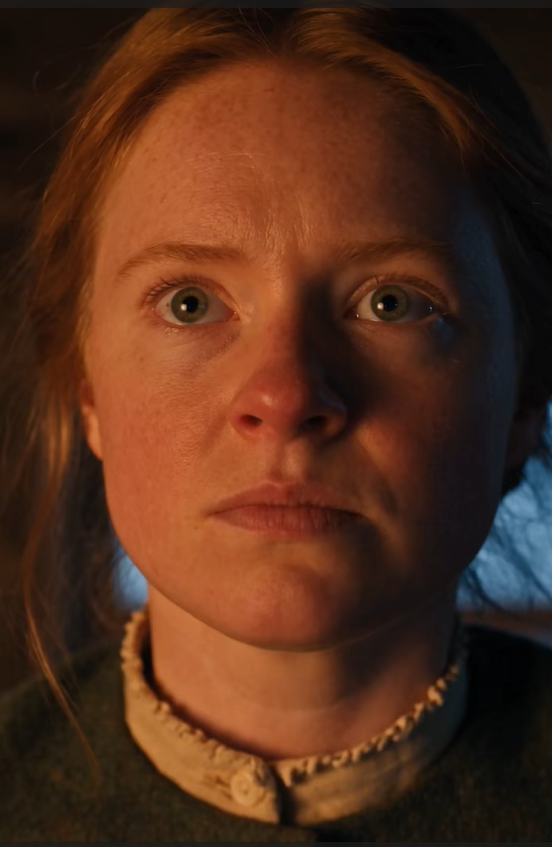
Ara’s face drained of color.
“You don’t know Caleb.”
“No.”
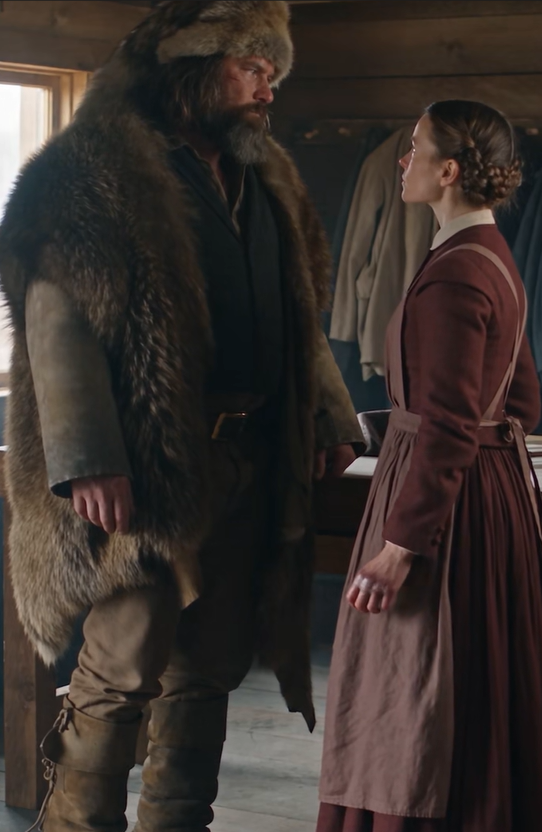
Elias stood.
“But he doesn’t know me either.”
Ara stared at him.
“I don’t want someone dying because of me.”
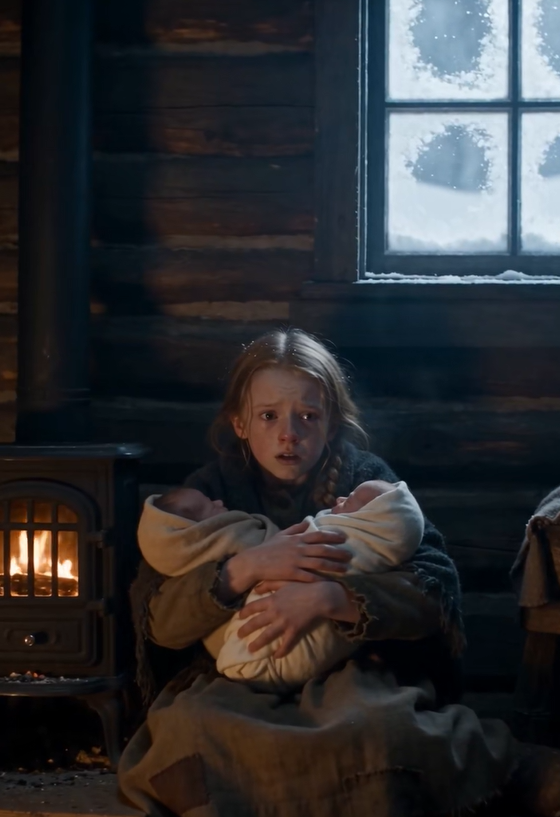
Elias looked at the twins.
Then back at her.
“Nobody should have to earn the right to survive.”
Ara’s eyes filled.
“I have nothing.”
“You have them.”
He nodded toward Hope and Grace.
“And they have you.”
She pressed her lips together.
“I know what people see when they look at me.”
Elias frowned.
“What?”
“A large woman.”
Her cheeks reddened.
“A plain woman.”
Elias stared at her as though she’d started speaking another language.
Ara continued.
“A woman who takes up too much space.”
Elias leaned one shoulder against the wall.
“You’re lying in my bed and still apologizing for taking up space.”
Ara looked away.
Elias’s voice softened.
“Maybe you’ve been surrounded by people who needed you small so they could feel large.”
She looked at him again.
He pointed toward the babies.
“Those girls don’t need you small.”
Ara’s breath caught.
“They need you alive.”
Silence filled the cabin.
Then Elias said the words that would change all their lives.
“You’ll live with me now.”
Ara stared at him.
He immediately added, “Until you’re strong enough to decide what comes next.”
It wasn’t a command.
It wasn’t ownership.
It was the first promise anyone had given her without demanding something in return.
Ara bowed her head.
And cried.
Two weeks became six.
Six became ten.
Winter tightened around the mountains.
Ara learned Elias’s cabin.
She learned he woke before sunrise even when there was nowhere to go.
She learned he drank coffee strong enough to strip paint.
She learned he talked to his horse, Samson, as though the animal were an argumentative business partner.
She learned that he pretended not to like the twins’ noise but could identify which baby was crying from the barn.
“That’s Grace,” he’d say.
Ara would smile.
“You haven’t even come inside.”
“Hope screams like she’s declaring war.”
He wasn’t wrong.
Hope grew louder every week.
Grace watched everything.
By February, both had round cheeks.
Ara’s health returned more slowly.
Her body softened again.
The hollows beneath her cheekbones disappeared.
Her strength came back.
And with it came an old fear.
One morning she stood beside the water basin looking at herself in the small mirror.
Her dress had begun fitting tightly around her hips again.
Elias walked inside carrying firewood.
Ara immediately stepped away from the mirror.
He noticed.
“What?”
“Nothing.”
“That’s generally what people say when something’s wrong.”
Ara hesitated.
“I’m gaining weight.”
Elias dropped the firewood.
“Good.”
She blinked.
“Good?”
“You nearly froze to death because you weighed less than my saddle.”
A laugh escaped her before she could stop it.
Elias looked confused.
Ara covered her mouth.
“I’m sorry.”
“What?”
“Nothing.”
He stared.
Then she laughed harder.
Something strange happened.
Elias smiled.
It changed his entire face.
Ara stared at him.
He noticed.
The smile vanished immediately.
“What?”
“I didn’t know you could do that.”
“Do what?”
“Smile.”
“I smile.”
“When?”
“When appropriate.”
“Apparently once every February.”