Not once.
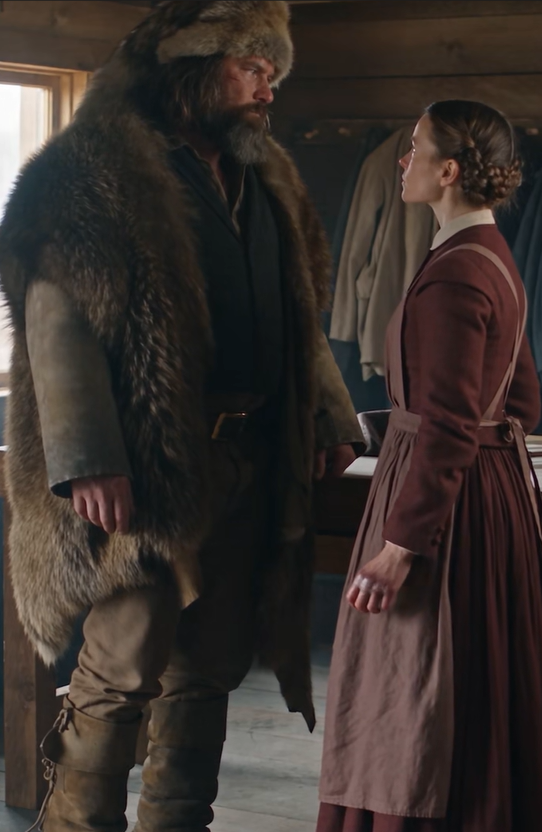
Now the mountain man who had carried three dying strangers through a blizzard covered his face with both hands.
“Elias.”
She moved closer.
“What?”
He looked at her.
His eyes were red.
“When you were little…”
Ara froze.
He continued.
“You hated carrots.”
Her mouth opened.
“You’d hide them under the table and blame the dog.”
Ara stared at him.
“You had a rag doll with one blue button for an eye.”
Something changed in her face.
Memories.
Not full memories.
Fragments.
A woman’s voice.
A wagon.
A boy carving animals from wood.
Ara whispered, “How do you know that?”
Elias took one step forward.
“Because I made the doll.”
Her breath stopped.
“No.”
“I was thirteen.”
“No.”
“Our mother’s name was Ruth.”
Ara backed away.
“My mother was Mary Bell.”
“Mary Bell found you.”
Ara shook her head violently.
“Stop.”
“Your real name was Anna.”
Something shattered inside her.
Not painfully.
Like ice breaking over running water.
A forgotten voice returned.
Annie.
A boy calling from across a field.
Annie, come back!
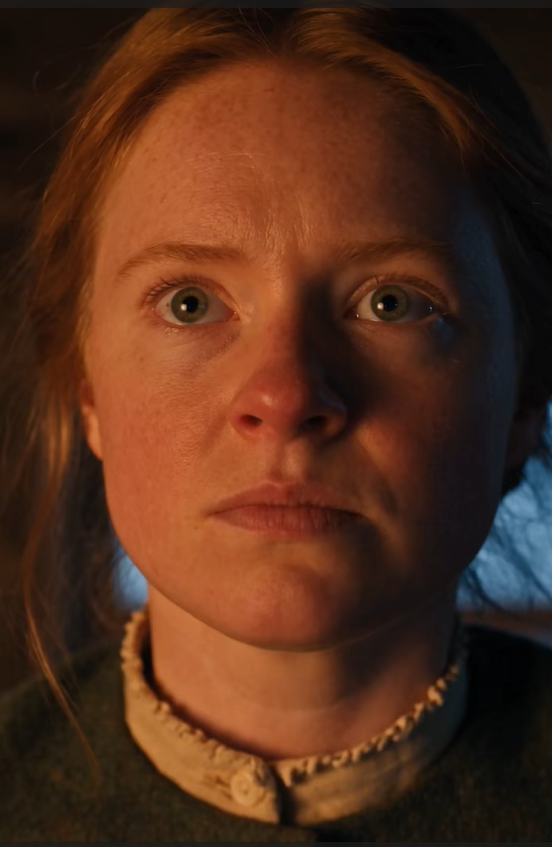
Ara covered her mouth.
Elias’s voice broke.
“Anna Rose Vance.”
Her knees gave way.
Elias caught her.
For one second they stared at each other.
Then Ara began sobbing.
Not the quiet tears she’d shed in his cabin.
These came from somewhere twenty-three years deep.
Elias wrapped both arms around her.
“I’m sorry.”
She clung to him.
“I’m sorry.”
“For what?”
“I lost you.”
“You were a child.”
“I should’ve come back sooner.”
“You were a child.”
“I looked.”
Ara cried harder.
“Elias.”
“I looked everywhere.”
She held his face.
“You found me.”
He stopped.
Ara’s eyes filled with tears.
“You found me.”
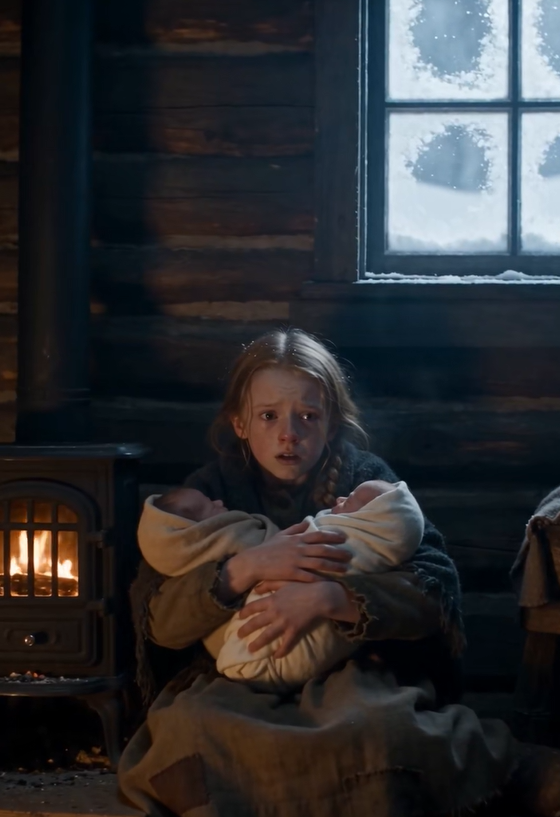
Hope began crying.
Then Grace joined her.
Through tears, Ara laughed.
Elias did too.
And in that ruined mining office, surrounded by broken furniture, gun smoke, winter, and the wreckage of a terrible man’s greed, a family believed dead for more than two decades became a family again.
Caleb Dorne went to prison.
Not for cruelty.
The law had shamefully little interest in what husbands did inside their own homes.
But forgery interested judges.
Fraud interested banks.
Attempted murder interested everyone.
And Caleb had made the mistake arrogant men often make.
He had documented his greed.
Letters found inside his desk described Ara as “the surviving Vance girl.”
Another explained his plan to obtain her signature after marriage.
A third contained the darkest sentence.
If she dies with no surviving issue, everything passes to me.
The twins had ruined that plan simply by breathing.
That was why Caleb wanted them dead.
Not because they were girls.
Not because they were useless.
Because they were heirs.
Because their existence made them powerful.
Ara read the letter once.
Then burned it.
Spring came late that year.
Snow melted from the mountain slopes.
Wildflowers appeared beside the cabin.
Ara learned her history piece by piece.
Mary Bell and her husband had discovered six-year-old Anna wandering beside a river after the Vance wagon attack.
She remembered almost nothing except the name Ara.
It was apparently how she’d pronounced “Anna Rose” while feverish.
The Bells had searched for surviving relatives but communication across the territory was poor.
Years became decades.
Anna Rose disappeared.
Ara Bell grew in her place.
Elias explained his own disappearance.
After burying their parents, he spent years searching for Anna.