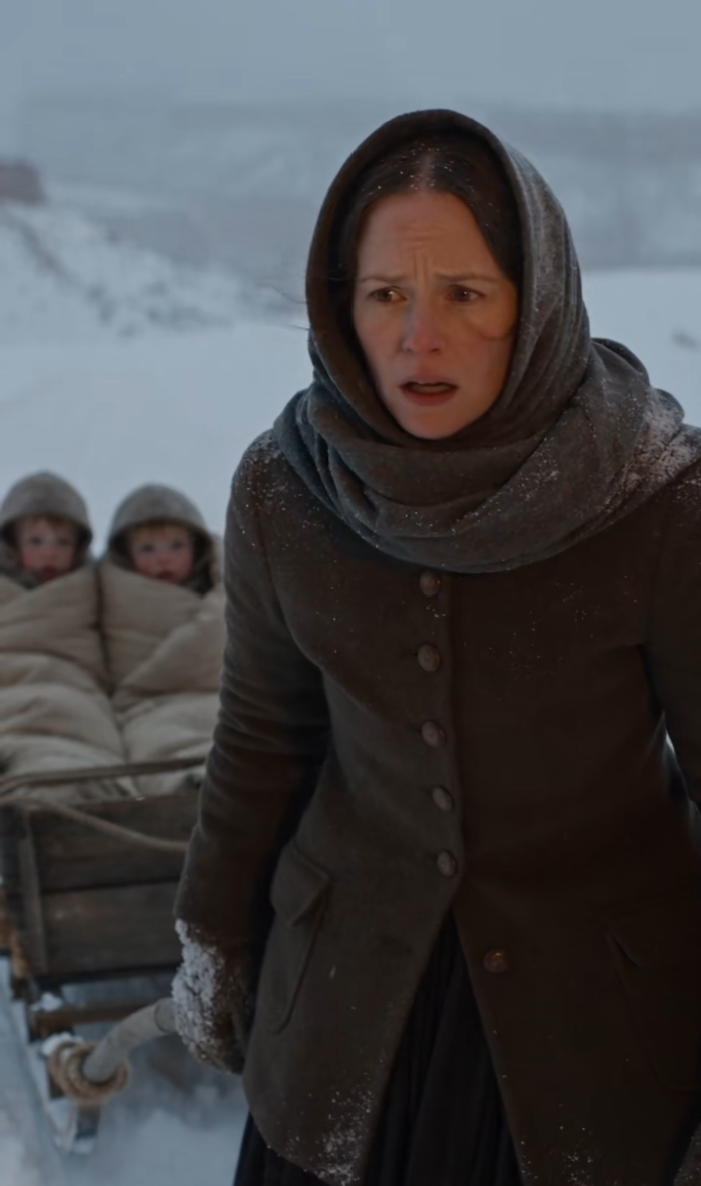
The woman translated.
“Rusk plans to make settlers believe Apache raiders are attacking ranches for water. He poisons our springs. His men kill isolated settlers wearing stolen clothing. Then fear does the rest.”
Corvin’s eyes narrowed.
“You expect me to believe settlers were killed by white men pretending to be Apache?”
“I expect you to read your father’s journals.”
Corvin opened the top journal.
Several pages had been marked.
Names.
Dates.
Payments.
Weapons purchased in Tucson.
Uniforms.
One page contained a list of ranches attacked during the previous year.
Beside each ranch was a single letter.
R.
R.
R.
Corvin turned the page.
At the top, his father had written:
All four ranches refused Gideon Rusk’s purchase offers.
Corvin felt suddenly sick.
The woman’s voice softened.
“Your father learned too much.”
“So Rusk killed him.”
“Rusk’s son did.”
Corvin looked up.
“Caleb?”
She nodded.
Caleb Rusk.
Thirty years old.
Educated in St. Louis.
Smiled like a preacher.
Shot like a gunfighter.
Corvin had drunk whiskey with him.
Played cards with him.
Once helped pull his horse from a flooded arroyo.
Corvin stared at the coffin.
“Where?”
“Your father was bringing these papers to you. Caleb found him near Black Mesa.”
“And you?”
“I found your father after.”
She touched the scar at her forehead.
“Caleb’s men found me too.”
Corvin remembered her collapsed beside his fence.
The blood.
The cracked lips.
“You were running from them.”
“Yes.”
“And you came here.”
“Your father told me to.”
Corvin looked back at Elias.
Twenty-three years.
Twenty-three years of questions.
Anger.
Loneliness.
Christmas mornings with one empty chair.
Years of imagining the father he barely remembered lying beneath desert stones.
And Elias had been alive.
Corvin’s grief twisted instantly into rage.
“Why didn’t he send a letter?”
The woman’s expression changed again.
Pain now.
“He did.”
“I never received one.”
“I know.”
“How?”
“Because the man who delivered his letters worked for Rusk.”
Corvin said nothing.
The implication settled between them.
Every unanswered letter.
Every year of silence.
Deliberate.
The woman continued.
“Your father believed at first that you received them and hated him.”
Corvin looked away.
A breeze moved through the cottonwood leaves.
Somewhere inside the barn, a horse stamped nervously.
Corvin whispered, “He thought I hated him?”
“Yes.”
“Did he hate me?”
The woman answered immediately.
“No.”
That certainty hurt more than anything else.
“He talked about you every day.”
Corvin shut his eyes.
He was seven again.
Sitting on his father’s shoulders.
Laughing beside the well.
Holding the brass compass.
Know where you stand.
Corvin opened his eyes.
“What’s your name?”
The woman hesitated.
“Among English speakers, Mara.”
“Mara what?”
Her gaze held his.
“Mara is enough.”
Before Corvin could ask more, a rifle shot cracked from the southern ridge.
Every horse moved at once.
Three hundred warriors turned.
The transformation was terrifying.
One moment they had been statues.
The next, bows were in hands, rifles raised, horses wheeling.
The older leader shouted something.
Lines shifted across the hills.
Corvin ran toward the porch.
Dust rose from the southern road.
Riders.
Dozens.
Then wagons.
A flag fluttered at the front.
Not an Army flag.
White cloth.
A black R painted across it.
Rusk.
Mara stepped beside Corvin.
“He came sooner than we expected.”
Corvin counted perhaps sixty men.
Armed.
Behind them rolled two freight wagons.
Gideon Rusk rode at the center on a gray stallion.
Caleb rode beside him.
Corvin’s hand moved toward his rifle.
Mara caught his wrist.
Her grip was astonishing.
“Not yet.”
“He murdered my father.”
“Then do not help him escape justice by becoming a murderer.”
Corvin stared at her.
“He shot Elias.”
“Yes.”
“Why shouldn’t I kill him?”
“Because your father had twenty-three years to become a man ruled by hatred.”
Mara released him.