Silas Thorne knew his little girl was dying because she had stopped asking where they were going.
For three days, four-year-old May had whispered the same question against the back of his neck.
“Is it much farther, Papa?”
At first, Silas had lied cheerfully.
“Just over the next rise.”
Then there had been another rise.
And another.
By the third afternoon, beneath a Wyoming sun that seemed determined to burn every living thing from the earth, May no longer asked.
She barely breathed.
Silas felt each shallow exhale against his torn collar.
Sometimes five seconds passed between them.
Sometimes seven.
Every time the pause lasted too long, terror clawed through his chest.
“Come on, sweetheart,” he murmured, forcing one bleeding foot in front of the other. “Stay with me.”
The leather straps holding May against his back cut into his shoulders. A ragged blanket shielded her from almost nothing. Her cheek rested against him, frighteningly hot.
Silas’s boots had disintegrated two miles earlier.
The soles hung loose like dead tongues, exposing his feet to stone and thorn. Blood darkened the dust behind him.
He did not care.
A man could surrender when the only life left to lose was his own.
A father had no such privilege.
Ahead, shimmering through waves of heat, stood a ranch.
Not a town.
Not a settlement.
Just one weather-beaten house, a barn, a windmill, several corrals, and miles of sunburned grass bordered by distant mountains.
It might be empty.
It might belong to someone who would drive him away.
It might have nothing.
But it was the first roof Silas had seen since yesterday morning.
He kept walking.
Six months earlier he had owned eighty acres in Nebraska.
They had not been good acres, but they had been his.
Sarah had planted sunflowers beside the kitchen window. May had chased chickens through the yard. Silas had believed hardship meant worrying over rain, market prices, and whether the roof would survive another winter.
Then locusts came.
They descended like a moving cloud.
In two days, the fields disappeared.
After that came debt.
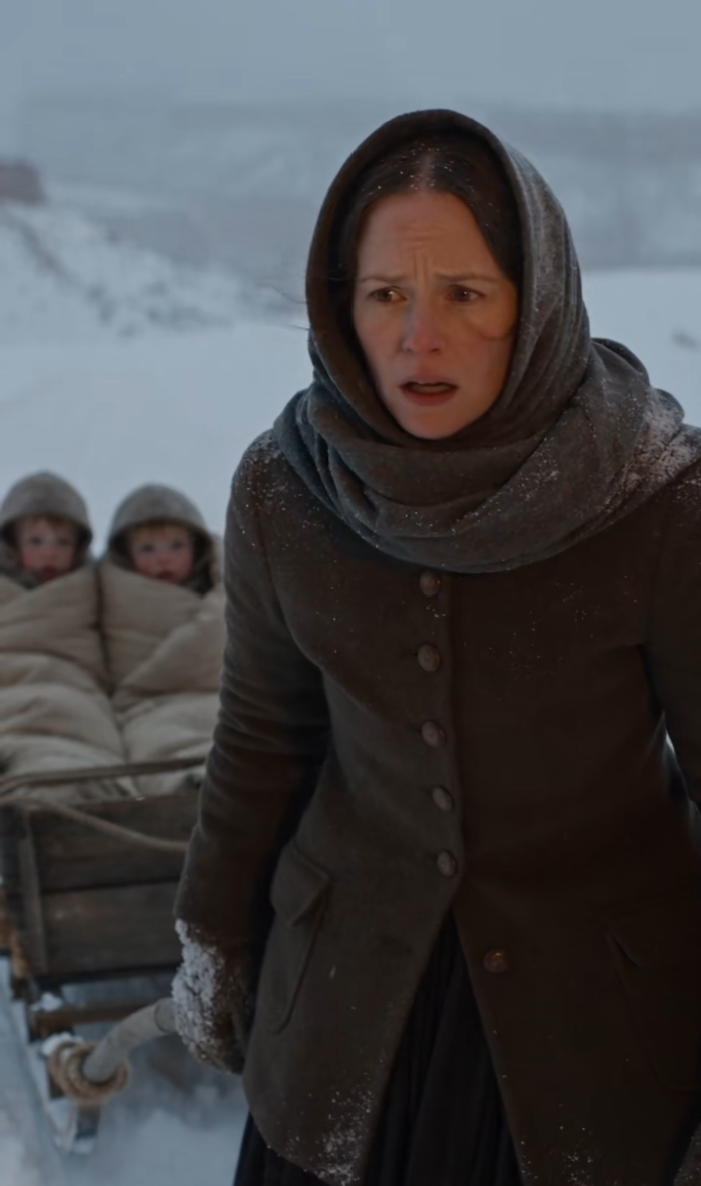
Then the winter of 1887 buried half the plains beneath snow and ice. Cattle froze standing. Families abandoned homesteads they had spent decades building.
And then came fever.
Sarah died in March.
Silas had sat beside her bed while May slept in the next room, listening to his wife struggle for every breath.
Sarah’s last coherent words had been about their daughter.
“Promise me.”
“I promise.”
“No matter what happens.”
“No matter what.”
“Keep her safe.”
Silas had taken her hand.
“I will protect May if it costs me everything.”
At the time, he had not understood that promises could demand payment in pieces.
First the farm.
Then the wagon.
Then the horse.
Then his wedding ring for food.
Then nearly his own life.
And still the debt was not settled.
The ranch drew closer.
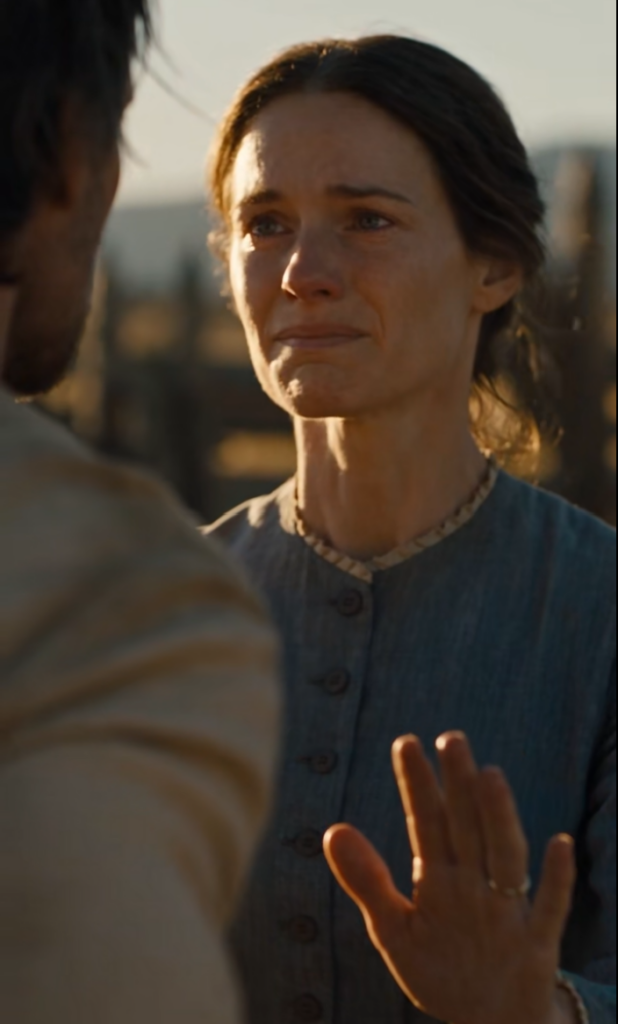
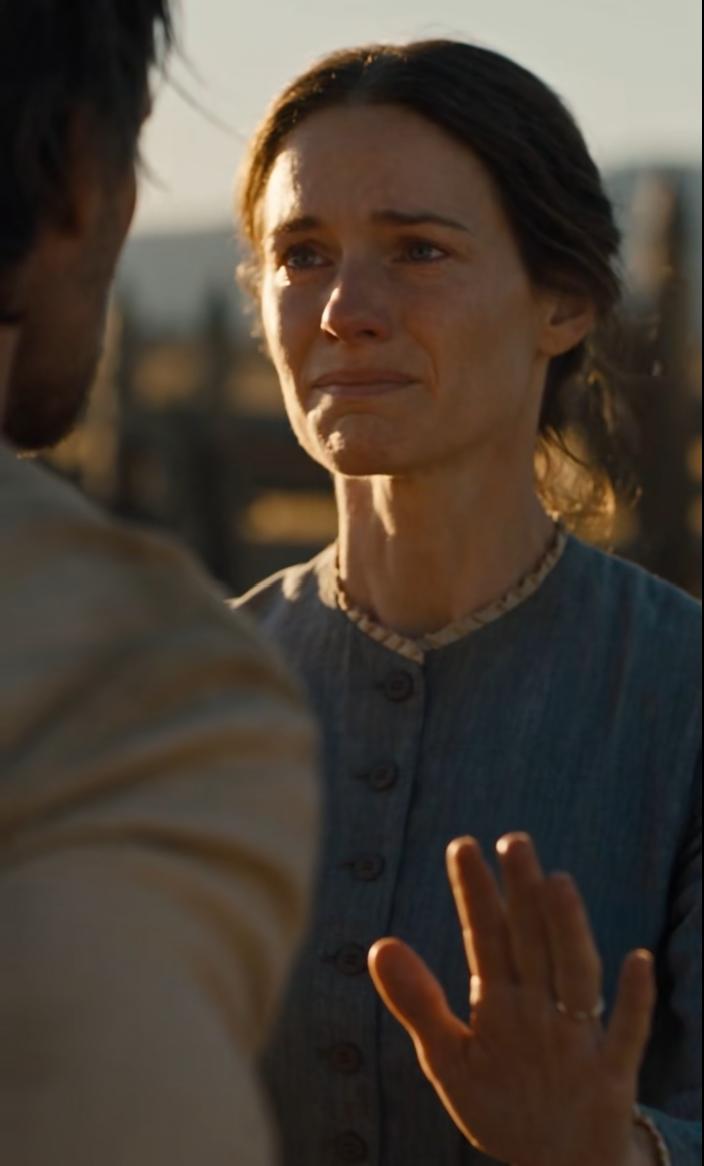
A woman appeared on the porch.
She wore a faded blue dress and stood with her arms crossed, watching him approach.
She was perhaps thirty-five.
Maybe forty.
Years of weather had written fine lines around her eyes, but she carried herself with the rigid self-sufficiency of someone accustomed to depending on no one.
Silas stopped several yards from the steps.
He removed his battered hat.
“Good afternoon, ma’am.”
His voice cracked.
The woman’s gaze traveled from his hollow face to his ruined boots.
Then upward.
To May.
“You’re a long way from anywhere.”
“Yes, ma’am.”
“What do you want?”
“Work.”