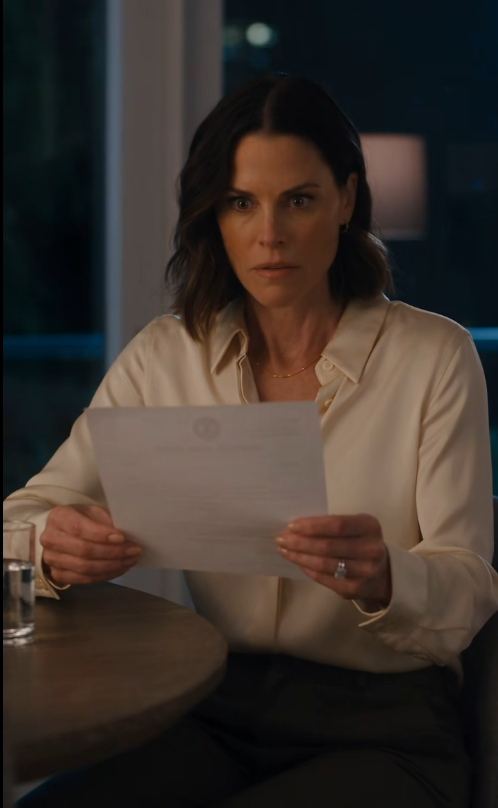
“But Abigail?”
“She died before sunrise.”
Lydia looked again at the embroidered square.
“She had that?”
Gideon nodded.
“And papers.”
He returned to the cedar chest.
This time he removed a bundle tied with black thread.
Inside were railway receipts.
Marriage certificates.
Letters.
And several yellowed ledger pages.
Gideon handed one to Lydia.
She read the first line.
Then the second.
By the fifth, her stomach turned.
Names.
Women’s names.
Beside each name were numbers.
Initials.
Town names.
Acreage.
Some entries were crossed through with red ink.
“What is this?”
“I don’t know everything.”
Lydia studied the page.
Gideon continued.
“Abigail said Pike wasn’t simply looking for a wife when he answered Crowley’s advertisement.”
Lydia looked up.
“He was paid.”
“For what?”
“To marry her.”
The wind screamed against the cabin.
“And afterward?”
“To get her signature.”
“On what?”
“Property transfers.”
Lydia frowned.
“Abigail didn’t own property.”
“No.”
Gideon pointed at the list.
“But several women did.”
A horrible understanding began forming.
Gideon explained.
The matrimonial agency connected isolated homesteaders with desperate women from eastern cities.
Some marriages were genuine.
Others were selected.
Women without close family.
Women who would not be missed quickly.
Women whose identities could be used on legal documents.
Men received money.
Land changed ownership.
Insurance policies appeared.
Widow signatures were forged.
Sometimes husbands died.
Sometimes wives disappeared.
Sometimes both.
“And Abigail discovered it?” Lydia asked.
“Yes.”
Gideon touched the embroidered cloth.
“She also discovered someone had been collecting evidence years before her.”
“My mother.”
“That’s what Abigail believed.”
Lydia shook her head.
“My mother worked as a seamstress.”
“Did she?”
“Yes.”
The answer came too quickly.
Lydia remembered something.
Her mother, Ellen Fenwick, had indeed sewn clothing.
But she had also spent evenings at the kitchen table writing numbers into narrow notebooks.
Lydia had assumed they were household expenses.
She remembered names.
Initials.
Fabric quantities.
Her mother burning pages in the stove.
Men knocking late at night.
Her mother suddenly insisting Lydia sleep at a neighbor’s apartment.
And finally—
Fire.
An entire boardinghouse room burning while Lydia stayed three streets away.
A body declared to be Ellen Fenwick.
No coffin opened.
No proper funeral.
Lydia looked at the ledger again.
Her eyes narrowed.
“These numbers.”
“What?”
“I’ve seen them.”
Gideon leaned forward.
“Where?”
“At Bellweather.”
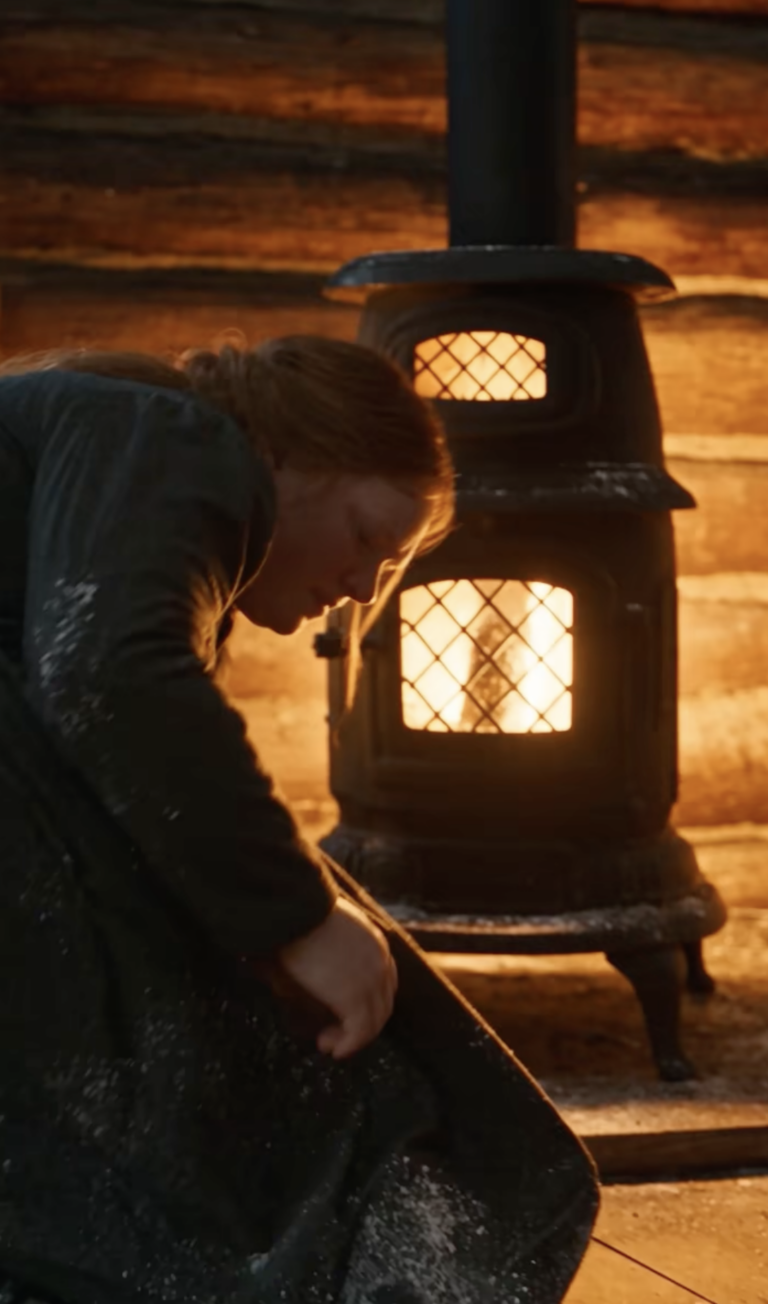
Lydia climbed from the bed, pulled the robe around herself, and carried the paper closer to the fire.
“Three-fourteen. Seven-twelve. Nine-twenty.”
“Meaning?”
“I don’t know yet.”
Her finger moved downward.
Then stopped.
She felt suddenly dizzy.
There, near the bottom of the final page, in handwriting newer than the rest, were two letters.
L.F.
Beside them:
BELLWETHER — BRIGGS
Then:
BLACK ELK / ROURKE
Lydia nearly dropped the page.
“No.”
Gideon stood.
“What?”
She pointed.
“That’s me.”
Neither of them spoke.
The marriage.
The railway ticket.
Crowley.
Briggs.
Gideon Rourke.
All written on the same page.
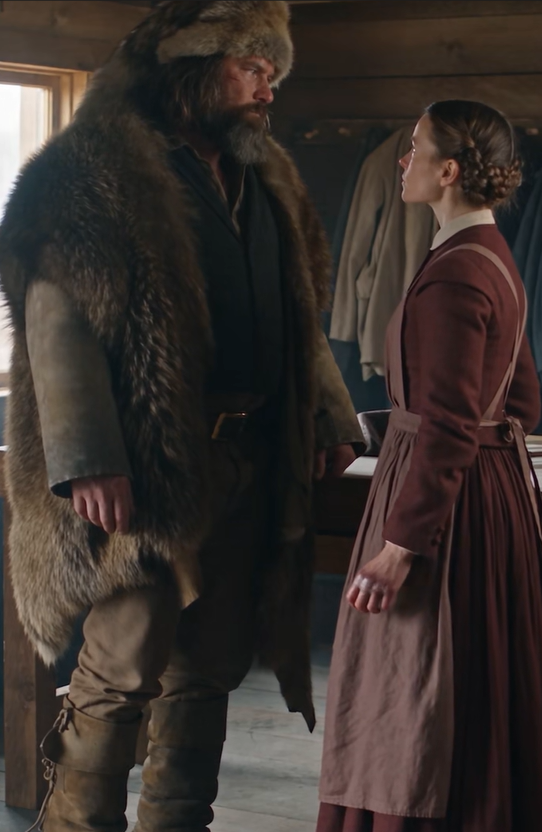
Lydia slowly turned toward her husband.
“You weren’t looking for me.”
“No.”
“But someone was.”
Gideon’s expression darkened.
“Yes.”
They did not sleep.
For the next four hours, Lydia spread every paper from Gideon’s chest across the kitchen table.
She forgot the cold.
Forgot embarrassment.
Forgot that only hours earlier she had been afraid of the man now making coffee beside her.
Numbers were safe.