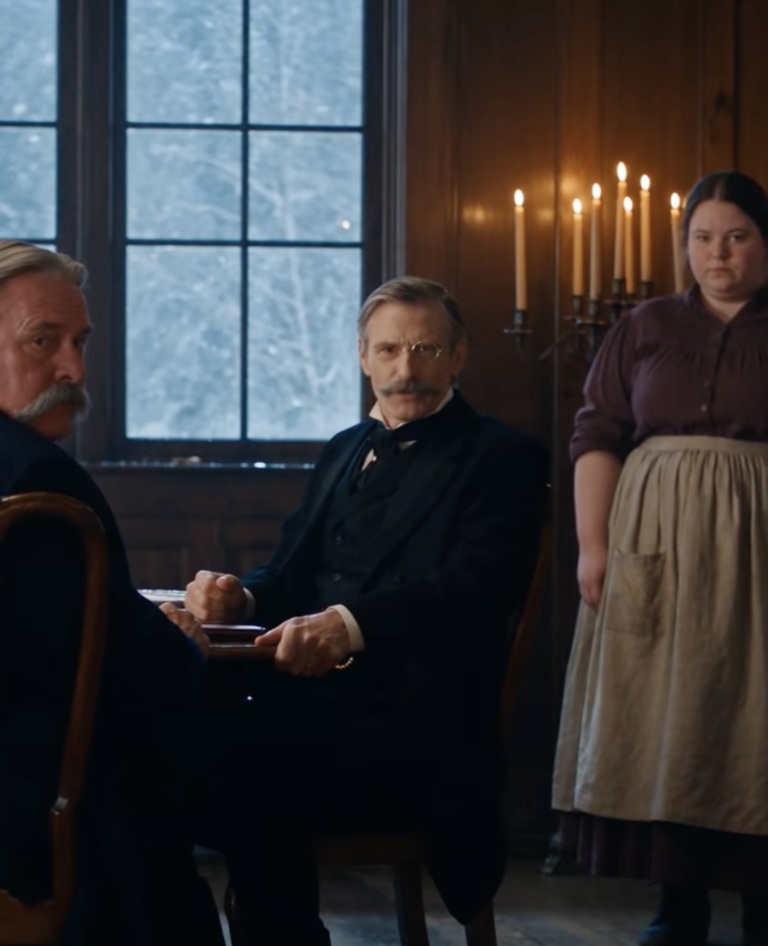
Crowley dismounted.
Beside him stood Deputy Marshal Silas Vane.
The other riders remained near the trees.
“Rourke!” Vane shouted. “Come outside!”
Gideon looked at Lydia.
She surprised herself by saying, “We need answers.”
“I need you alive.”
“Then don’t start shooting.”
Something almost like a smile moved beneath his beard.
“You’re bossy.”
“I balanced seven hundred worker accounts every Friday. You’re easier.”
They stepped outside together.
Crowley smiled warmly.
“Mrs. Rourke.”
Lydia hated hearing the name from his mouth.
“You’ve caused considerable concern.”
“Have I?”
“Mr. Briggs reported you missing.”
Gideon laughed once.
It contained no humor.
Crowley’s eyes moved toward him.
“Mr. Rourke.”
“Crowley.”
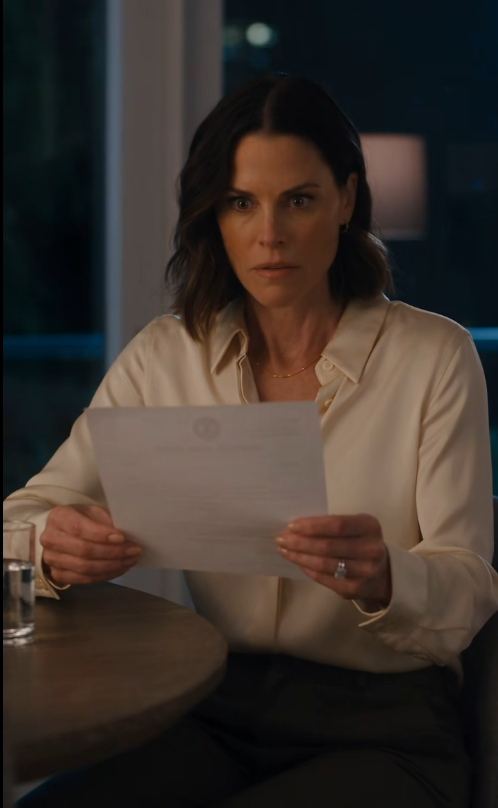
Vane produced a folded document.
“Gideon Rourke, you are under arrest in connection with the disappearance of Abigail Rourke and the killing of Vernon Pike.”
Gideon went still.
Lydia stared.
“That happened thirteen years ago.”
Vane nodded.
“New witness.”
Crowley looked sorrowful.
“Very unfortunate.”
Lydia understood immediately.
They wanted Gideon removed.
And perhaps they expected a frightened eastern bride to cooperate.
So Lydia did the most difficult thing she had ever done.
She stepped away from her husband.
“Take me with you.”
Gideon turned sharply.
“Lydia.”
She refused to look at him.
Crowley smiled.
“Of course.”
Gideon grabbed her wrist.
Then released it instantly.
That small movement nearly broke her.
“I’m not letting you—”
She looked directly into his eyes.
“Trust me.”
Two words.
Nothing more.
Something passed between them.
Gideon understood.
His jaw tightened.
Then he allowed Vane to bind his hands.
Black Elk settlement consisted of one mercantile, a boardinghouse, smithy, telegraph office, stable, church, and twenty-seven buildings pretending to be a town.
Gideon was locked inside the sheriff’s storage room.
Lydia was given a room above the mercantile.
Crowley visited after dark.
Alone.
He closed the door behind him.
Lydia remained beside the window.
“You found the chest,” he said.
She made herself appear confused.
“What chest?”
Crowley sighed.
“Your mother used to make the same face when she lied.”
Everything inside Lydia stopped.
She turned.
Crowley removed his spectacles.
Without them, something about his eyes changed.
Lydia suddenly remembered a man lifting her when she was very small.
Rain against a window.
A deep voice humming.
A silver watch chain.
Her mother screaming.
Thomas.
Crowley watched recognition appear.
Then he smiled.
“Hello, Lydia.”
Her knees nearly failed.
“No.”
“My little girl.”
“No.”
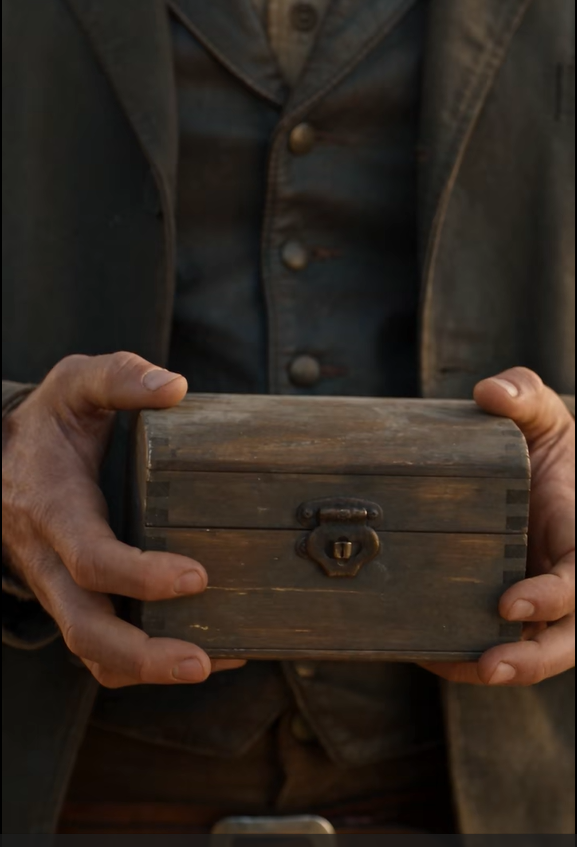
Edmund Crowley reached into his coat and removed an old photograph.
A young woman stood beside a river.
Ellen Fenwick.
Beside her was a handsome dark-haired man.
Twenty-five years younger.
Crowley.
Thomas Fenwick.
Lydia backed against the wall.
“You’re dead.”
“So your mother told you.”
“She said you drowned.”
“Your mother said many inconvenient things.”
“You killed her.”
Crowley smiled faintly.
“No.”
Lydia stared.
“Then who did?”
“Your mother killed herself the moment she decided principles mattered more than survival.”
Rage replaced shock.
“What did you do?”
Crowley walked toward the fireplace.
“Your mother discovered certain business arrangements.”
“Women.”
“Yes.”
“You sold women.”
“Don’t be theatrical. I arranged opportunities.”
“For men who beat them?”
“For men who paid.”
Lydia’s hands shook.
“You sent Abigail Pike to Vernon.”
“Among others.”
“And me?”
Crowley turned.
Here, finally, his smile disappeared.
“You were different.”
“Why?”
“Because you were never supposed to reach Idaho alive.”