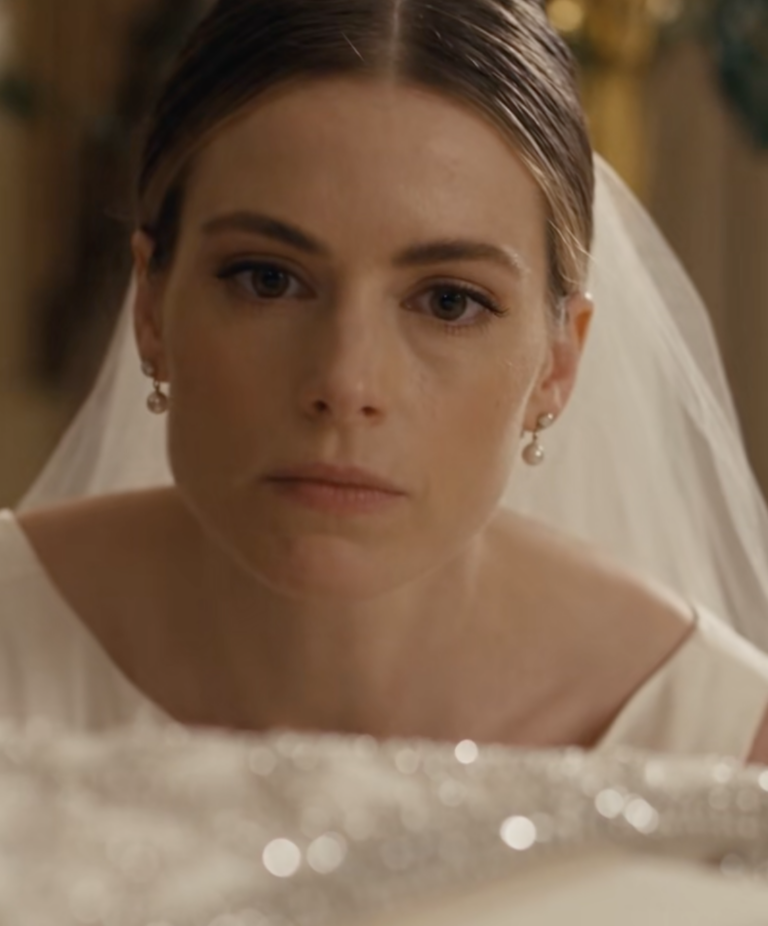
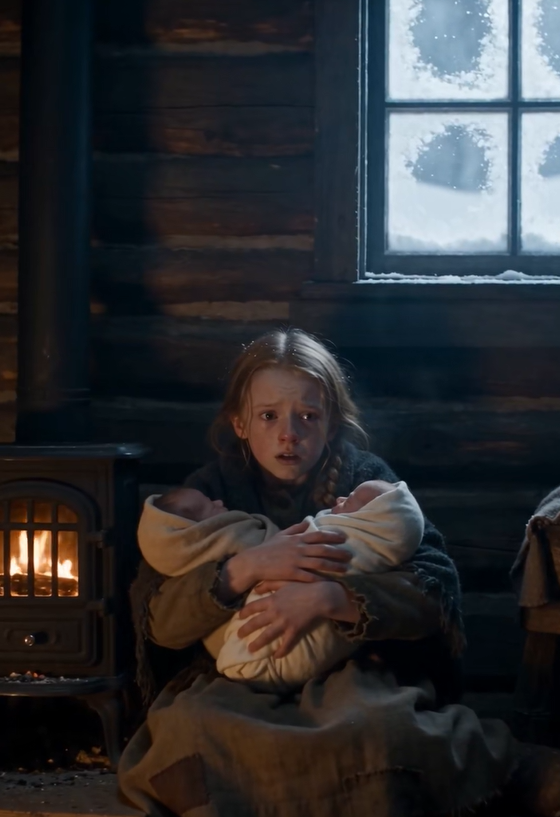
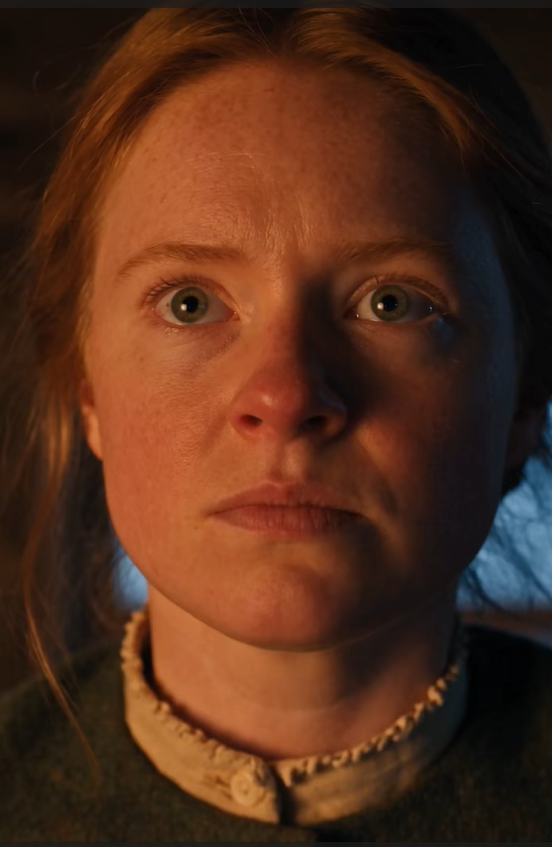
But there were nights when she remembered the bruises around Thomas’s wrist.
And the missing leather satchel he always carried when doing surveying work.
And the final words he had spoken before leaving home.
“If Gable comes asking about my maps, you tell him you’ve never seen them.”
At the time, Cora had thought nothing of it.
Now she wished she had asked why.
They reached the Thornton farm at dusk.
Twenty-eight acres.
A narrow house.
A leaning barn.
One milk cow.
Six hens.
Three horses before Thomas died.
One now.
The farm had been purchased seven years earlier when Thomas believed Clearwater would become a place worth building a future.
After his death, Cora discovered debts she had never known existed.
Mortgage payments.
Equipment loans.
Feed credit.
And a bank note secured against the property.
All carrying Arthur Gable’s signature.
She had worked through one winter.
Then another summer.
But numbers did not care how hard a widow worked.
The foreclosure notice sat inside her kitchen drawer.
She had twenty-three days left.
Nellie entered the house.
Cora began unhitching the mare.
That was when she heard bells.
A freight wagon rolled through the gate.
Then another.
Mr. Higgins sat atop the first.
Behind the wagons rode Josiah Langford.
Cora stared.
“What is this?”
Higgins climbed down.
“Delivery.”
“I ordered oats.”
“Yes, ma’am.”
“One half sack.”
“Yes.”
“Then why are there two wagons?”
Higgins looked at Josiah.
Cora did too.
Josiah dismounted.
Up close, he seemed even larger than he had inside the mercantile. Broad shoulders filled a weathered brown coat. Snow dusted dark hair already threaded with faint silver near the temples.
Cora recognized him.
Everyone recognized Josiah Langford.
But they had never formally met.
“I bought some supplies,” he said.
“For whom?”
“You.”
Cora’s expression hardened.
“No.”
Josiah blinked.
Higgins suddenly became deeply interested in his boots.
Cora stepped closer.
“You can take it back.”
“Mrs. Thornton—”
“I am grateful for your intention.”
“That sounds dangerous already.”
“But I won’t become someone’s charity because Harriet Gable embarrassed my daughter.”
Nellie appeared at the doorway.
She saw the red wool tucked beneath a canvas sheet.
Her eyes widened.
Cora saw.
Josiah saw.
Neither mentioned it.
Josiah took off his hat.
“Then don’t accept charity.”
Cora crossed her arms.
“What would you call this?”
“A business arrangement.”
“What business?”
“I need bookkeeping help.”
That surprised her.
“You own three ranches.”
“Four.”
“You have employees.”
“Bad ones.”
Higgins coughed suspiciously.
Josiah ignored him.
“My wife handled accounts before she died. My daughter helped afterward. She married last spring and moved to Montana. Since then, I have discovered I’m capable of managing six thousand cattle and completely incapable of remembering whether I paid the blacksmith.”
Cora studied him.
It sounded plausible.
Too plausible.
“What do you pay?”
“Twenty dollars monthly.”
Her eyes narrowed.
“That is absurd.”
“Fifteen.”
“Still absurd.”
“Mrs. Thornton, you bargain strangely.”
“For bookkeeping that might take one afternoon weekly?”
“Two.”
“Twelve dollars.”
“Sixteen.”
“Thirteen.”
“Fifteen and supper on the days you work.”
Cora almost smiled.
Almost.
“Fourteen.”
Josiah extended his hand.
“Done.”
She hesitated.
Then shook it.
His hand was warm despite the cold.
“What about the supplies?”
“Advance wages.”
“You bought perhaps sixty dollars’ worth.”
“Then I expect excellent books.”
Cora released his hand.
“You’re impossible.”
“I’ve been called worse.”
Behind them, Higgins began unloading flour.
Then Nellie spotted something.
A parcel wrapped in brown paper.
She rushed down the porch steps.
“What’s that?”
Higgins grinned.
“Open it.”
Inside lay six yards of the brilliant red wool.
Not twelve.
Six.
Nellie touched it as though it were sunlight made solid.
Cora looked at Josiah.
“You said business arrangement.”
“It is.”
“And that?”
Josiah looked uncomfortable for the first time.
“My daughter’s old dressmaker owes me a favor.”
Nellie hugged the fabric.
“Could Mama make me a dress?”
Josiah looked directly at Cora.
“I suspect your mother can make anything.”
It should not have affected her.
But after eighteen months of people looking at Cora and seeing widow, debt, burden, misfortune—
being looked at as though she were capable of something felt dangerously close to kindness.
“Thank you,” she said.
This time, she meant it.
Josiah nodded.
Then his attention shifted toward the barn.
His expression changed.
“What?”
He walked toward the doors.
Cora followed.
Josiah crouched beside the threshold.
Fresh tracks marked the thin snow.
Boot prints.
Large.
Two men, perhaps.
They led around the side of the barn.
Cora frowned.
“I haven’t had visitors.”
“When did you leave for town?”
“Before noon.”
Josiah followed the prints.
They ended below the small window along the eastern wall.