Cora whispered, “You knew?”
“Not where he hid the evidence.”
“But you knew Arthur was dangerous.”
“Yes.”
“You knew when you were standing in that mercantile?”
Josiah said nothing.
And suddenly the story Cora had told herself for fifteen years changed.
The cowboy by the stove had not been a stranger moved by a child’s tears.
He had known exactly who Nellie was.
Cora stared.
“That day…”
Josiah nodded.
“I recognized her name.”
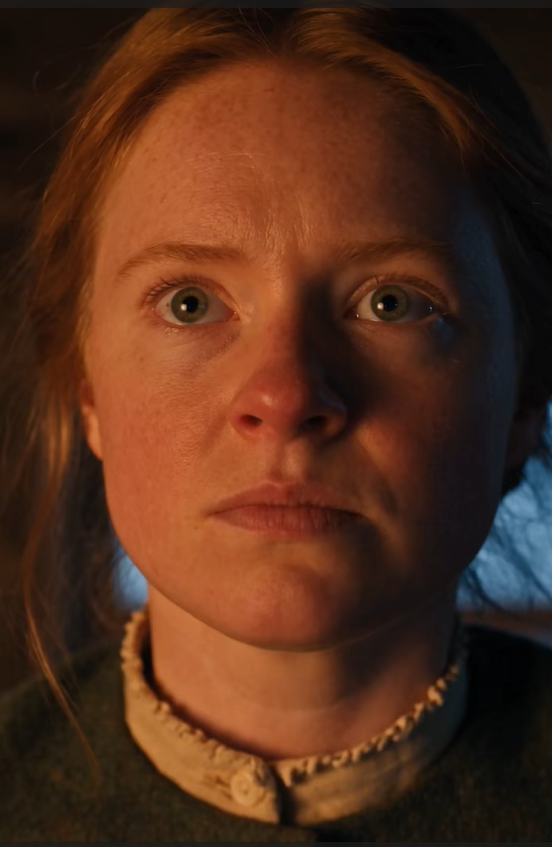
Cora’s tears came.
“You bought the red wool because of Thomas.”
“At first.”
The words wounded more than he intended.
“At first?”
Josiah stepped closer.
“Thomas’s last request was not about the railroad.”
Cora could barely speak.
“What was it?”
Josiah’s eyes moved to Nellie.
“He asked me to watch for his little girl.”
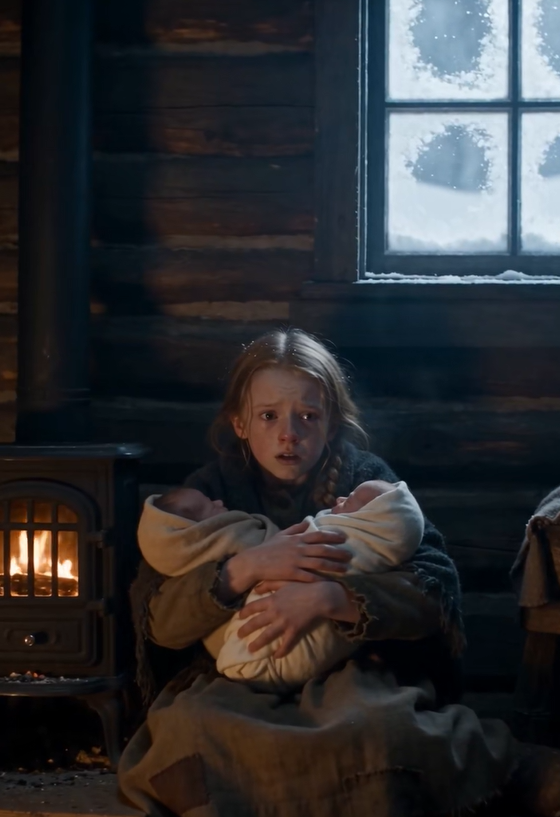
Nellie began crying silently.
“He said she liked red.”
Cora’s hand flew to her mouth.
A memory returned.
Thomas kneeling beside six-year-old Nellie one Christmas.
A red ribbon in her hair.
Telling her she looked brighter than a cardinal in snow.
Josiah continued.
“He made me swear I wouldn’t approach you unless you needed help. Thomas knew you. He said if a wealthy rancher appeared after his death offering protection, you would suspect pity and send him off the property.”
Despite everything, Cora laughed through her tears.
“That sounds like him.”
“He was right.”
“Why wait eighteen months?”
“Because you survived.”
Josiah’s voice softened.
“You kept the farm. You kept Nellie fed. You owed me nothing. I watched from a distance because that was what Thomas asked.”
Cora stared at him.
“Then you heard them laughing.”
“Yes.”
“And you broke your promise.”
“No.”
He shook his head.
“That was the moment I decided you needed help.”
Nellie wiped her face.
“What did Papa say before he died?”
Josiah looked at the young woman she had become.
For fifteen years, he had carried those final words.
Now he finally released them.
“He said, ‘Don’t let my daughter grow up believing poor means worthless.’”
Nellie sobbed.
Cora reached for her.
Mother and daughter held each other.
Then Cora looked at the man she had married, furious and grateful and heartbroken all at once.
“There’s more.”
Josiah nodded.
“What?”
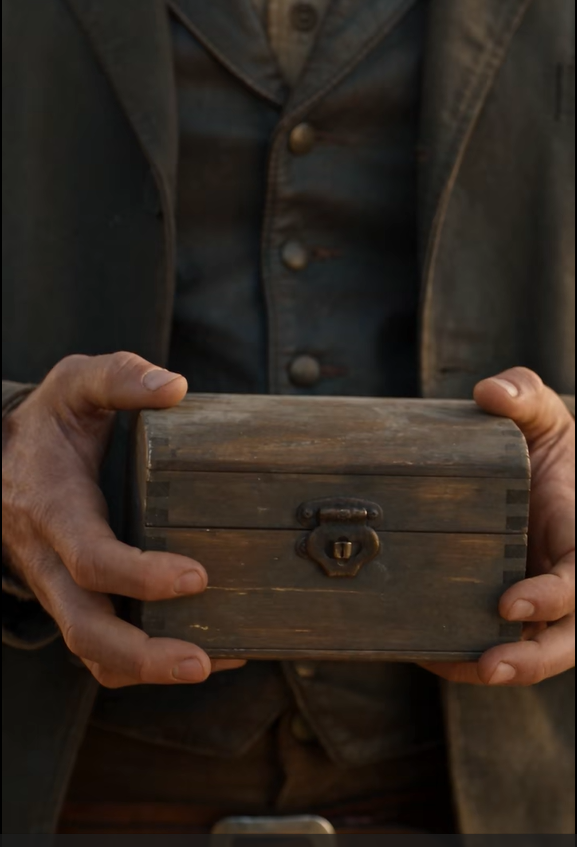
He reached into the old compass case.
Pressed beneath the lining was a tiny folded scrap neither Cora nor Nellie had noticed.
Josiah unfolded it.
Thomas’s handwriting.
Three lines.
If this reaches Nellie when she is grown, tell her something her mother may never believe:
The land was never the fortune.
Her mother was.
Cora closed her eyes.
And for the first time in fifteen years, she allowed herself to remember Thomas not as a body beneath a wagon, not as a murder victim, not as a signature on a railroad map—
but laughing in their first kitchen, flour on his sleeves, holding newborn Nellie as though the entire universe weighed six pounds.
She cried until there was nothing left to hold back.
Josiah sat beside her.
He did not apologize again.
Some truths were too large for apologies.
Some promises survived imperfectly.
Some love stories did not end simply because another began.
Outside, the evening train sounded its whistle.
Cora looked through the window.
Across the field, beside the railroad that had once threatened to destroy everything, children were running toward Thornton House.
Some wore fine coats.
Some wore patched ones.
Nobody cared.
Near the entrance stood an old wooden display case.
Inside was a faded gray child’s dress.
Thin elbows.
Dark stitching at one cuff.
One mismatched iron button.
Beside it lay a piece of brilliant red wool.
Visitors often asked why a wealthy family displayed such shabby clothing.
Nellie always gave the same answer.
“Because that dress was never proof that we were poor.”
Then she would touch the iron button.
“It was proof my mother kept me warm when she had almost nothing.”
And if visitors asked about the red wool, Nellie would smile.
“That taught us something else.”
“What?”
She would look toward Josiah, usually pretending not to listen nearby.
Then toward Cora.
“Never laugh at someone because they have less than you.”
She would pause.
“You may be looking at the richest person in the room and simply be too foolish to understand what wealth really is.”