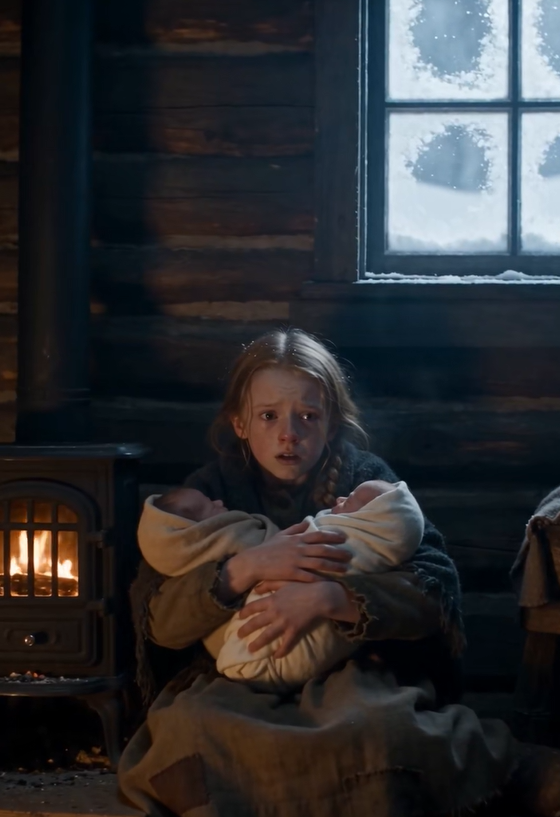
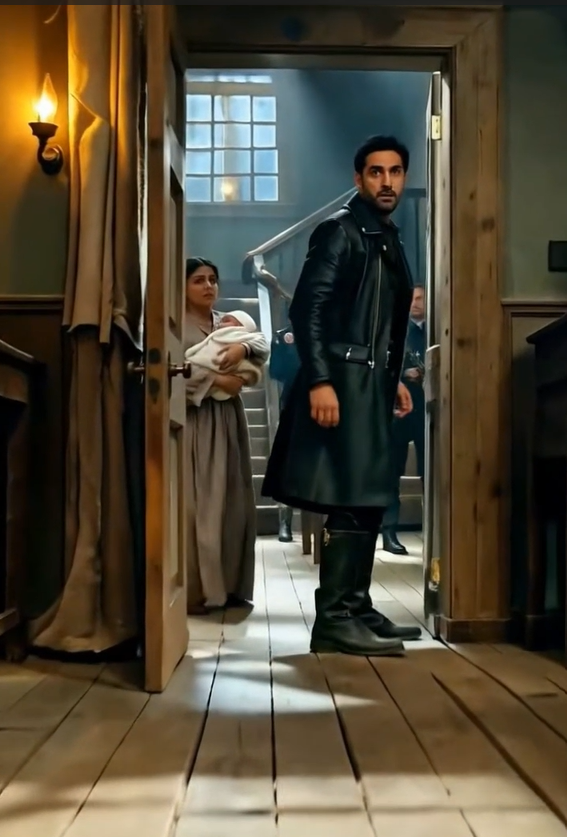
Caleb looked toward them.
“They’re my nieces and nephews.”
Edward frowned.
“You’re our uncle?”
Caleb closed his eyes.
“Apparently.”
Edward considered this.
Then smiled brightly.
“Uncle Bear.”
Everyone burst out laughing.
Even Bell.
Even Eleanor.
Caleb groaned.
“This is worse than prison.”
But Samuel Bell had not ridden into the mountains merely to reveal an old name.
He held one final document.
“The government located your father’s original will.”
Caleb’s humor vanished.
Bell handed it over.
Westward Consolidated had never legally belonged to Silas.
The elder Mercer, perhaps recognizing too late what his empire had become, had amended his will shortly before dying.
The company and its land holdings were to pass equally to his three sons.
But Silas had concealed the document.
Nathaniel’s identity had been erased.
Caleb had been declared dead.
Silas took everything.
Now two brothers were dead or imprisoned.
Legally, that left Caleb.
The company lands.
The remaining mines.
Thousands of acres.
Timber rights.
Rail contracts.
Property across three territories.
A fortune.
Caleb stared at Bell.
“I don’t want it.”
“You may not.”
“I won’t take it.”
Eleanor watched him.
Then understood.
“Take it.”
Caleb turned.
“No.”
“Take it.”
“It’s blood money.”
“Exactly.”
He stared at her.
She stepped closer.
“Take every mine.”
“Eleanor—”
“Every acre. Every building. Every dollar legally owed to you.”
Caleb shook his head.
“For what?”
She looked toward the children.
Then toward the mountains.
“For them.”
He frowned.
“For who?”
“For every family Silas hurt.”
Understanding moved slowly across his face.
Eleanor continued.
“Close the dangerous mines. Give workers ownership shares. Build houses. Schools. Clinics. Use the land for settlements where widows aren’t auctioned and children aren’t taken because their mothers are poor.”
Caleb remained silent.
Sarah stepped outside.
“Papa wanted the money returned.”
Thomas joined her.
“He’d want the company fixed too.”
James nodded.
Then William.
Margaret.
Catherine.
Finally Edward walked through the snow and wrapped both arms around Caleb’s leg.
“Take the money, Uncle Bear.”
Caleb looked down.
“You’re remarkably persuasive.”
Edward nodded seriously.
“I know.”
Caleb laughed.
Then his eyes filled.
He turned away, but not fast enough.
Eleanor saw.
So did the children.
Nobody mentioned it.
Ten years later, travelers entering Covenant Creek no longer saw an auction platform in the center of town.
Caleb had burned it.
In its place stood a school.
Beside it stood a medical clinic.
Across the street was the Hayes-Roar House, where women traveling west could stay without charge until they found work.
A brass plaque hung near the entrance.
It contained no names of wealthy donors.
Only nine words:
NO FAMILY SHALL BE BROKEN BECAUSE POVERTY MADE THEM POWERLESS.
Sarah eventually studied law.
Thomas became a federal marshal.
James bred horses.
William became a teacher.
Margaret trained as a nurse.
Catherine became the first woman in Covenant Creek to manage one of the former Mercer mines, now owned cooperatively by its workers.
Edward grew into a young man who remained convinced cast-iron cookware was an acceptable law-enforcement tool.
Caleb never succeeded in changing his mind.
As for Eleanor and Caleb, the marriage contract that began as a desperate legal arrangement eventually became something neither had believed possible.
Years after the auction, Caleb asked Eleanor a question beside the same fireplace where Daniel’s secret had once been uncovered.