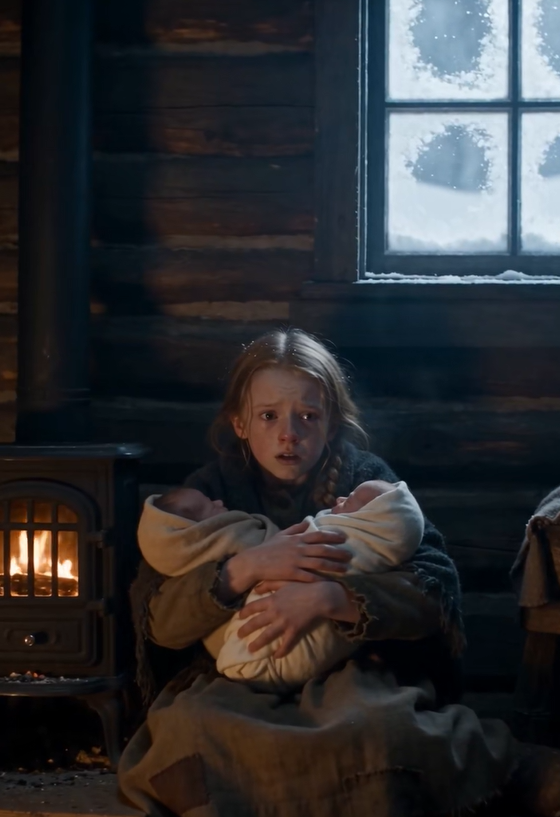
Something in the thirteen-year-old’s face convinced her.
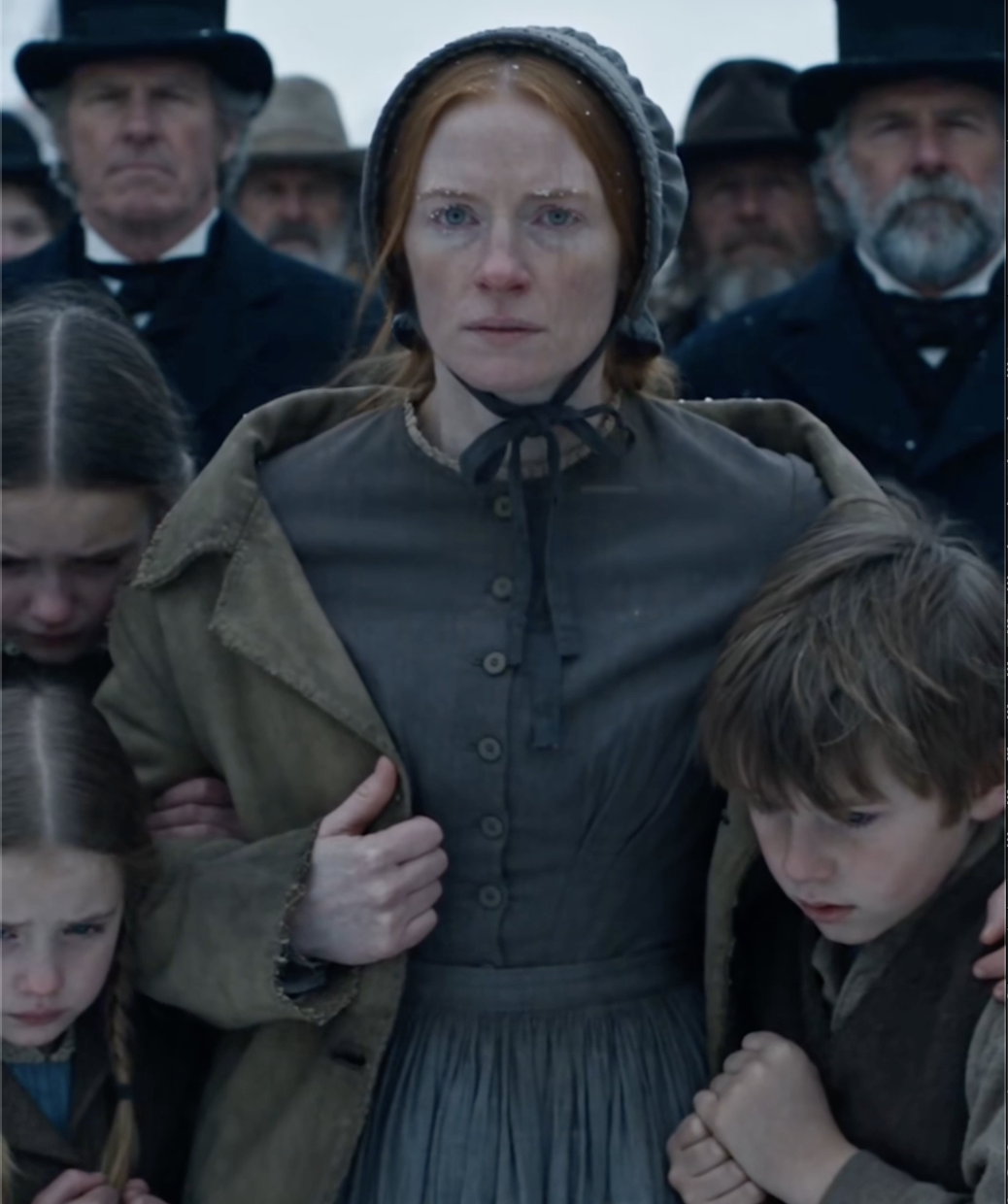
Federal marshals arrived two days later.
But the mystery was not finished.
Silas refused to explain the seven numbers.
Caleb didn’t understand them.
Neither did the marshals.
For weeks Eleanor tried every possibility.
Bank accounts.
Property records.
Land coordinates.
Railway lockers.
Nothing.
Then one afternoon Catherine was practicing arithmetic at the kitchen table.
She looked at the paper.
“Mama?”
“Yes?”
“These aren’t seven numbers.”
Eleanor looked up.
“What?”
Catherine pointed to Daniel’s note.
“They’re fourteen.”
Each entry contained two numbers separated by a small mark.
Eleanor had assumed it was punctuation.
Catherine saw something else.
“Like pages and lines in Sarah’s book.”
Sarah froze.
“The books.”
Caleb turned from the fireplace.
“What?”
Sarah ran toward the shelves.
“Papa loved codes.”
Eleanor stared.
“You knew that?”
“He taught me one.”
Sarah pulled down The Last of the Mohicans.
“The numbers could be page and line references.”
“But which book?”
Caleb’s gaze moved toward one shelf.
Then stopped.
He removed an old Bible.
Inside the cover was writing.
Not Caleb’s.
Daniel’s.
Eleanor’s knees weakened.
“When did you get that?”
Caleb whispered, “He gave it to me during the war.”
They decoded the seven references.
Each produced one word.
UNDER. CHILDREN. WHERE. MOTHER. FIRST. FOUND. HOME.
Thomas frowned.
“That makes no sense.”
Eleanor stopped breathing.
Sarah saw her face.
“Mama?”
Eleanor whispered, “Philadelphia.”
Years earlier, when Sarah was born, Daniel had built a cradle.
Oak.
Heavy.
Far too strong for an infant bed.
Every Hayes child had slept inside it.
When Edward outgrew it, Eleanor refused to sell it.
She had dismantled the cradle before traveling west.
Its long oak boards now formed part of a storage chest Caleb had built for her belongings.
Caleb carried the chest downstairs.
They removed the clothing.
Thomas found screws hidden beneath the base.
Caleb lifted the false floor.
Inside lay a cloth-wrapped package.
The ledger.
And something else.
A bank certificate.
Eleanor unfolded it.
Then sat down.
Caleb read over her shoulder.
$140,000 held in trust.
But not in Daniel’s name.
Not Eleanor’s.
Seven beneficiaries.
Sarah Hayes.
Thomas Hayes.
James Hayes.
William Hayes.
Margaret Hayes.
Catherine Hayes.
Edward Hayes.
Silas had told the truth about the money.
And lied about everything else.
Daniel had not stolen it.
He had recovered money the Mercer company had taken from workers through fraudulent debt agreements.
But instead of returning it through corrupt territorial offices, Daniel had transferred the entire amount into a trust.
The attached instructions explained why.
The money belonged not merely to the Hayes children.
They were trustees.
When each reached adulthood, the funds were to establish schools, medical clinics, and legal aid for mining families whose wages had been stolen.
Daniel had named his children because he trusted their mother to raise them differently from the Mercer family that had raised him.
Eleanor covered her face and wept.
Not quietly.
Not gracefully.
Eighteen months of grief came out at once.
Caleb moved toward her.
Then stopped.
As always, he waited.
Eleanor reached for his hand.
Only then did he kneel beside her.
Summer transformed the valley.
Wildflowers appeared where snow had once stood waist-deep.
The children became stronger.
Thomas grew nearly an inch.
Sarah began helping a retired territorial judge catalog the ledger.