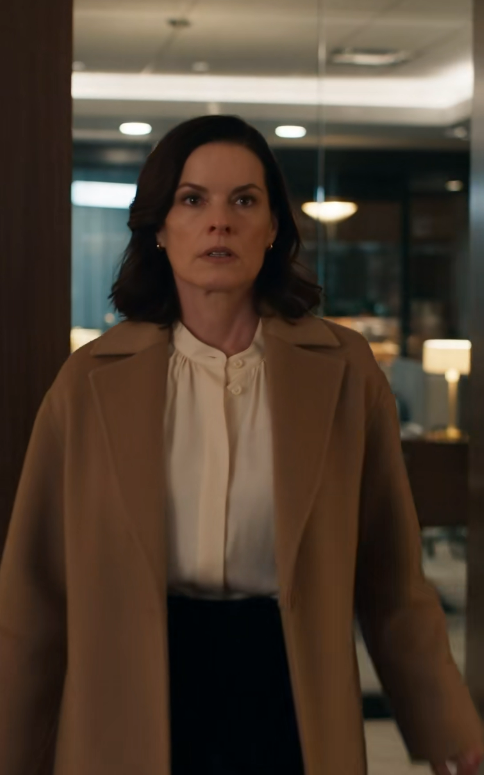
“The auction wasn’t real,” Eleanor whispered.
“Some of it was.”
“But we were sent there deliberately.”
Caleb nodded.
“They wanted you desperate enough to accept whichever man they selected.”
“Why?”
“So they could search everything you carried and question the children separately.”
Thomas went pale.
“The orphan farms.”
Caleb looked at him.
“There were never going to be orphan farms.”
Eleanor stood so fast the chair fell.
“What were they going to do with my children?”
Caleb did not answer.
That answer was enough.
She turned away, pressing both hands over her mouth.
Caleb said quietly, “I learned about the auction three days before it happened.”
“And you paid three hundred dollars.”
“It was all the money I could reach quickly.”
“Why didn’t you simply tell me?”
“Would you have believed Caleb Roar?”
She turned.
He gestured toward himself.
“Former soldier. Mountain recluse. Man half the territory thinks is a murderer.”
Eleanor remembered her own terror in the wagon.
No.
She would not have believed him.
“Why do people think you’re a murderer?”
Caleb’s gaze shifted toward the window.
“Because sometimes the easiest way to protect witnesses is to let dangerous men think you’re more dangerous than they are.”
Thomas frowned.
“What does that mean?”
“It means,” Caleb said, “some of the men people claim I killed are alive.”
“Where?”
“California. Oregon. Canada.”
Eleanor stared.
“You helped them disappear.”
He nodded.
“The men hunting them never needed to know.”
The stories.
Men crossing Caleb and vanishing.
They had vanished.
Just not into graves.
Caleb’s terrifying reputation had been built partly from people he had saved.
Eleanor lowered herself into the chair.
“Daniel knew you?”
“For six years.”
“How?”
“We served together.”
This time she laughed bitterly.
“Daniel never served.”
Caleb’s expression changed.
“Yes, he did.”
“No. Daniel was nineteen when the war ended. He stayed with his family.”
“Eleanor.”
“I knew my husband.”
Caleb reached slowly inside his coat.
He removed a folded photograph.
He placed it on the table.
Five young soldiers stood before a canvas tent.
Caleb was unmistakable, though younger and clean-shaven.
Beside him stood Daniel Hayes.
Eleanor stared at the photograph until her vision blurred.
Her husband had lied about that too.
“Who was he?” she whispered.
Caleb’s answer changed everything.
“Daniel Hayes wasn’t his real name.”
His real name had been Nathaniel Mercer.
The man at the fence—Silas Mercer—was his older brother.
Their father had built Westward Consolidated Mining through fraud, intimidation, and political influence.
Nathaniel had run away at seventeen.
He enlisted under a false name.
After the war, he kept it.
Daniel Hayes.
He met Eleanor years later.
Built an ordinary life.
Had seven children.
And never told his wife that he came from the family whose empire he would eventually try to destroy.
“Silas is their uncle?” Thomas whispered.
Caleb nodded.
Thomas looked sick.
Eleanor could hardly breathe.
“Why would Daniel hide that from me?”
“At first? Shame.”
Caleb paused.
“Later, fear.”
“Fear of what?”
“That if his family knew you existed, they’d use you.”
Eleanor’s anger exploded.
“They used us anyway!”
“I know.”
“He should have told me!”
“Yes.”
“He let me believe he was a simple laborer!”
“Yes.”
“He left me with seven children and secrets powerful men were willing to kill for!”