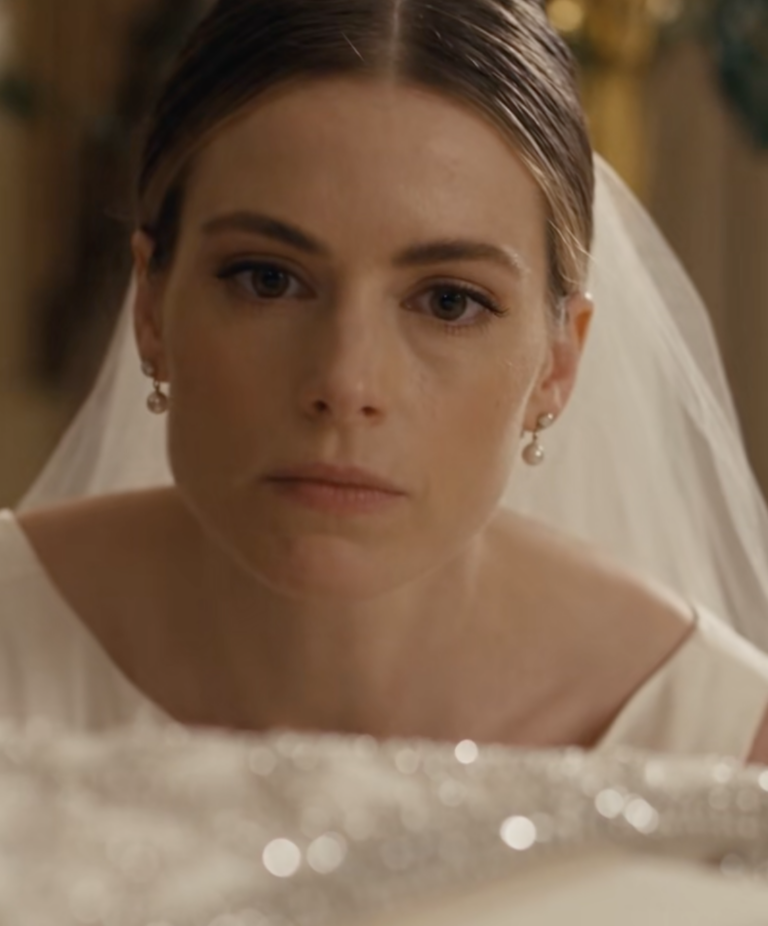
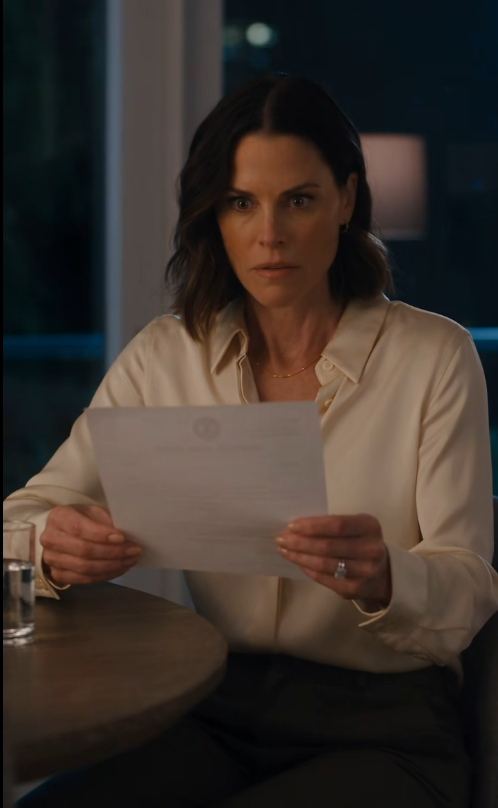
She folded her hands.
“Proceed.”
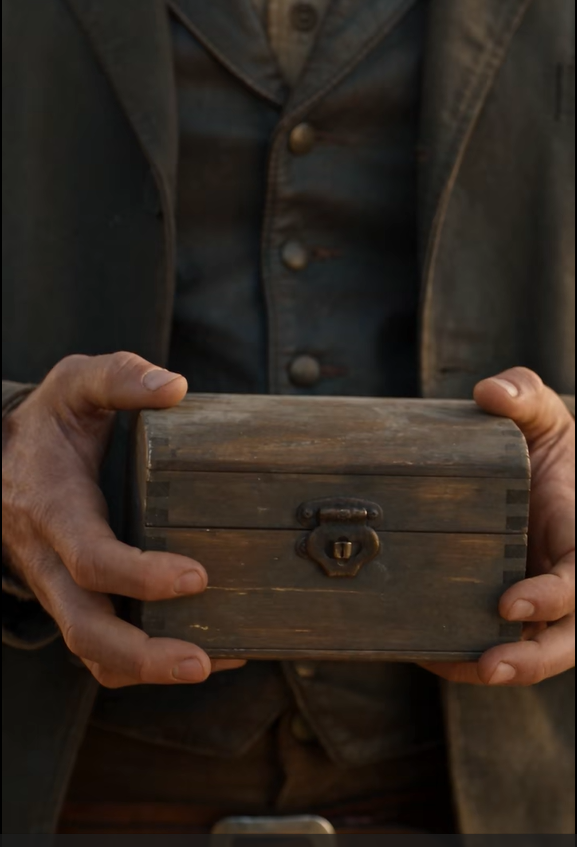
He opened the box.
Inside lay a simple gold band.
“No diamonds,” he said.
“Good.”
“No estate attached.”
“Better.”
“No hidden compartments.”
“Excellent.”
“And no expectation that you become quieter, more obedient, less difficult, or in any measurable way more convenient.”
Eleanor’s smile faded.
Samuel continued.
“I would like to marry the woman who hit Adrian Blackwood in front of thirty-two people.”
“Thirty-one.”
“What?”
“Mrs.
Parker had fainted.”
“Then thirty-one conscious witnesses.”
Eleanor laughed.
Samuel held out the ring.
“Will you?”
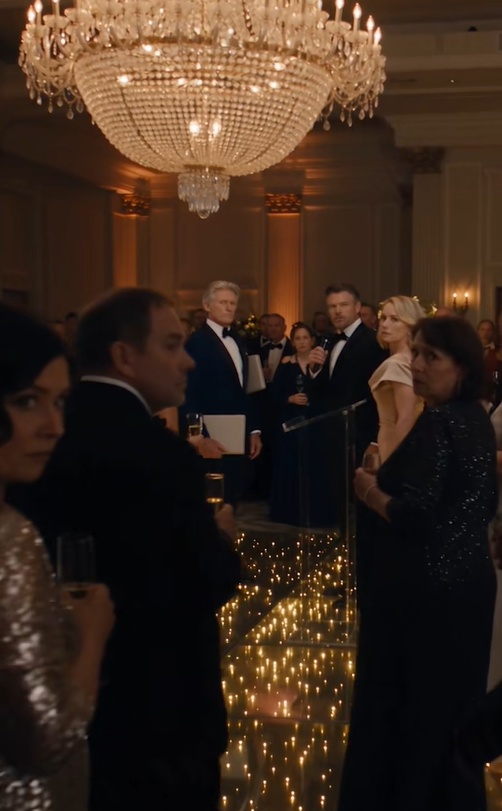
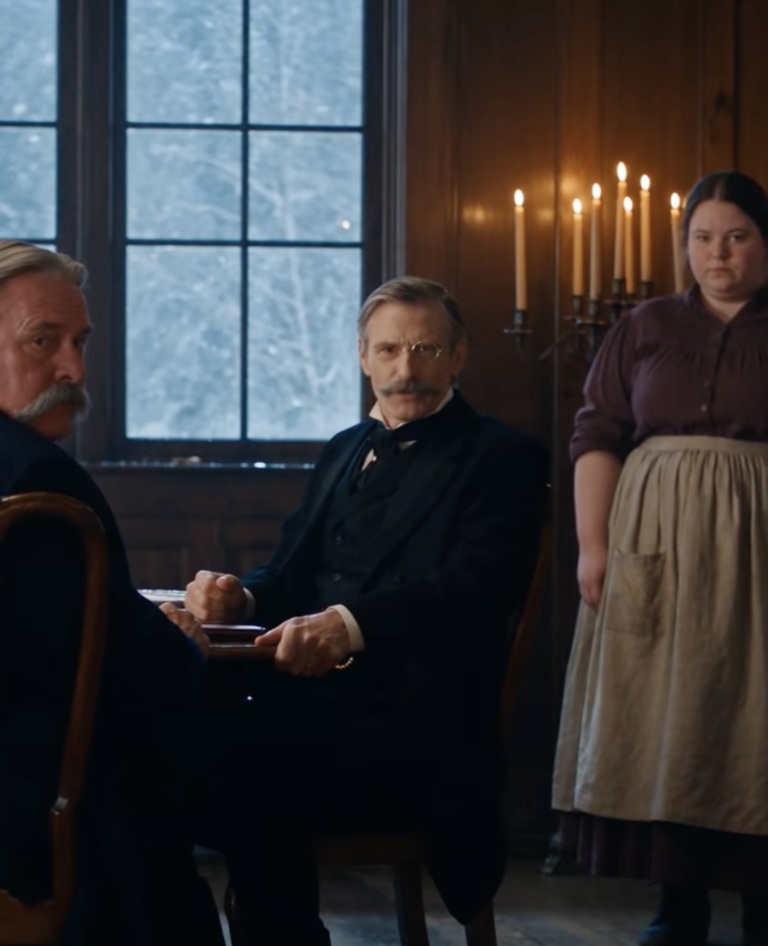
She looked around the room.
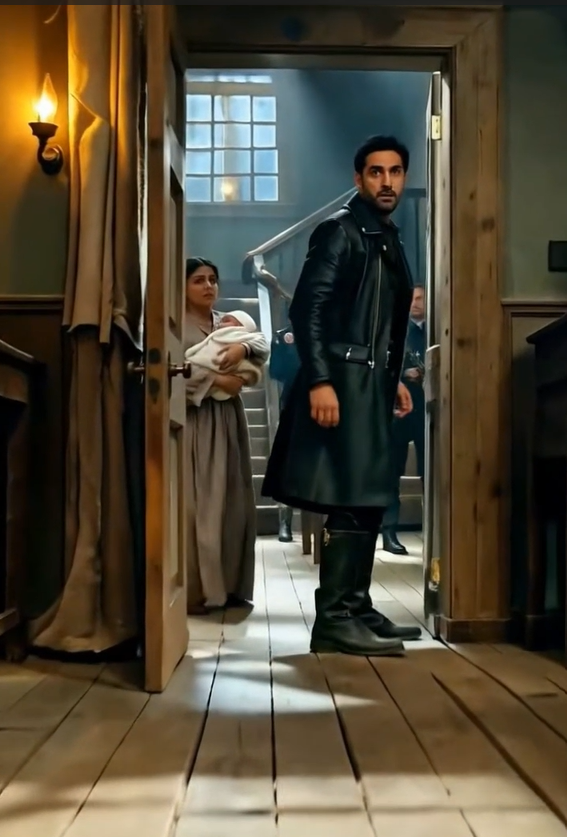
Years earlier, she had stood there carrying a tray.
Invisible.
That was how everyone described servants.
Invisible.
But Eleanor had learned something since.
Servants were never invisible.
They saw everything.
People simply forgot to look back.
She looked at Samuel.
“Yes.”
He exhaled.
“But,” she added.
His expression became cautious.
“Yes?”
“If you ever tell anyone I accepted that quickly, I will deny it.”
“Understood.”
“And I am keeping my name.”
“I assumed.”
“And Blackthorn remains mine.”
“Gladly.”
“And—”
Samuel kissed her.
Eleanor stopped talking.
Mrs.
Fenwick, listening outside the door with absolutely no shame, later described the silence as miraculous.
Years afterward, visitors to Blackthorn Hall often noticed an unusual object displayed beneath glass in the entrance gallery.
Not a crown.
Not an ancestral sword.
Not some priceless painting.
A maid’s gray apron.
Beside it lay the green-stoned ring.
The brass plaque beneath them read:
ELEANOR WARD BLACKWOOD WORE ONE OF THESE WHEN THE HOUSE BELIEVED SHE HAD NO POWER.
The second line had been added at Eleanor’s request:
THE HOUSE WAS MISTAKEN.
Schoolchildren loved the story.
Most wanted to hear about the slap.
Some wanted the pistol.
Others preferred the burning chapel.
Adults always asked about the inheritance.
“How extraordinary,” they would say, “to discover you were the true heir.”
Eleanor usually smiled.
Because that was not the revelation that had changed her life.
Wealth could be inherited.
Names could be changed.
Property could move from one hand to another with enough paper and ink.
The real revelation had occurred before any solicitor entered Blackthorn.
Before anyone knew about Catherine’s marriage.
Before the hidden documents.
Before the chapel fire.
It happened when Adrian Blackwood looked at Eleanor in a servant’s uniform and told her she was
only a maid.
For years she had secretly believed something similar.
Not that maids were worthless.
But that power belonged to the people upstairs.
The people whose names were engraved on silver.
Whose portraits hung on walls.
Whose signatures moved money.
Whose anger could dismiss a servant before dinner.
Then she finally understood.
Adrian’s power had depended upon obedience.
Edmund’s reputation had depended upon silence.
The Blackwood fortune had depended upon nobody asking where the money came from.
And Nathaniel’s disgrace had survived because the people who knew better had been too frightened to speak.
Power was not always something a person possessed.
Sometimes it was something everyone else
agreed to keep giving them.
The day Eleanor struck Adrian, that agreement broke.
First in her.
Then in Thomas.
Mrs.
Fenwick.
Lady Beatrice.
Judge after judge.
Witness after witness.
Until the great Blackwood lie, which had survived decades, collapsed because the quietest woman in the house finally said no.