And that was why Eleanor never removed the maid’s apron from the entrance gallery.
Not even when Samuel complained that visitors thought it peculiar.
Not even when their children asked why Mother displayed old servant clothing beside family portraits.
Eleanor would take them beneath the glass case and point first to the apron.
Then to the ring.
“Which one made me powerful?” she would ask.
Her daughter once answered:
“The ring.”
Her son said:
“The house.”
Samuel, wisely, said nothing.
Eleanor smiled.
“Neither.”
She touched the glass above the faded gray cloth.
“I was already powerful when I wore this.”
Her daughter frowned.
“Then why didn’t everyone know?”
Eleanor looked toward the portraits of generations of Blackwoods.
Men in military uniforms.
Women covered in jewels.
People who had inherited the right to be noticed.
Then she looked back at her children.
“Because sometimes,” she said,
“the most dangerous mistake powerful people make is believing that the person they refuse to see cannot see them.”
Outside, evening settled over Blackthorn.
Servants and family ate supper in different rooms still—Eleanor had discovered that abolishing every tradition merely created new inconveniences—but the doors between those worlds stood far more open than before.
Laughter drifted from the kitchen.
Someone practiced piano upstairs.
Samuel was arguing with the gardener about roses.
Nothing about the house looked revolutionary.
That pleased Eleanor.
Real change, she had learned, rarely announced itself forever.
Eventually it became ordinary.
But there remained one final secret known only to Eleanor.
Inside Nathaniel’s ring, beneath the empty space where the seal once rested, she had discovered another engraving after returning from France.
So small that even Beatrice had never noticed it.
Four words.
Nathaniel must have carved them before hiding the evidence.
Eleanor kept them private for years.
On the morning her first daughter left Blackthorn to begin a life of her own, Eleanor finally showed her.
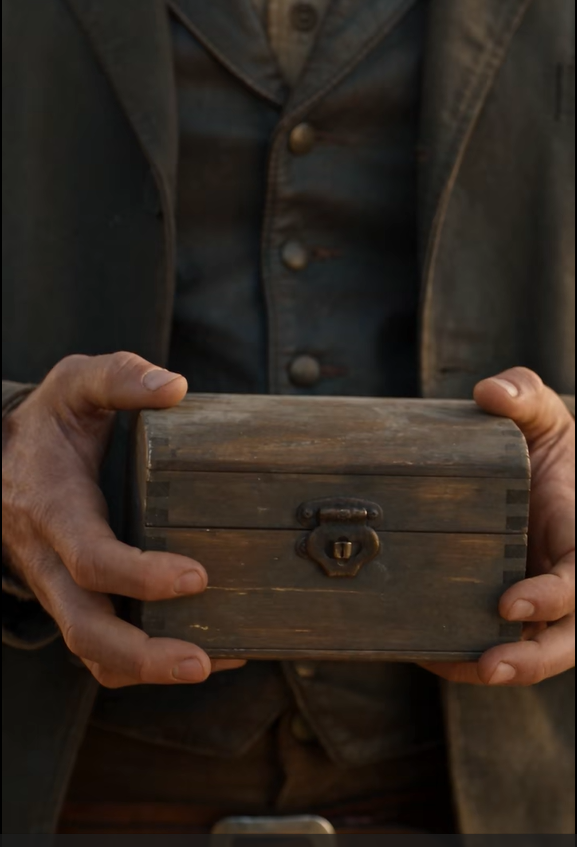
She opened the ring.
Held it toward the light.
The girl squinted.
Then read:
SHE MUST CHOOSE HERSELF.
Eleanor’s eyes filled.
Because suddenly she understood why her father had hidden the evidence where “only Eleanor” might find it.
It had never merely been about clearing his name.
He had known documents could prove theft.
A marriage record could prove inheritance.
A court could prove ownership.
But none of those things could give his daughter the one thing he feared Edmund Blackwood’s world might take from her.
The belief that her life belonged to her.
Not a father.
Not a master.
Not a husband.
Not a house.
Herself.
The ring had opened Blackthorn’s deepest secret.
But
the secret inside the secret was that Eleanor had never needed the ring to become someone worth listening to.
It had only forced everyone else to discover what had been standing quietly in front of them all along.