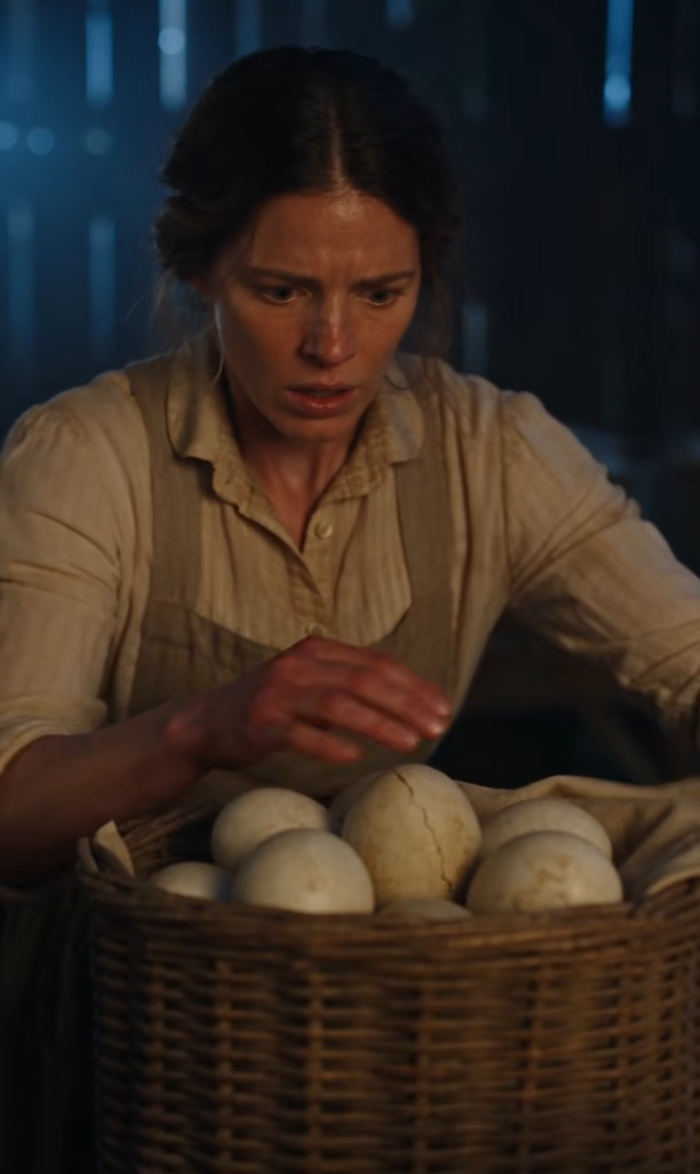
They Laughed When Rowan Mercer Saved 350 Broken Goose Eggs. By Spring, the Whole Town Learned What Had Really Been Hidden Inside Them.
The first goose hatched at dawn, and by sunset someone was trying to burn Rowan Mercer’s barn down.
That was the part nobody in Caldwell Flats ever remembered when they told the story later.
They remembered the eggs.
They remembered the laughter.
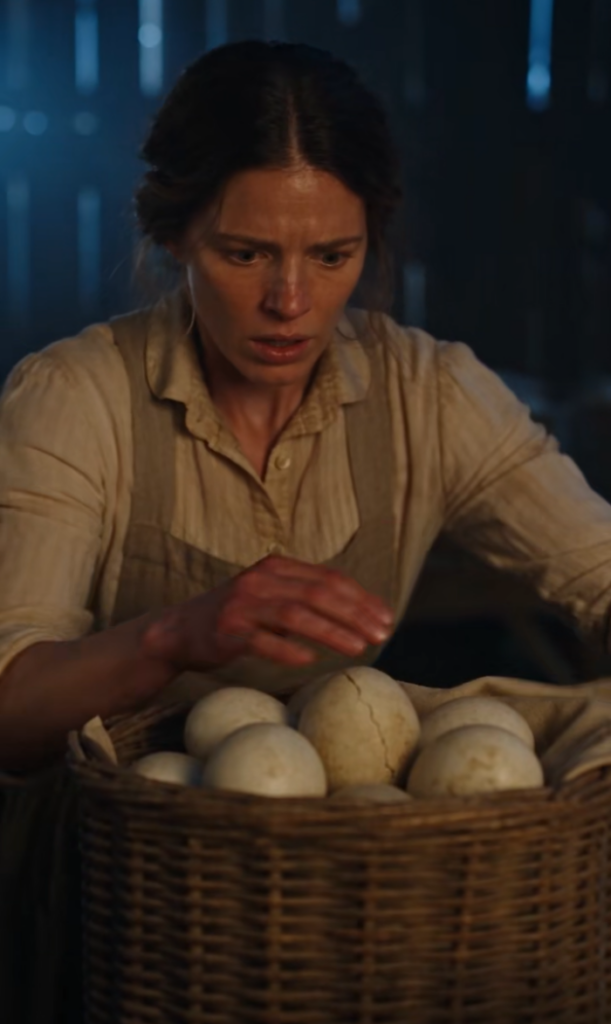
They remembered how Rowan Mercer had knelt in a muddy roadside ditch and gathered 350 cracked goose eggs after a freight driver declared them worthless.
They remembered calling her foolish.
What they forgot was that somebody had been terrified those eggs might survive.
Nobody in Caldwell Flats thought the broken eggs were worth saving.
Rowan did.
That was how three hundred and fifty cracked goose eggs—mud-stained, leaking, and already written off as worthless—became the strangest gamble anyone in town had ever seen.
It started on an ordinary October afternoon in 1889 when a delivery wagon came rattling down the north road too fast.
The driver barely slowed before dumping six wooden crates into a ditch.
Eggs tumbled through mud.
Some struck stones.
Some split open.
Several leaked pale yellow streams into the dirt before the wagon had even disappeared around the bend.
Rowan had been repairing a section of fence near her ten-acre farm when she heard the crash.
She climbed through the rails and stared.
“Bad shipment,” the driver called over his shoulder.
He was a narrow-faced man wearing a gray coat despite the warmth.
“Cracked shells. Nobody will buy them.”
He shrugged.
“They’ll be spoiled by morning anyway.”
Then he whipped the horses.
Most people would have left the mess there.
Rowan knelt instead.
One pale egg rolled toward her boot.
A long fracture ran from end to end.
She lifted it carefully.
The shell was warmer than she expected.
There was no way to know if anything inside had survived.
Still, Rowan whispered, “I’m not throwing you away yet.”
That was when the laughter began.
Two farm boys passing on horseback slowed long enough to see what she was doing.
“Mercer!” one shouted. “Planning to hatch scrambled eggs?”
They howled.
Rowan ignored them.
She was accustomed to being laughed at.
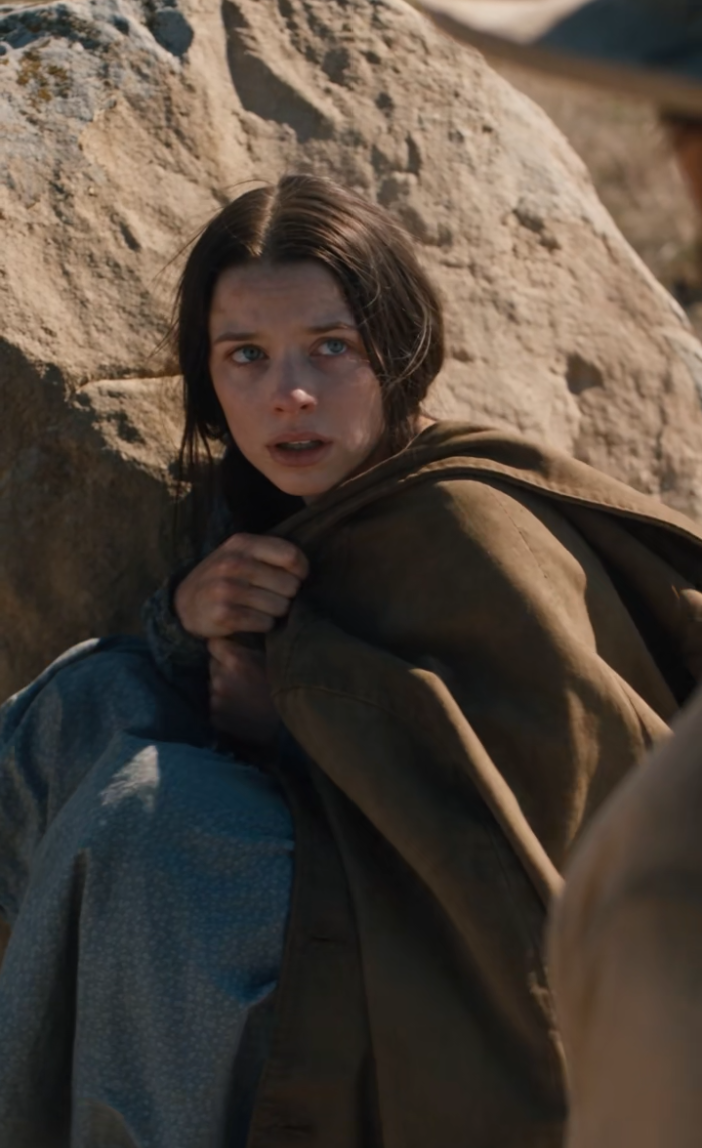
At twenty-six, she had recently inherited ten acres of land no sensible farmer wanted.
The locals called it The Sink.
The farm sat in a low basin east of Caldwell Flats where rainwater collected instead of draining away. The soil stayed wet for days. Grass grew in uneven patches. In spring, wagon wheels could disappear almost to their hubs.
No wheat farmer wanted it.
No cattleman trusted it.
Rowan’s uncle Silas had lived there alone for thirty-eight years.
When he died, people assumed the land would finally be abandoned.
Instead, the deed named Rowan.
She had arrived with eighty-three dollars, two dresses, one pair of work boots, and a stubbornness nobody quite knew what to do with.
The farmhouse leaned east.
The barn roof leaked.
The fences had collapsed in four places.
But Rowan stayed.
Every morning she repaired whatever she could.
She borrowed hammers.
Collected discarded boards.
Straightened fence posts.
Bartered sewing for nails.
Her hands blistered and hardened.
She never had much money, but she seemed to possess an endless supply of determination.
So when townspeople saw her hauling baskets of broken eggs back to The Sink that afternoon, even those accustomed to her eccentricities stared.
Children pointed.
Neighbors laughed across fences.