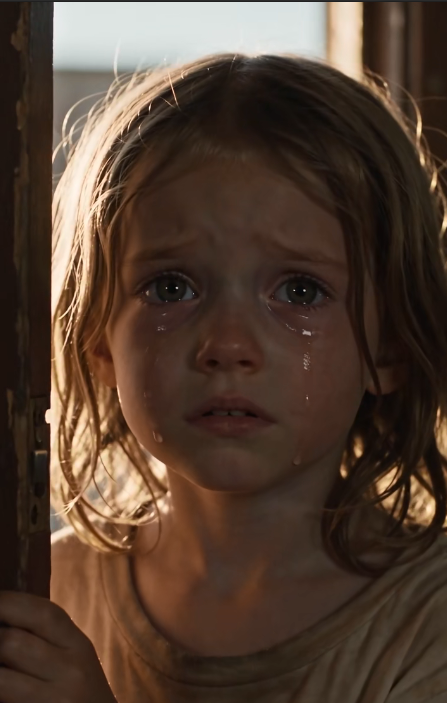
Caleb inspected the eave.
“This didn’t start by accident.”
He held up a scrap of cloth.
It smelled sharply of kerosene.
The neighbors grew silent.
Rowan looked toward the road.
“Who would burn a barn over geese?”
Caleb’s gaze met hers.
“Maybe it isn’t about the geese.”
The next morning Elias Voss arrived.
He rode a black horse and wore a tailored coat inappropriate for mud.
At fifty-eight, Voss possessed the polished manner of a banker and the eyes of a butcher choosing livestock.
“I heard about your fire,” he said.
“So did half the county.”
“A tragedy.”
“Almost.”
His gaze shifted toward the paddock where the goslings clustered beneath makeshift canvas shelters.
Something flickered across his expression.
Recognition.
Rowan saw it.
“You know what they are.”
Voss smiled.
“Geese.”
“What kind?”
“Does it matter?”
“It matters to you.”
His smile vanished.
Voss dismounted.
“Miss Mercer, I will increase my offer for this property.”
“No.”
“You haven’t heard the amount.”
“No.”
“Two thousand dollars.”
Rowan stared.
That was nearly four times what the land was worth.
Caleb, repairing roof timbers nearby, stopped hammering.
Voss continued.
“You walk away with enough money to purchase fifty dry acres anywhere in the county.”
“Why?”
“I admire stubborn women. But stubbornness and farming are a bad marriage.”
“What do you want beneath my mud, Mr. Voss?”
The question struck.
Voss’s eyes hardened.
Then he laughed.
“Silas filled your head with nonsense.”
“You knew my uncle?”
“I knew everyone.”
“He wrote about you.”
That was a lie.
Silas had written about Voss only indirectly.
But Voss’s face changed.
Barely.
Still, Rowan saw it.
Then he stepped closer.
“Your uncle died poor on land that drowned every spring. Consider carefully which parts of his life are worth imitating.”
He mounted his horse.
Before leaving, he looked once more at the goslings.
“Some things survive when they shouldn’t, Miss Mercer. That doesn’t make survival wise.”
Caleb waited until Voss disappeared.
Then he said, “You should leave.”
Rowan turned sharply.
“You too?”
“I mean temporarily.”
“This is my home.”
“He burned your barn.”
“You don’t know that.”
Caleb looked at the kerosene cloth.
“I know men like him.”
The way he said it made Rowan study him.
“You know Voss?”
Caleb resumed hammering.
“Everyone does.”
“That isn’t what I asked.”
His jaw tightened.
“No,” he said. “It isn’t.”
Winter arrived early.
Snow flattened Caldwell Flats by December.
Rowan converted the repaired barn into a fortress against cold.
The geese grew rapidly.
And stranger still, they thrived on The Sink.
Where ordinary chickens struggled in the damp soil, the geese flourished.
They fed on weeds.
Slugs.
Wild grasses.
They moved across flooded patches as if born for the land.
By January, Rowan understood something her neighbors did not.
The Sink was not useless farmland. It was perfect goose country.
She began recording growth rates in Silas’s notebooks.
Several birds developed remarkable size.
Their plumage thickened.
Their feathers were dense and exceptionally soft.
Amos Bell examined one handful.
“Could stuff pillows with this.”
Rowan’s eyes widened.
“Down.”
“What?”
“They weren’t breeding meat birds.”
She looked toward the flock.
“They were breeding them for feathers.”
Amos rubbed the down between his fingers.
“Fine stuff.”
“Very.”
“How fine?”
Rowan soon found out.
She sent a sample through a traveling merchant to Denver.
Three weeks later, a letter returned.
A bedding manufacturer offered eight dollars per pound for cleaned down.