“Disease?”
“A goose cholera outbreak wiped out thousands of birds across Missouri and Kansas in the early 1880s. These Marshline birds showed unusual resistance.”
“Why would Voss destroy that?”
Miriam folded her hands.
“Because he was invested in the treatment.”
Rowan went cold.
Miriam continued.
“A company connected to Voss imported medicinal compounds and sold them to large farms. Epidemics were profitable.”
“You’re saying…”
“I’m saying a naturally resistant breeding line could have destroyed an entire market.”
Rowan’s stomach turned.
“He burned hundreds of living birds?”
“We don’t know that.”
Rowan thought of the kerosene cloth.
“I do.”
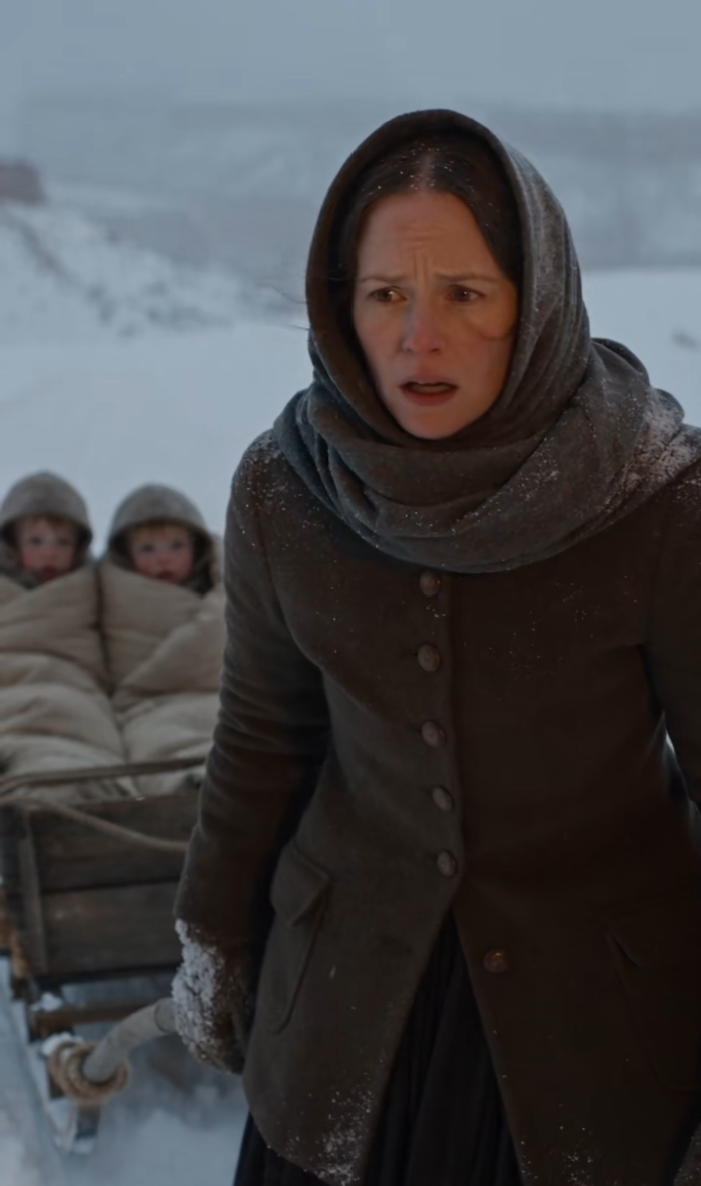
Spring came violently.
The snow melted in four days.
The Sink flooded.
Neighbors expected disaster.
Instead, Rowan opened the channels Silas had mapped.
Water flowed exactly where the old diagrams predicted.
Ponds formed.
Reed islands appeared.
The geese exploded with health.
By April, the flock had begun laying.
Hundreds of eggs.
Perfect ones this time.
Rowan could scarcely gather them fast enough.
Meanwhile, the down business grew.
A Denver hotel ordered pillows.
Then another.
A railway company requested samples.
Amos helped Rowan establish prices.
Caleb built nesting shelters.
Miriam wrote scientific reports.
Within six weeks, Rowan had earned more money than The Sink had produced in the previous ten years.
Caldwell Flats changed its opinion.
The woman they had mocked became the woman people sought for advice.
Yet Rowan trusted the admiration no more than she had feared the laughter.
Especially because Voss had become silent.
Too silent.
Then the county sheriff arrived.
He carried a seizure order.
Rowan read it twice.
“This says the flock belongs to Elias Voss.”
The sheriff looked miserable.
“He claims the eggs were stolen property.”
“They were dumped in a public ditch.”
“He says the driver was transporting damaged inventory back to a Voss facility when you interfered.”
“That’s a lie.”
“Maybe. But there’s a hearing in three days.”
The sheriff glanced toward the geese.
“Until then, you’re not to sell, move, or breed any of them.”
Rowan’s hands shook with fury.
Voss did not want money.
He wanted control.
Again.
The hearing packed the Caldwell courthouse.
Voss arrived with two attorneys.
Rowan arrived with Amos, Miriam, Caleb, and one leather satchel containing Silas’s records.
Voss’s lawyer spoke first.
He described Rowan as an opportunist who knowingly appropriated commercial livestock.
Then Rowan stood.
She described the ditch.
The driver’s words.
The shattered crates.
The fire.
She produced the Hawthorne letters proving Silas’s breeding rights.
Murmurs filled the room.
Voss remained expressionless.
Then Rowan revealed Silas’s notebook.
The judge read the entry concerning Voss.
His eyebrows rose.
Voss’s attorney objected.
“Hearsay.”
“Perhaps,” the judge said. “But relevant.”
Then Miriam testified about Marshline Strain Seven and its probable disease resistance.
Voss shifted for the first time.
The judge leaned forward.
“Mr. Voss, did you previously operate a breeding partnership with Silas Mercer?”
Voss stood.
“Yes.”
“Did a fire destroy that operation?”
“Yes.”
“Did you have financial interests in veterinary medicines?”
“Yes.”
The courtroom erupted in whispers.
“But,” Voss said smoothly, “Dr. Vale’s insinuation is absurd. I never destroyed healthy animals to protect medicine sales.”
Rowan stood.
“Nobody said healthy.”
Voss looked at her.
She continued.
“My uncle wrote that you burned the barn after discovering what the birds were carrying.”
Voss went still.
And Rowan realized something.
Not anger.
Fear.
Real fear.
He was not afraid of disease-resistant geese.