Now it was Caleb’s turn to freeze.
Eleanor continued.
“Your mother was already pregnant when she married James. He adopted you privately. Almost nobody knew.”
Caleb sank into a chair.
Rowan stared from him to Eleanor.
“What kind of family keeps records like dynamite?”
Despite everything, Miriam snorted.
Then Rowan laughed.
Caleb began laughing too.
It was hysterical.
Exhausted.
Almost desperate.
But it broke something open.
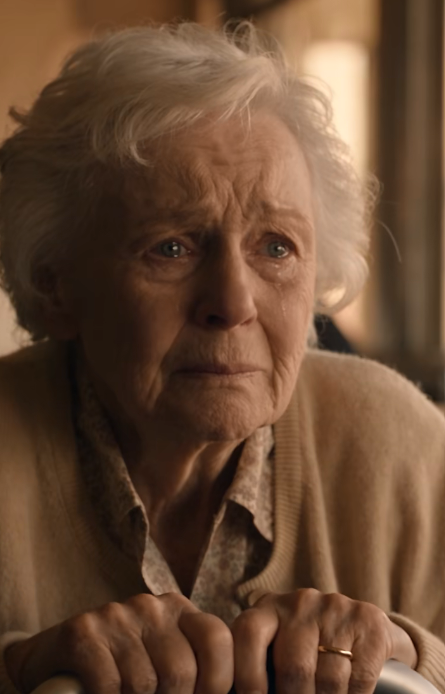
Eleanor laughed through tears.
And for the first time, the truth stopped feeling like a weapon.
Eleanor died in November.
She passed quietly in Rowan’s farmhouse with rain tapping the roof.
Her last words were not about Voss.
Not about medicine.
Not about secrets.
She looked toward the window where a line of geese crossed the flooded field and whispered:
“Your grandfather was right. Life likes difficult ground.”
Rowan held her hand until it grew cold.
She buried Eleanor beside Silas beneath a cottonwood overlooking The Sink.
Nearly the whole town came.
Even Elias Boone.
After the service, he removed his hat and stood awkwardly beside Rowan.
“I owe you an apology.”
“For which part?”
He winced.
“There are options?”
“Several.”
He smiled.
“I suppose there are.”
Then he looked across the marsh.
“Funny thing.”
“What?”
“We all spent years wondering how to fix this land.”
Rowan followed his gaze.
Water gleamed between reeds.
Hundreds of geese moved like gray-white ships across the basin.
Research buildings stood beyond the barn.
Workers crossed new wooden walkways.
Children from Caldwell Flats helped collect naturally molted down.
The old collapsing farm had become the county’s largest employer.
Rowan smiled.
“The land didn’t need fixing.”
Five years later, people came from across the country to visit Mercer Marsh Cooperative.
They came for medicine.
For breeding stock.
For down.
For research.
They came to see the famous geese descended from the broken eggs in the ditch.
Reporters loved that story.
They always wanted Rowan to say she had known.
They wanted wisdom.
Destiny.
A perfect instinct.
But Rowan refused to lie.
One journalist asked, “When you picked up that first cracked egg, did you understand what you were saving?”
Rowan smiled.
“No.”
“Did you suspect the birds were valuable?”
“No.”
“Did you believe they would change medicine?”
“Certainly not.”
The journalist frowned.
“Then why save them?”
Rowan looked toward the flock.
Among them moved birds descended from the strongest goslings of that first impossible hatch.
Some were gray.
Some black.
Some carried white bands around their heads.
She remembered kneeling in mud while people laughed.
She remembered wax on her fingers.
Smoke in her lungs.
The tiny sound of tapping inside a repaired shell.
“I saved them,” Rowan said, “because being damaged is not the same as being worthless.”
The journalist wrote that down.
Years later, people would quote it without knowing where it came from.
But that was not the final secret of the cracked eggs.
The final secret emerged almost thirty years later.
By then Rowan was an older woman.
Caleb had built a house beside hers.
They had married quietly after the Voss trial and raised three children among geese, reeds, researchers, mud, and endless arguments about fence repairs.
One winter, a historian cataloging the original Mercer papers found a sealed envelope behind the backing of Silas’s framed land deed.
The envelope contained one page.
Rowan recognized her grandfather’s handwriting immediately.
She read it alone.
Then she sat down.
Because Silas had known.
Not about the egg shipment.